
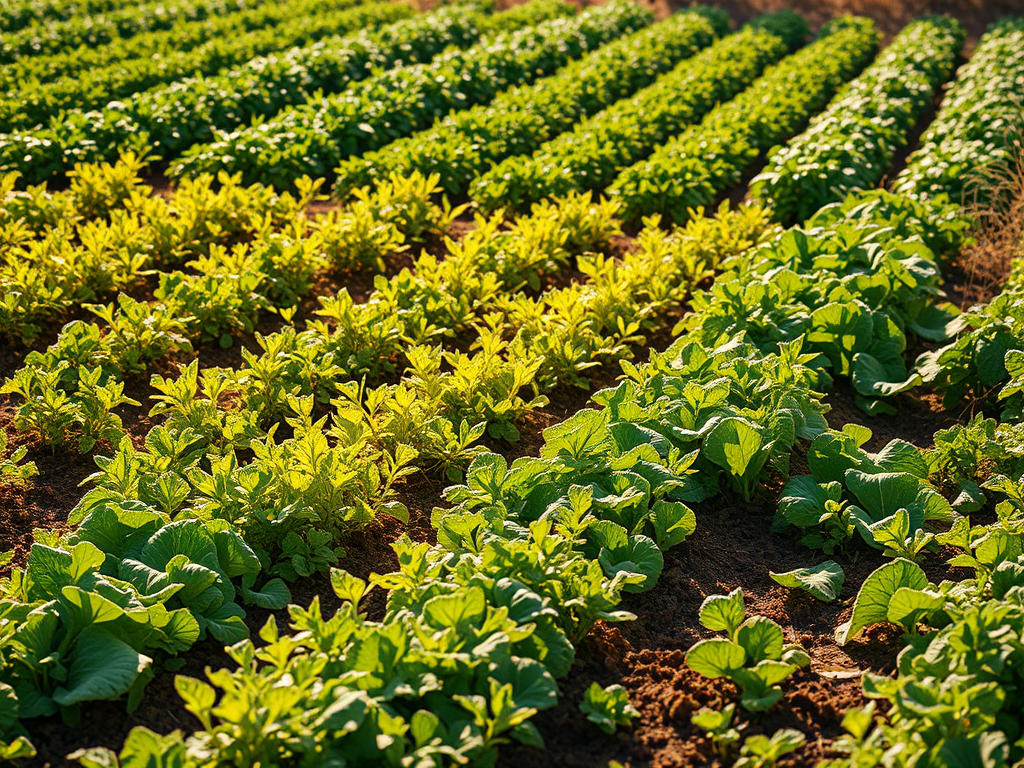
Intercropping: A Detailed Overview
Intercropping is an agricultural practice in which two or more crops are grown simultaneously on the same field, either in rows or mixed together. The practice has been used for centuries across the world, and it provides several benefits such as improved land use efficiency, enhanced biodiversity, pest control, and increased yield stability. The concept can be applied in various ways. It depends on the type of crops being grown and the farming system in use.
Types of Intercropping
- Row Intercropping: Crops are grown in separate rows, typically alternating between different crops. The rows may be arranged in such a way that one crop provides shade, shelter, or protection to the other.
- Mixed Intercropping: Crops are planted together without any specific row arrangement. This method can sometimes be chaotic, but it maximizes the use of space and can mimic the natural growth patterns of certain plants.
- Strip Intercropping: In this method, the crops are grown in wide strips. These strips are usually designed to allow both crops to receive sufficient sunlight, water, and nutrients.
- Relay Intercropping: This involves planting a second crop between the rows of a first crop during the first crop’s growing season, before it is harvested. This allows farmers to use the land for longer periods, enhancing land productivity.
- Intercropping with Perennials: Perennial crops, such as fruit trees or shrubs, are used in combination with annual crops. This practice is less common but can be beneficial in agroforestry systems.
Benefits of Intercropping
- Increased Yield and Productivity: Growing multiple crops on the same land can result in higher overall yields compared to monoculture farming, where only one crop is grown.
- Improved Soil Fertility: Different crops have different nutrient requirements. Some crops, like legumes, can fix nitrogen in the soil, improving soil health and reducing the need for chemical fertilizers.
- Pest and Disease Control: Intercropping helps reduce the spread of pests and diseases, as different crops may not share the same vulnerabilities. Natural predators of pests are often attracted to diverse crops.
- Weed Suppression: The diversity of plants in intercropping systems can prevent weeds from becoming a problem, as the crops compete for sunlight, nutrients, and space.
- Risk Diversification: Growing more than one type of crop reduces the risk of total crop failure due to weather events, pests, or diseases that might affect a single crop.
- Improved Water Management: Some crops in intercropping systems have deeper root systems, which can help absorb water from different layers of soil, while others may have shallow roots, ensuring efficient water use.
- Enhanced Biodiversity: Intercropping contributes to maintaining a variety of plant species, which supports biodiversity and ecological balance.
Considerations and Challenges
- Competition for Resources: When crops are intercropped, they can compete for sunlight, water, and nutrients. Careful planning and crop selection are needed to ensure that one crop does not overshadow the other or deprive it of essential resources.
- Management Complexity: Intercropping systems are often more complex to manage compared to monoculture systems. Farmers need to be knowledgeable about crop compatibility, planting schedules, and pest management.
- Labor and Equipment: Intercropping may require more labor for planting, maintaining, and harvesting crops. Specialized equipment may be necessary to manage intercropped fields.
- Economic Viability: While intercropping can improve yield stability, the financial benefits may depend on market demand, the cost of inputs, and the efficiency of managing diverse crops.
Table: Examples of Crops for Intercropping
Below is a table listing some common crop combinations for intercropping. This table highlights crop pairs that tend to grow well together, based on complementary growing conditions and resource use.
| Primary Crop | Intercrop 1 | Intercrop 2 | Benefits/Notes |
|---|---|---|---|
| Maize (Corn) | Beans | Groundnuts (Peanuts) | Beans fix nitrogen in the soil, maize benefits from the extra nitrogen. |
| Rice | Soybeans | Mustard | Soybeans provide nitrogen, and mustard can suppress weeds. |
| Tomato | Basil | Carrot | Basil repels pests like aphids, and carrots have complementary root structures. |
| Cabbage | Onion | Lettuce | Onions repel pests that target cabbage, and lettuce grows quickly between cabbage. |
| Potato | Beans | Corn | Beans enrich soil with nitrogen, while corn provides shade. |
| Wheat | Soybean | Sunflower | Soybeans fix nitrogen and sunflowers attract beneficial insects. |
| Cotton | Groundnut (Peanut) | Cowpea | Groundnut adds nitrogen, and cowpea helps suppress weeds. |
| Banana | Pineapple | Taro | Pineapple and taro benefit from the shade provided by banana trees. |
| Sugarcane | Soybeans | Cowpea | Soybeans fix nitrogen, which benefits sugarcane growth. |
| Lettuce | Radish | Spinach | Radish can deter pests, and spinach benefits from the cooler environment provided by lettuce. |
Selecting Compatible Crops
When selecting crops for intercropping, it is essential to consider the following factors:
- Growth Habits: Choose crops with different growth patterns (e.g., tall vs. short, deep roots vs. shallow roots). This minimizes competition for sunlight and nutrients.
- Nutrient Requirements: Some crops, like legumes (e.g., beans and peas), fix nitrogen in the soil, benefiting other plants that require nitrogen.
- Pest and Disease Resistance: Choose crops that are resistant to the same pests or diseases. Intercropping can reduce pest pressure by disrupting the life cycle of pest species.
- Water Needs: Pair crops with similar water requirements, or opt for crops that can use water from different soil depths to avoid competition.
- Market Demand: It’s essential to select crops that are in demand and can be harvested at different times, so that the farmer does not face market saturation.
Conclusion
Intercropping is a valuable agricultural practice that can provide numerous environmental and economic benefits. It increases biodiversity, optimizes land use, and improves soil health, all while helping to reduce the risks associated with monoculture farming. However, successful intercropping requires careful planning and management. Crop compatibility, growth patterns, and resource use must be balanced for maximum productivity.
By carefully selecting compatible crops, farmers can reap the rewards of intercropping, from increased yields to reduced pest pressure. This practice offers a sustainable way forward for farming in the face of climate change, market fluctuations, and environmental degradation.

 KrishiCenter
Leave a reply to Crop Diseases: Types, Effects, Symptoms, Management – KrishiCenter Cancel reply