
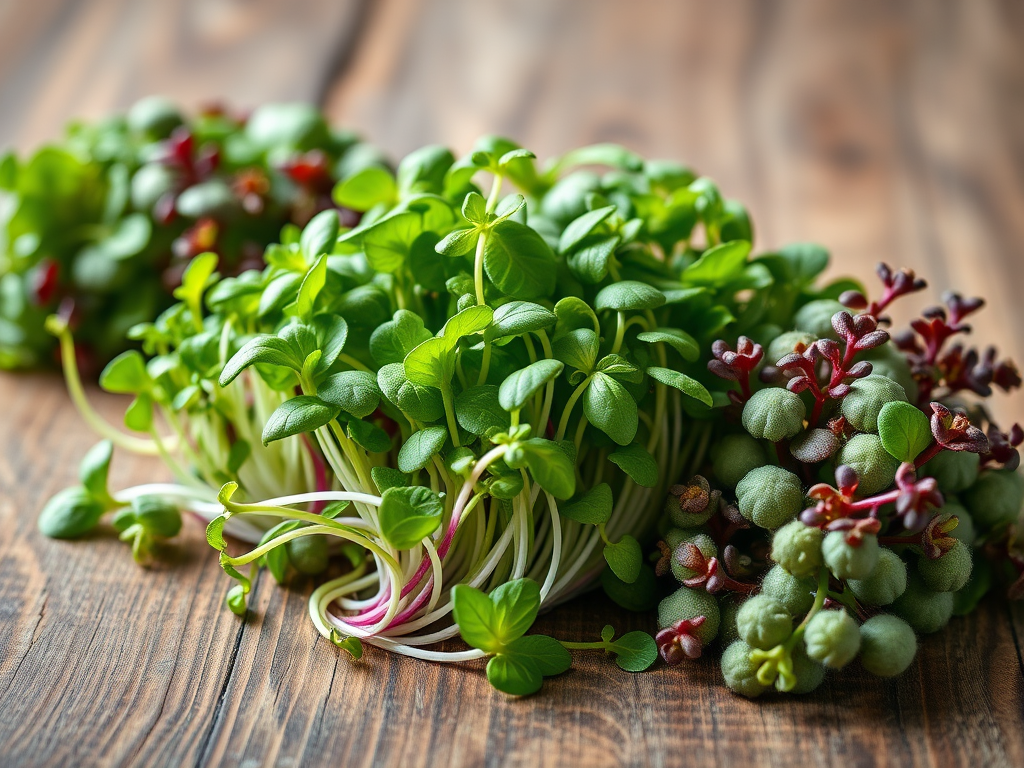
🌿 Microgreens: The Tiny Plants with Mighty Nutrients
In recent years, microgreens have taken the health and culinary world by storm. These small but powerful greens are packed with nutrients, vibrant flavors, and visual appeal — making them a favorite among chefs, health enthusiasts, and urban gardeners alike.
But what exactly are microgreens, and why are they considered superfoods? Let’s dig into the science, cultivation, and benefits of these tiny greens.
🌱 What Are Microgreens?
Microgreens are young vegetable greens harvested just after the first true leaves develop — usually 7–21 days after germination.
They are not sprouts (which are germinated seeds) or baby greens (which are older and larger). Microgreens fall right in between — small in size, but rich in nutrients and flavor.
Common Types of Microgreens:
- Leafy Greens: Kale, spinach, arugula, lettuce
- Herbs: Basil, cilantro, dill, parsley
- Vegetables: Broccoli, radish, beetroot, mustard, sunflower
- Grains & Legumes: Pea shoots, wheatgrass, amaranth
💪 Nutritional Powerhouse
Despite their small size, microgreens are nutrient-dense — often containing 4–40 times more vitamins and minerals than their mature counterparts.
Nutrients Found in Microgreens:
- Vitamin C: Boosts immunity and skin health
- Vitamin K: Supports bone strength and blood clotting
- Beta-carotene: Promotes vision and cell repair
- Antioxidants: Protect cells from damage and aging
- Iron, Zinc & Magnesium: Essential for energy and metabolism
🥗 Example: Red cabbage microgreens have up to 40 times more vitamin E and 6 times more vitamin C than mature red cabbage leaves!
🪴 How to Grow Microgreens at Home
Growing microgreens doesn’t require acres of land or heavy equipment — just a small tray, soil, seeds, and sunlight.
Simple Steps:
- Choose your seeds: Pick from popular varieties like broccoli, kale, or mustard.
- Prepare a shallow tray: Fill with organic soil or a growing mat.
- Sow the seeds evenly: Press gently into the soil and mist with water.
- Provide light & warmth: Keep in indirect sunlight or under grow lights.
- Harvest in 1–3 weeks: Cut just above the soil when leaves appear.
🌞 Tip: Rinse gently and store in an airtight container in the refrigerator for up to a week.
🍽️ Uses of Microgreens
Microgreens are not just nutritious — they’re also delicious and versatile in the kitchen.
Creative Ways to Use Them:
- Add to salads, sandwiches, or wraps
- Garnish soups, pizzas, and omelets
- Blend into smoothies or green juices
- Use as a topping for gourmet dishes
Their unique flavors — from spicy (radish) to sweet (pea shoots) — add both color and character to any meal.
🌾 Microgreens and Sustainable Farming
Microgreens represent a sustainable solution for urban and small-scale agriculture.
Sustainability Benefits:
- Require minimal water and space
- Can be grown indoors year-round
- Reduce transportation emissions (local production)
- Short growing cycle → quick harvests and low waste
💧 In urban areas, microgreens can turn balconies, rooftops, or even windowsills into mini-farms!
💚 Health Benefits at a Glance
| Benefit | How It Helps |
|---|---|
| Boosts immunity | Rich in antioxidants and vitamins |
| Improves digestion | High fiber content |
| Reduces inflammation | Contains polyphenols and phytonutrients |
| Supports heart health | Helps lower “bad” cholesterol |
| Enhances detoxification | Promotes liver and cellular cleansing |
🧭 Conclusion
Microgreens may be tiny, but their impact is massive — from improving nutrition to supporting sustainable food systems. Whether you’re a home gardener or a commercial farmer, growing microgreens is simple, profitable, and eco-friendly.
🌱 In every small leaf lies a world of health, flavor, and opportunity.
Top 10 Microgreens & Their Health Benefits
1️⃣ Broccoli Microgreens
🟩 Nutrient Highlight: High in sulforaphane (cancer-fighting compound)
💪 Benefit: Boosts immunity and detoxifies the body
2️⃣ Radish Microgreens
🟥 Nutrient Highlight: Vitamin C, E, and potassium
💪 Benefit: Aids digestion and supports skin health
3️⃣ Kale Microgreens
🟢 Nutrient Highlight: Iron, calcium, vitamin K
💪 Benefit: Strengthens bones and improves circulation
4️⃣ Sunflower Shoots
🌻 Nutrient Highlight: Protein, healthy fats, and zinc
💪 Benefit: Promotes muscle growth and immune function
5️⃣ Pea Shoots
🌿 Nutrient Highlight: Vitamins A, C, folate, and fiber
💪 Benefit: Supports eye health and reduces inflammation
6️⃣ Beet Microgreens
🟣 Nutrient Highlight: Betalains and antioxidants
💪 Benefit: Improves blood flow and heart health
7️⃣ Arugula Microgreens
🌱 Nutrient Highlight: Calcium, magnesium, and nitrates
💪 Benefit: Regulates blood pressure and boosts stamina
8️⃣ Basil Microgreens
💚 Nutrient Highlight: Vitamin K and essential oils
💪 Benefit: Fights inflammation and supports brain function
9️⃣ Mustard Microgreens
💛 Nutrient Highlight: Glucosinolates and vitamin A
💪 Benefit: Enhances metabolism and aids detoxification
🔟 Red Cabbage Microgreens
💗 Nutrient Highlight: Vitamin C and anthocyanins
💪 Benefit: Strengthens immunity and reduces oxidative stress
Start growing microgreens today — fresh, fast, and full of flavor!

 KrishiCenter
Leave a comment