
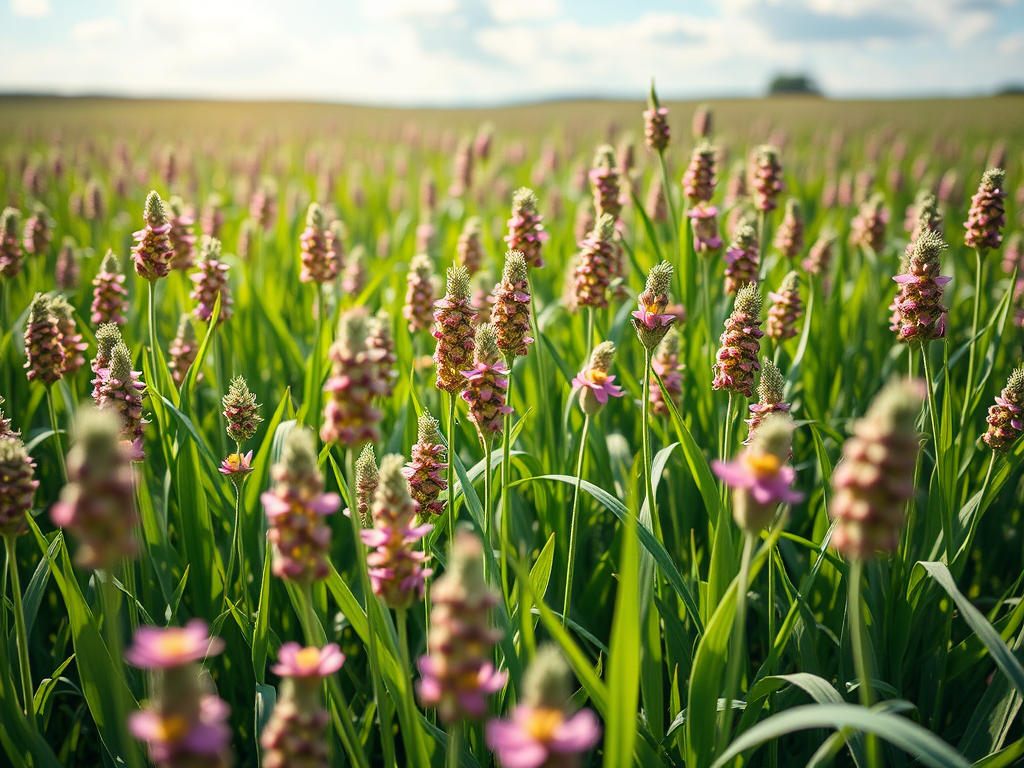
Flaxseed (Linseed) Farming Guide
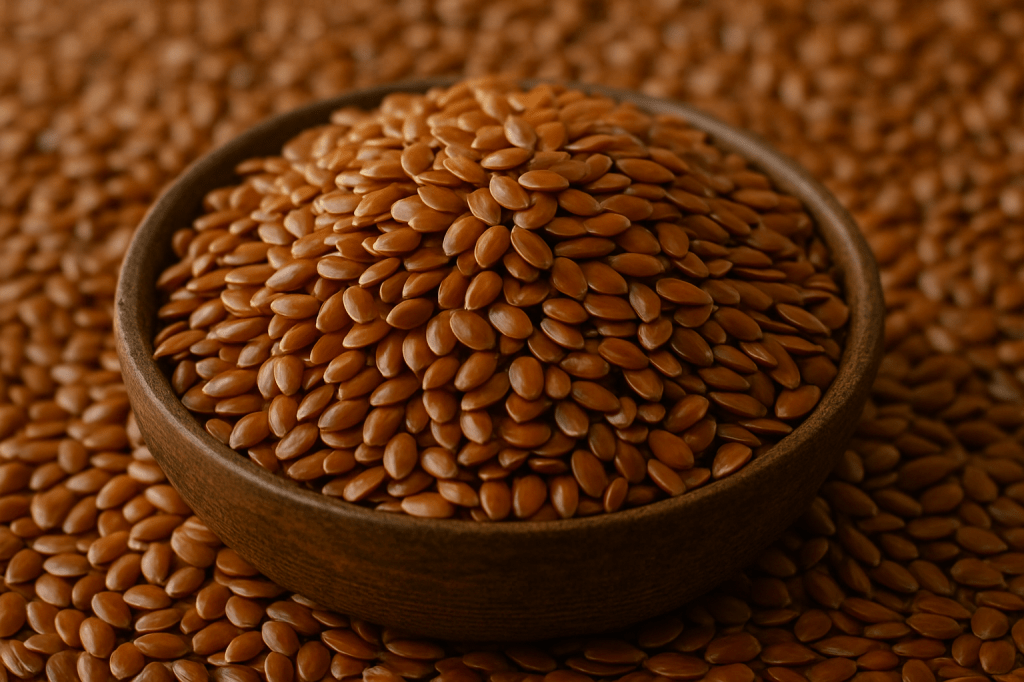
Flax seed (Linum usitatissimum) or अलसी is grown for its seeds (linseed) and fiber. This guide focus on harvesting of seeds, though many practices overlap with fiber flax.
Climate and Soil Requirements
Climate
- It prefers Cool, temperate climate is ideal.
- Optimal temperature should range between 20 to 30°C.
- Sensitive to drought and water logging condition.
- Requires approx 100 to 120 days to get matured.
Soil
- It prefers well drained soil loams or sandy loams.
- Soil pH should be in 6.0–7.0 (slightly acidic to neutral).
- Avoid it in saline or clay heavy soils.
- Must have good tilling of land because flax is a weak competitor to weeds.
Land Preparation
- Deep plough (20–25 cm) during the off season.
- Harrow 2–3 times to create a fine seedbed.
- Make sure soil is firm and moist, not having hard lumps.
- A fine leveled field helps uniform plants germination.
Seed Selection
Improved Varieties
It is better to select disease-resistant, high-yielding varieties suitable to your region. (e.g., T-397, Neelum, Surabhi in India; CDC Sorrel, Norlin in Canada).
Seed Rate
- Broadcasting: 30–35 kg/ha
- Line sowing: 20–25 kg/ha
(Slightly more if fiber + seed dual purpose.)
Seed Treatment
- Fungicide: Carbendazim or Thiram @ 2–3 g/kg seed.
- For wilt-prone regions: Trichoderma viride @ 4 g/kg.
Sowing
Timing
- Temperate regions: Early Spring.
- Tropical/subtropical regions:
- Rabi (winter) crop: October to November
- Kharif (monsoon) crop: August to September
Method
- Line sowing preferred:
- Row spacing: around 20–25 cm
- Depth: between 2–3 cm
Germination
- Usually starts within 7–10 days under optimal moisture.
Nutrient Management
Recommended Fertilizer Dose
Per hectare:
- N: 40–60 kg
- P₂O₅: 30–40 kg
- K₂O: 20 kg
Application Schedule
- Apply all P and K + 50% N as basal.
- Remaining 50% N at 35–40 days after sowing (DAS).
Micronutrients:
- Zinc deficiency results in yellowing; you can apply Zinc sulfate @ 25 kg/ha.
Irrigation Management
Water Requirement
- Needs 4–6 irrigations, depending on climate.
Critical stages
- Branching
- Flowering
- Capsule formation
Avoid over-irrigation, flax is prone to lodging and root diseases.
Weed Management
Flax grows slowly early on → prone to weed competition.
Manual Weeding
- Two weeding at 20–25 DAS and 40 DAS.
Chemical Control
- Pendimethalin 1 kg a.i./ha as pre-emergence.
- Quizalofop 50 g a.i./ha for grassy weeds (post-emergence).
Pest & Disease Management
Common Pests
| Pest | Symptoms | Management |
|---|---|---|
| Aphids | Curling leaves, honeydew | Neem oil 3%; Imidacloprid 0.3 ml/L |
| Cutworms | Seedling cut at base | Carbaryl 2% dust or bait traps |
| Budworms | Damage to buds | Spinosad 0.3 ml/L |
Diseases
| Disease | Cause | Control |
|---|---|---|
| Wilt | Fusarium oxysporum | Resistant varieties, Trichoderma treatment |
| Powdery mildew | Fungal | Sulfur dusting 25 kg/ha |
| Rust | Melampsora lini | Mancozeb 0.2% spray |
Flaxseed (Linseed) Cultivation Supplement
Fertilizer Application Chart
(Per hectare recommendation — adjust based on soil test)
Basal Application (Before/At Sowing)
| Nutrient | Recommended Dose | Fertilizer Source | Amount to Apply | Notes |
|---|---|---|---|---|
| Nitrogen (N) | 20 to 30 kg | Urea (46% N) | 45 to 65 kg | Apply 50% of total N at sowing |
| Phosphorus (P₂O₅) | 30 to 40 kg | SSP (16% P₂O₅) | 190 to 250 kg | Entire dose at sowing; improves root growth |
| Potassium (K₂O) | 20 kg | MOP (60% K₂O) | 30 to 35 kg | Entire dose at sowing |
| Zinc (Zn) | (If deficient) 25 kg ZnSO₄ | Zinc Sulphate | 25 kg | Apply once every 2–3 years |
Top Dressing (35 to 40 Days After Sowing)
| Nutrient | Dose | Fertilizer Source | Quantity | Purpose |
|---|---|---|---|---|
| Nitrogen (N) | 20 to 30 kg | Urea | 45 to 65 kg | Enhances branching, flowering & pod fill |
💡 Optional Bio-Fertilizers
| Type | Application | Benefits |
|---|---|---|
| Trichoderma viride | 4 gram/kg seed | Controls soil-borne diseases (wilt) |
| PSB (Phosphate Solubilizing Bacteria) | 400 gram/acre with seed | Enhances P uptake |
Pest & Disease Spray Calendar
You can follow practical 3–4 spray schedule, targeted at the main pests & diseases of Flaxseed.
Stage-Wise Spray Program
Early Vegetative Stage (20–25 DAS)
Target: For Soil & early foliar diseases, initial sucking pests
Spray:
- Neem oil 3% or Azadirachtin 1500 ppm @ 3 ml/L
Purpose: - Reduces early aphid build up.
- Minimizes fungal spore initiation.
Pre-Flowering Stage (35–40 DAS)
Target:
- Aphids
- Powdery mildew (if its humid)
Spray Options: - Imidacloprid 17.8% SL @ 0.3 ml/L (for aphids)
- If mildew seen: Wettable Sulfur 0.25%
Notes:
- Do NOT mix sulfur with imidacloprid; alternate sprays.
Flowering Stage (50 to 60 days) – Critical
Target:
- Budworm
- Rust
Spray: - Spinosad 0.3 ml/L (for budworm)
- If rust appears: Mancozeb 0.2%
Purpose:
- Protects buds and flowers to maintain yield potential
Capsule Formation (70 to 80 days)
Target:
- Capsule-borers
- Late-season foliar diseases
Spray: - Lambda-Cyhalothrin 0.6 ml/L (if capsule-borer)
- Carbendazim 0.1% (for late fungal infections)
Pest/Disease Management Table
| Problem | Stage | Symptoms | Chemical Control | Organic Option |
|---|---|---|---|---|
| Aphids | Early to mid | Curling leaves, sticky honeydew | Imidacloprid 0.3 ml/L | Neem oil 3% |
| Budworm | Flowering | Bored buds, flower drop | Spinosad 0.3 ml/L | Hand picking |
| Cutworms | Early | Seedlings cut at soil level | Carbaryl bait | Wire traps |
| Rust | Mid to late | Orange pustules | Mancozeb 0.2% | Avoid overhead irrigation |
| Powdery Mildew | Early to late | White coating on leaves | Sulfur dusting 25 kg/ha | Baking soda spray (1%) |
| Wilt | All stages | Sudden plant drying | Seed treatment + crop rotation | Trichoderma |
Crop Growth Stages
- Germination (7 to 10 days)
- Seedling (up to 25 days)
- Vegetative/Branching (25 to 45 days)
- Flowering (50 to 75 days)
- Seed set & capsule formation (75 to 100 days)
- Maturity (100 to 120 days)
10. Harvesting
Signs of Maturity
- Capsules turn brown.
- Seeds rattle inside capsules.
- Leaves dry and fall off.
Harvest Method
- Cut plants at 10–15 cm above ground.
- Stack upright for 7–10 days for drying.
Threshing
- Use beating sticks as common practice or mechanical threshers.
- Clean and dry seeds to 8–10% moisture are fine.
Post-Harvest Handling & Storage
- Ensure proper seed cleaning.
- Store in airtight gunny bags or bins.
- Add neem leaves or diatomaceous earth to prevent pests.
- Maintain storage moisture ≤ 10%.
Expected Yield
- Seed yield: 1.0–1.5 tons/ha (improved crops up to 2 tons/ha).
- Straw (fiber): 2.5–3 tons/ha.
Tips for Higher Productivity
- Use certified quality seeds of improved varieties.
- Ensure timely sowing as per weather/climate region.
- Practice crop rotation (avoid continuous flax cropping).
- Maintain weed free fields during the first 40 to 45 days.
- Use balanced fertilizer and proper irrigation timing.


Leave a Reply