
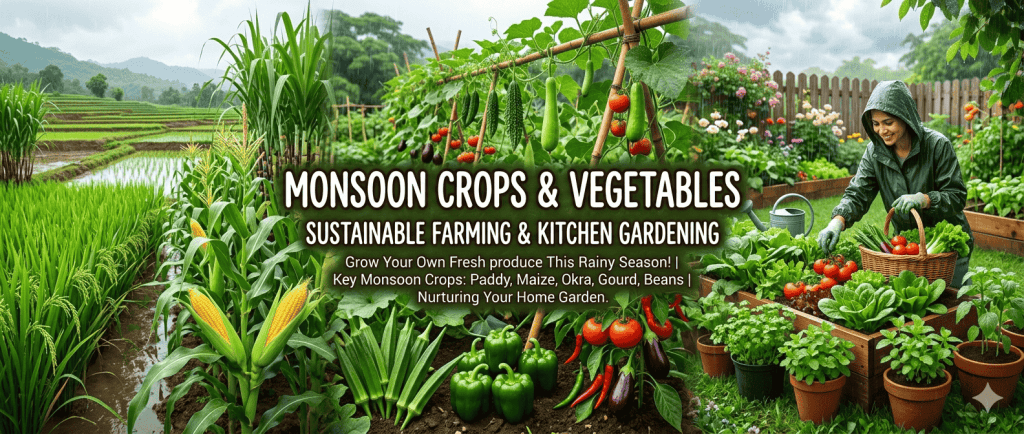
Monsoon is the golden window for Indian agriculture. The arrival of the rains brings the perfect blend of high humidity, warm soil, and abundant water, which acts as a natural booster for a wide variety of crops and vegetables.
To get the best yield, monsoon planting is generally split into two categories: Agronomic Kharif Crops (field crops) and Monsoon Vegetables.
1. Major Monsoon (Kharif) Field Crops
If you are managing larger plots of farmland, these are the traditional heavy-hitters sown between June and July:
- Rice (Paddy): The quintessential monsoon crop. It requires standing water and heavy rainfall during its initial growth phase.
- Maize (Corn): Thrives in warm weather but requires excellent soil drainage; it cannot tolerate waterlogging.
- Pulses (Pigeon Pea/Arhar, Black Gram/Urad, Green Gram/Moong): Excellent for soil health as they fix nitrogen. They prefer warm climates and moderate rainfall.
- Oilseeds (Groundnut, Soybean): Soybean is highly reliant on early monsoon rains for uniform germination.
- Cotton: Requires a warm climate and frequent but controlled moisture.
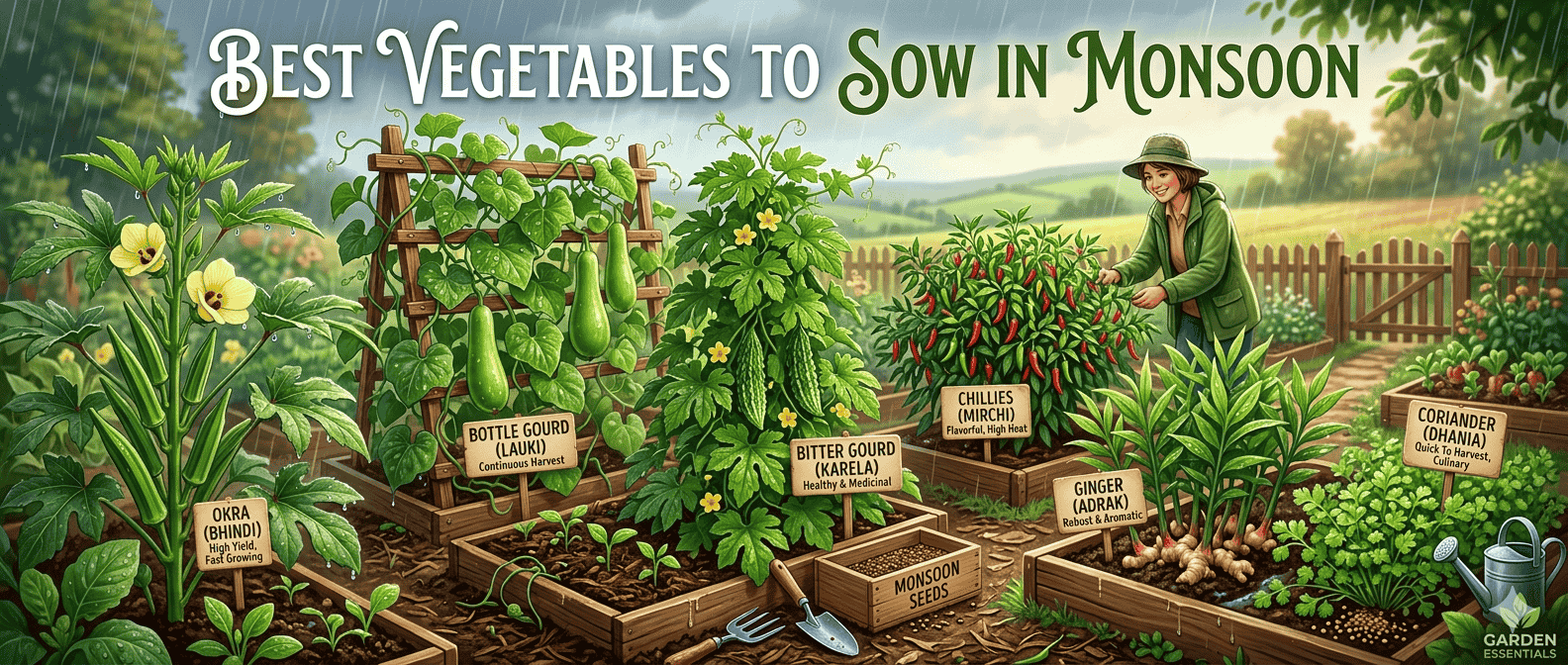
2. Best Vegetables to Sow in Monsoon
For kitchen gardens, raised beds, or commercial vegetable patches, these varieties thrive in rainy weather:
| Vegetable Type | Specific Varieties | Planting & Care Tips |
| Gourds (The Vine Family) | Bitter Gourd (Karela), Bottle Gourd (Lauki), Ridge Gourd (Torai), Sponge Gourd | These vines love the rain. Crucial: Build a sturdy trellis or bamboo framework to keep the fruits off the wet mud, preventing rot. |
| Solanaceous Crops | Tomato, Green Chillies, Brinjal (Eggplant) | Sown in nursery beds first and then transplanted. Monsoon varieties are highly resilient, but watch out for fungal root rot. |
| Okra (Bhindi) | Lady’s Finger | One of the easiest monsoon crops. Prefers direct sowing. Ensure the soil is highly fertile and well-drained. |
| Legumes | Cowpeas (Lobia), Cluster Beans (Gawar), French Beans | Great for quick harvests. They handle the rainy weather well and improve soil structure. |
| Leafy Greens | Malabar Spinach (Pui Shak), Coriander | Regular spinach struggles in heavy rain, but Malabar spinach thrives in hot, humid, rainy conditions. |
3. Essential Monsoon Preparation Checklist
Monsoon gardening/farming is less about watering and more about management. To prevent your seeds from rotting or washing away, follow these preparation steps:
🛠️ Step 1: Fix the Drainage (Most Critical)
- Raised Beds: Plant your vegetables on raised beds (6–8 inches high). This allows excess water to drain away from the root zone.
- Channels: Dig drainage channels around your plot so water doesn’t pool into stagnant ponds. Waterlogging suffocates roots and kills plants within days.
🌱 Step 2: Soil Preparation & Treatment
- Fungal Protection: Humid weather is a playground for fungus. Mix Trichoderma viride (a bio-fungicide) or Neem Cake powder into your soil before sowing to prevent “damping-off” disease in seedlings.
- Aeration: Mix organic compost, coco peat, or well-rotted manure to loosen the soil, ensuring it doesn’t compact into tight clay when wet.
💧 Step 3: Sowing Strategy
- Don’t Sow Deep: In the monsoon, plant seeds slightly shallower than usual. Heavy rain packs the soil tightly, making it hard for deeply buried seeds to break through.
- Shelter for Seedlings: If you are starting delicate seeds like tomatoes or chillies, do it in seedling trays under a temporary plastic shed or net to protect them from heavy, physical raindrop damage.
Monsoon Kitchen Garden
A monsoon kitchen garden is incredibly rewarding because everything grows at double speed, but it does require a specific strategy to keep your plants from drowning.
Since you are setting up a kitchen garden, here is your step-by-step blueprint to prepare right now for the rains.
Top 5 Foolproof Vegetables for a Monsoon Kitchen Garden
These are the easiest, highest-yielding varieties for home growers during the rainy season:
- The Gourd Trio (Bottle Gourd/Lauki, Ridge Gourd/Torai, Bitter Gourd/Karela):
- Why: They love high humidity and grow rapidly.
- Kitchen Garden Tip: Plant them near a wall, fence, or build a simple bamboo trellis. Keeping the fruit off the wet ground is the secret to preventing rot.
- Okra (Bhindi):
- Why: It absolutely thrives in the summer-monsoon transition.
- Kitchen Garden Tip: Sow seeds directly into their final pot or bed (it hates being transplanted). Space them about 6 inches apart.
- Green Chillies & Brinjal:
- Why: Highly resilient to heavy downpours once established.
- Kitchen Garden Tip: Start these in small seed-trays under a shade first, then transplant them into bigger pots after 3–4 weeks when they have 4 leaves.
- Cowpeas (Lobia / Barbati):
- Why: A fast-growing vine that gives you fresh green pods in just 45–50 days.
- Malabar Spinach (Pui Shak):
- Why: Normal spinach (Palak) rots easily in heavy rain, but Malabar spinach loves the monsoon and tastes fantastic in stir-fries and dals.
2. Container vs. Ground Beds: The Drainage Setup
Excess water is your number one enemy in a monsoon kitchen garden.
If you are growing in Pots/Grow Bags:
- Check the Holes: Ensure every pot has 2–3 clear drainage holes. Poke them open if they are blocked by roots or soil.
- Elevate the Pots: Place your pots on brick pieces or pot stands. If the pot sits flat on a wet terrace or balcony, water cannot drain out, causing root rot.
- The Potting Mix: Use a highly porous mix. A ratio of 40% Soil + 30% Compost + 30% Coco Peat/Sand works best to let excess rain slice right through.
If you are growing in a Ground Patch:
- Make Raised Ridges: Dig up the soil and create raised mounds or ridges (6–8 inches high) to plant your seeds on.
- Dig a Trench: Create a small slope or a mini-drainage ditch around your garden patch so pooling water flows away.
3. Essential Monsoon Maintenance Tips
- Hold the Water Cans: Let nature do the watering. Only water your plants manually if the top 2 inches of soil feel completely dry during a dry spell between rains.
- The Neem Oil Shield: High humidity brings pests like aphids, whiteflies, and caterpillars. Spray your plants with a Neem Oil solution (1 tsp neem oil + a few drops of liquid dish soap in 1 liter of water) once every 10 days in the evening as a preventive shield.
- Watch the Sun: The sky can stay overcast for days. Place your sun-loving plants (like tomatoes and chillies) in the spot that gets the absolute maximum available daylight.


Leave a Reply