
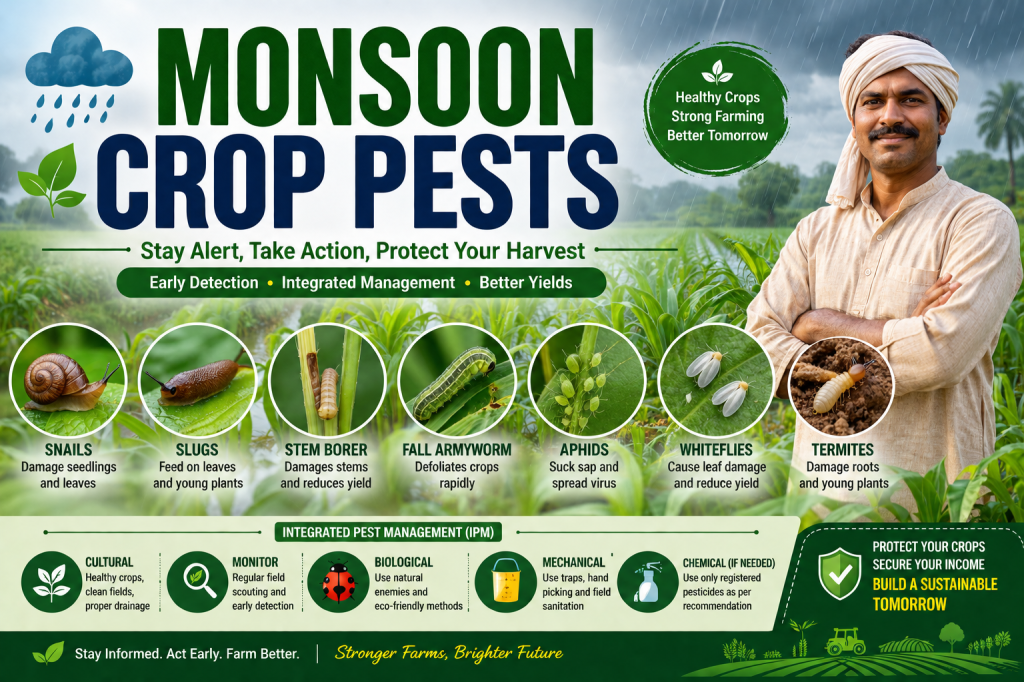
The monsoon season is crucial for Indian agriculture as it supports the cultivation of Kharif crops such as rice, maize, soybean, cotton, pulses, sugarcane, and vegetables. However, continuous rainfall, high humidity, and moderate temperatures also create ideal conditions for the rapid multiplication of pests and insects.
During the rainy season, farmers commonly face attacks from snails, slugs, stem borers, armyworms, leaf folders, aphids, whiteflies, termites, and various fungal disease vectors. If not managed in time, these pests can reduce crop yields by 20–60%, depending on the crop and severity of infestation.
Adopting Integrated Pest Management (IPM) practices is the most effective way to minimize crop damage while protecting the environment.
Why Do Pest Attacks Increase During the Monsoon?
Several environmental factors favor pest multiplication:
- High humidity accelerates insect breeding.
- Frequent rainfall creates moist habitats for snails and slugs.
- Dense crop canopies provide shelter to insects.
- Excess weeds serve as alternate hosts.
- Warm temperatures increase pest activity.
- Standing water encourages the spread of diseases and pests.
Major Monsoon Crop Pests
1. Snails (Apple Snails and Land Snails)
Crops Affected
- Paddy (Rice)
- Vegetables
- Nurseries
- Leafy vegetables
- Taro (Colocasia)
Identification
- Soft-bodied mollusks with spiral shells
- Most active during the night and early morning
- Thrive in waterlogged fields
Damage Symptoms
- Young seedlings disappear overnight.
- Leaves have irregular holes.
- Seedlings are cut at the base.
- Large slime trails are visible on soil and plants.
Favorable Conditions
- Heavy rainfall
- Standing water
- Humid weather
- Weedy fields
Prevention
- Maintain proper field drainage.
- Avoid prolonged water stagnation.
- Remove weeds around field boundaries.
- Collect snails manually during early morning or evening.
- Install bamboo or plastic barriers around nursery beds.
Biological Control
- Ducks can effectively feed on snails in paddy fields.
- Encourage natural predators such as certain birds.
Mechanical Control
- Hand-pick snails after rainfall.
- Destroy egg clusters found on bunds and plants.
- Use simple traps with vegetable leaves or bran.
Chemical Control
Where infestation is severe, use only registered molluscicides according to the label directions and recommendations issued by your local agricultural department. Avoid overuse and follow all safety precautions, especially near water bodies.
2. Slugs
Unlike snails, slugs do not have a shell but cause similar damage.
Crops Affected
- Cabbage
- Cauliflower
- Lettuce
- Spinach
- Tomato
- Chilli
Damage
- Large holes in leaves
- Damaged fruits touching the soil
- Slime trails on plants
Control
- Improve drainage.
- Remove weeds and crop debris.
- Hand collection during cool hours.
- Encourage natural predators.
3. Rice Stem Borer
Crops Affected
- Paddy
Symptoms
- Dead heart during vegetative stage
- White earheads during flowering
- Reduced grain filling
Prevention
- Balanced fertilizer application
- Remove stubbles after harvest
- Monitor fields regularly
Integrated Control
- Install pheromone traps for monitoring.
- Conserve beneficial parasitoids and predators.
- Use insecticides only if economic threshold levels are exceeded and as recommended by agricultural experts.
4. Rice Leaf Folder
Damage
- Leaves fold together
- Green tissues scraped
- Reduced photosynthesis
Management
- Avoid excessive nitrogen fertilizer.
- Install light traps for monitoring.
- Encourage natural enemies.
5. Fall Armyworm
Crops Affected
- Maize
- Sorghum
- Millets
Symptoms
- Window-like feeding marks
- Large holes in leaves
- Caterpillars inside the plant whorl
Control
- Regular field scouting.
- Destroy egg masses.
- Encourage biological control agents.
- Use recommended insecticides only when justified.
6. Aphids
Crops Affected
- Pulses
- Mustard
- Vegetables
- Cotton
Damage
- Sap sucking
- Leaf curling
- Yellowing
- Stunted growth
Management
- Encourage ladybird beetles and lacewings.
- Avoid excessive nitrogen application.
- Monitor populations frequently.
7. Whiteflies
Crops Affected
- Cotton
- Tomato
- Chilli
- Brinjal
Damage
- Sap sucking
- Honeydew secretion
- Sooty mold
- Virus transmission
Control
- Use yellow sticky traps.
- Remove infected plants.
- Maintain field sanitation.
8. Termites
Crops Affected
- Sugarcane
- Wheat
- Groundnut
- Vegetables
Symptoms
- Root damage
- Dry plants
- Hollow stems
Prevention
- Proper irrigation
- Remove crop residues
- Well-decomposed organic manure
9. Hairy Caterpillars
Crops
- Soybean
- Groundnut
- Pulses
Damage
- Complete leaf defoliation
- Reduced yield
Control
- Hand collection in early stages.
- Light traps for adult moths.
- Conservation of natural enemies.
10. Fruit and Shoot Borers
Crops
- Brinjal
- Tomato
- Okra
- Chilli
Damage
- Damaged shoots
- Bored fruits
- Premature fruit drop
Management
- Remove affected shoots and fruits.
- Install pheromone traps.
- Follow an integrated pest management approach.
Integrated Pest Management (IPM) During Monsoon
Cultural Practices
- Use certified seeds.
- Follow crop rotation.
- Maintain proper plant spacing.
- Ensure good drainage.
- Avoid excess nitrogen fertilizer.
- Remove weeds regularly.
Mechanical Methods
- Hand picking of snails
- Destroy egg masses
- Install light traps
- Sticky traps
- Pheromone traps
Biological Control
Promote beneficial organisms such as:
- Ladybird beetles
- Green lacewings
- Spiders
- Trichogramma parasitoids
- Ducks (for snail management in paddy)
- Predatory birds
Chemical Control
Chemical pesticides should be considered only when monitoring indicates that pest populations have reached economically damaging levels. Always:
- Choose products registered for the specific crop and pest.
- Follow the label for dosage, timing, and pre-harvest interval.
- Rotate modes of action to reduce resistance.
- Wear appropriate personal protective equipment (PPE).
General Monsoon Pest Prevention Tips
- Inspect crops every 3–5 days during rainy periods.
- Remove infected plants promptly.
- Keep irrigation channels clean.
- Avoid waterlogging.
- Apply balanced fertilizers based on soil tests.
- Encourage biodiversity around farms.
- Keep fields free from excessive weeds and volunteer plants.
- Follow integrated crop management practices.
Economic Impact of Monsoon Pests
If left unmanaged, monsoon pests can lead to:
- Yield losses of up to 60% in severe outbreaks.
- Higher production costs.
- Reduced crop quality.
- Increased pesticide expenditure.
- Lower market prices due to damaged produce.
Timely monitoring and integrated pest management can significantly reduce these losses.
Conclusion
The monsoon season brings both opportunities and challenges for Indian farmers. While rains promote healthy crop growth, they also encourage the rapid spread of snails, slugs, insects, and other pests. Regular field scouting, good drainage, sanitation, biological control, and judicious use of approved pesticides form the foundation of effective pest management. By adopting an integrated approach, farmers can protect crop yields, reduce input costs, and support sustainable agriculture.
Frequently Asked Questions (FAQs)
Which pest causes the most damage during the monsoon?
Snails, slugs, stem borers, armyworms, aphids, and whiteflies are among the most common and damaging monsoon pests.
Why do snails increase during the rainy season?
High moisture, standing water, and humid conditions provide ideal breeding and feeding environments.
How often should farmers inspect fields during the monsoon?
Fields should be monitored at least once every 3–5 days, and more frequently if weather conditions favor pest outbreaks.
Can biological control reduce pesticide use?
Yes. Conserving beneficial insects, using pheromone traps, and encouraging natural predators can reduce pest pressure and lower reliance on chemical pesticides.
What is the safest approach to pest control?
Integrated Pest Management (IPM), combining cultural, mechanical, biological, and, when necessary, carefully selected registered pesticides, is the safest and most sustainable approach.


Leave a Reply