
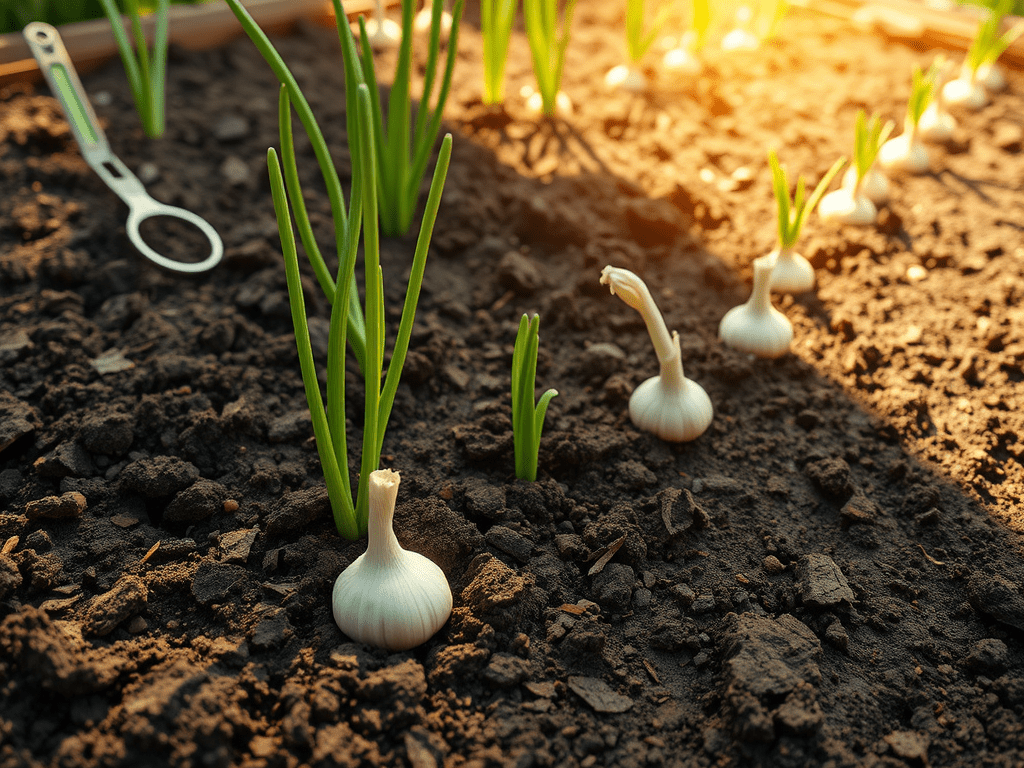
Preparing a Bed for Garlic & Onions
1. Choosing the Right Location
- Pick a sunny spot — garlic and onions do best with at least 4–6 hours of sun per day.
- Ensure the soil has good drainage. Alliums as like Onions and Garlic don’t like waterlogged soil — if needed, improve the drainage by mixing in coarse organic matter.
- Avoid areas with heavy perennial weeds (e.g. deeply rooted grasses) or places that have had disease problems in past crops.
- Practice crop rotation: don’t plant garlic or onions in the same patch every year. Ideally, leave a 2–3 year gap before replanting alliums in the same place to reduce disease risk.
2. Testing and Amending Soil
- Test the soil pH: the ideal range for garlic and onions is roughly between 6.0 and 7.0.
- If the pH is too low (acidic), add lime; if needed, adjust other nutrients based on soil test.
- Work in organic matter like well-rotted compost or manure. This improves soil structure (making heavy soils more friable) and helps with water retention.
- If your soil is very clayey or sandy, adding organic matter is especially important so that it becomes easier to work and holds nutrients better.
3. Bed Preparation (Before Planting)
- Loosen or till the soil well — create a loose bed to allow the bulbs to develop properly.
- Once loosened, water the bed deeply to encourage weed seeds to sprout.
- After ~1–2 weeks (when weeds germinate), work the soil again to remove weed seedlings and break up clods; this prevents poor germination and helps soil retain moisture better.
- Form raised beds if drainage is a concern — raised beds help excess water escape and avoid soggy soil conditions.
4. Fertilization & Nutrition
- Incorporate a balanced fertilizer (or organic alternative) while preparing the soil.
- For organic systems, nitrogen can be added later; avoid giving too much nitrogen when the bulbs are forming, because excess nitrogen can promote leaf growth at the cost of bulb size.
- If using manure, ensure it’s well-composted, not fresh, to reduce risk of disease and nitrogen burn.
5. Planting Garlic and Onions
- Garlic: Break bulbs into individual cloves, plant them with the pointed end up. Depth depends on variety and soil, but generally a couple of centimeters below surface is good.
- Onions: If planting from sets (small onions), plant shallowly so that just the tips are near the surface. Spacing matters — leave enough room for bulb growth.
- Leave adequate row spacing so that the plants don’t crowd each other as they grow.
6. Mulching & Watering
- Apply a mulch layer (straw, leaves, or well-rotted compost) after planting to:
- retain soil moisture
- suppress weeds
- protect cloves or sets from temperature fluctuations
- Water the bed regularly so that the soil stays evenly moist, but avoid waterlogging. Alliums prefer consistent moisture but do not like standing water.
7. Maintenance Through the Season
- Weed regularly, especially in the early phase, since alliums have shallow roots and can easily be outcompeted.
- Side-dress with a little nitrogen during active growth, but reduce nitrogen application when the bulbs start forming. Too much nitrogen later can hinder bulb development.
- Monitor for soil compaction; if the soil settles, gently loosen the top portion to aid root growth.
8. Crop Rotation & Long-Term Bed Management
- After harvesting garlic or onions, don’t plant alliums in the same bed for at least 2–3 years to reduce disease risk and nutrient depletion.
- In the intervening seasons, use the bed for leafy vegetables or other non-allium crops.
- You can grow a cover crop (green manure) in the off-season. This will improve soil structure and fertility. Green manures help rebuild soil for future use.
Key Points to Remember
- Drainage is critical — alliums do not tolerate soggy soil.
- Organic matter helps soil health, drainage, and nutrient retention.
- Maintain pH around neutral for best growth.
- Use balanced fertilization, but avoid excess nitrogen during bulb formation.
- Practice good crop rotation to minimize disease and maintain soil fertility.
 KrishiCenter
Leave a comment