
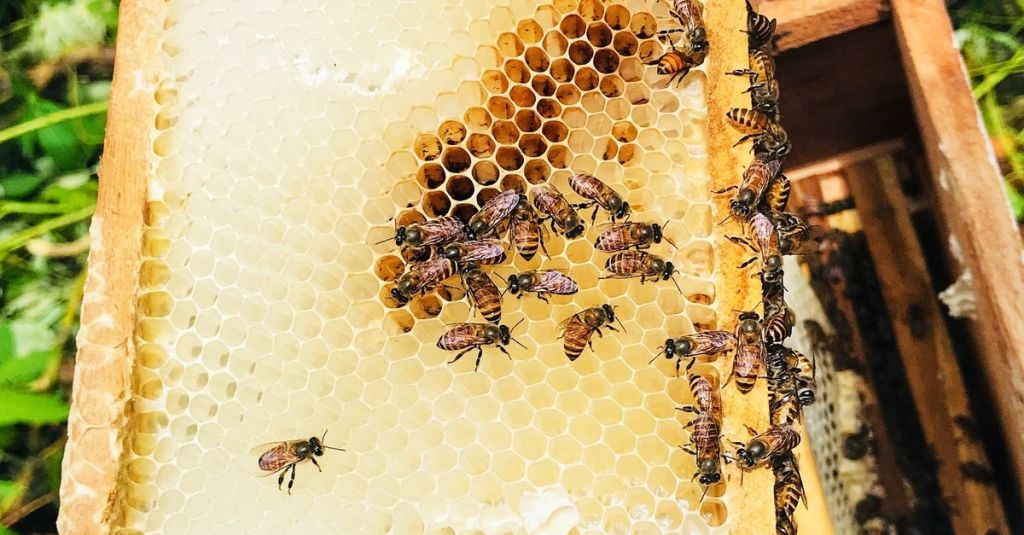
India is now the world’s second-largest honey exporter, and beekeeping needs almost no land or water. Here is what the Sweet Revolution has built, what a colony actually earns, and where the risk sits.
भारत में मधुमक्खी पालन: स्वीट रेवोल्यूशन, अर्थिकी और असली चुनौतियां
Beekeeping is the rare farm enterprise that adds income without taking land, water or much labour. A colony of honeybees lives in a box on a corner of your plot, forages across a two-to-three-kilometre radius, and pays you twice: once in honey, and again in the higher yields that pollination delivers to nearby crops. It fits neatly into an integrated farming system alongside crops and dairy, and it is one of the few agricultural activities a landless household or a women’s self-help group can take up on equal terms. What it is not is passive: a neglected colony swarms, weakens or dies, and a good beekeeper is made by handling bees through the seasons, not by buying boxes.
The Sweet Revolution / स्वीट रेवोल्यूशन
The government’s push for beekeeping is the National Beekeeping and Honey Mission (NBHM), launched in 2020 under the Atmanirbhar Bharat banner with an outlay of ₹500 crore for 2020-21 to 2022-23, and extended by another three years to 2025-26 with a remaining budget of about ₹370 crore. It is implemented by the National Bee Board, and runs through three mini missions: improving crop productivity through pollination, post-harvest management of honey and hive products, and research and technology generation.
The numbers show how fast the sector has moved. India produced about 1.42 lakh metric tonnes of honey in 2022-23 and around 1.4 lakh tonnes in 2024, with the 2025-26 second advance estimate putting production at roughly 1.52 lakh tonnes. Exports rose from about 60,000 tonnes in 2020-21 to around 1.07 lakh tonnes worth USD 177.55 million in 2023-24 — making India the second-largest exporter of natural honey in the world, up from ninth place in 2020. To protect quality and price, APEDA imposed a minimum export price of USD 2,000 per metric tonne for a period to the end of 2025. The mission has also built the plumbing of a modern industry: several world-class and dozens of mini honey testing labs, disease diagnostic labs, honey processing units, collection, branding and packaging units, cold storage, custom hiring centres, and Quality Nucleus Stock Development Centres for producing quality queen bees. A National Centre of Excellence in Beekeeping has been sanctioned at IIT Roorkee. The Madhukranti portal registers beekeepers and colonies for traceability of honey back to its source. The major honey-producing states are Uttar Pradesh (about 17%), West Bengal (16%), Punjab (14%), Bihar (12%) and Rajasthan (9%).
The bees, and how much they give / मधुमक्खियां और उनकी उपज
Three honeybee species matter in India. Apis mellifera, the European bee introduced in 1987, is the species of commercial beekeeping: it yields much more honey per colony (commonly 20–50 kg a year, with about 30 kg used in official costing) and suits migratory apiaries that follow the flowering season. Apis cerana indica, the native Indian bee, is hardier in hills and in areas of scattered flora but yields far less, roughly 6–8 kg a colony. The rock bee (Apis dorsata) and the little bee (Apis florea) are wild and are not kept in boxes. For anyone starting commercially, mellifera is the default — with the caveat that it is also more demanding to manage.
Starting an apiary / शुरुआत कैसे करें
Buy colonies in movable-frame boxes from a registered beekeeper, an agricultural university or a KVK — not from a stranger promising quick returns. Check the queen’s age, the brood pattern, and how many frames are covered with bees before you pay. Colony strength at the start of the flow decides the harvest: in a Haryana study, colonies started with 15 frames stored far more honey than those with 10 frames, and those with 5 frames stored the least. Start with a small apiary — about 10 colonies — for one season to learn handling, swarm control and seasonal feeding before you scale up, and multiply by dividing strong colonies rather than buying more every year. Before you commit, count the flowers within a two-to-three-kilometre radius and ask local beekeepers which months the bees go hungry; if the dearth gap runs longer than two months, you must budget for migration or sugar feeding. The major flows — mustard, eucalyptus, litchi, sunflower and forest flora — differ by district, so confirm your local calendar with the KVK or horticulture department.
What it costs and what it returns / लागत और आय
Beekeeping pays only when colonies are strong, moved to where the flow is, and the honey is sold at a fair price — and published income figures vary widely because they mix honey with by-products that most beekeepers cannot sell in volume. Read the ranges rather than any single number.
A KVIC model project for 50 mellifera colonies puts the capital requirement at roughly ₹3.07 lakh, with about ₹40,000 of consumables a year and a projected gross income of about ₹2.65 lakh from honey, wax and colony sales at 80% capacity. A TNAU costing for 50 colonies shows a first-year net income of about ₹14,300, rising in later years once the one-time equipment cost is behind you. An ICAR-IIVR costing for a 50-colony apiary shows annual expenditure of about ₹6.55 lakh against income of ₹8.78 lakh — a net of about ₹2.22 lakh, or roughly ₹4,450 a colony — though that figure leans heavily on pollen sales at a price few growers can actually realise. Field studies are more sober and more useful. A stationary beekeeping study under a crop+dairy+beekeeping system in Punjab and Haryana found an output-input ratio of 2.46 and 2.06 respectively, with an average yield of about 20.7 kg a box and honey prices near ₹140 a kilogram. In Himachal Pradesh, migratory apiaries yielded about 45 kg a colony a year against 15 kg for stationary ones, and profitability rose sharply with scale: the benefit-cost ratio was under 1 at 10 colonies, about 1.15 at 50, and around 1.41 at 100 colonies. In Bundelkhand, a 50-colony unit returned a benefit-cost ratio of 2.0–2.5.
The clear pattern: beekeeping is not profitable at a handful of colonies — it rewards scale and migration. Below about 50 colonies, the economics are thin; the gains come from moving hives to follow the honey flow and from managing enough colonies to spread the fixed costs of equipment, transport and labour.
Beyond honey: pollination and by-products / शहद से आगे
The least-appreciated return from bees is pollination. It is often said the value of pollination services is many times the value of the honey itself, and the evidence supports it: bee pollination has been reported to raise vegetable seed yields substantially — in the range of 22–100% in radish and 100–300% in cabbage. Vegetable growers need roughly 3–9 good colonies per hectare depending on the crop, which creates a rental market for pollination as well as a yield benefit for the beekeeper’s own fields. Alongside honey, bees produce wax, pollen, propolis, royal jelly and bee venom, but each needs its own equipment, skill and buyer — so treat honey as the main product and by-products as upside until you have buyers lined up.
Marketing, quality and risk / विपणन, गुणवत्ता और जोखिम
Adulteration is the sector’s biggest commercial problem: cheap, adulterated honey in the market depresses the price that honest producers can get, which is precisely why the testing labs and the Madhukranti traceability system exist, and why exporters now buy from beekeepers who can show source traceability and residue-free honey. For a small beekeeper, the practical routes are direct household and retail sales, selling through a beekeeper FPO (100 such FPOs have been allotted to TRIFED, NAFED and NDDB), or supplying a processor with a proper testing and grading relationship. Sell only sealed, ripe honey extracted hygienically, because unripe honey ferments.
The risks are real and should be budgeted for: colony loss from pests and disease, poisoning from pesticide sprays on nearby crops, dearth months, swarming, theft, and the cost and paperwork of moving hives across states. A beekeeper who plans for those — with strong colonies, a migration calendar, feeding reserves and a tested buyer — runs one of the more reliable small-farm enterprises available. The rest is patience and handling time.
Key takeaways
- Beekeeping adds income without land or irrigation and doubles as a pollination service to nearby crops.
- The National Beekeeping and Honey Mission (₹500 crore, 2020-21 to 2025-26, run by the National Bee Board) has driven India to second place among honey exporters, with traceability on the Madhukranti portal.
- Apis mellifera is the commercial bee (20–50 kg honey a colony a year); native Apis cerana indica yields 6–8 kg but is hardier in hills.
- Profitability needs scale and migration: benefit-cost ratios run well under 1 at 10 colonies and improve to about 1.15 at 50 and 1.41 at 100; field studies show output-input ratios of 2.0–2.5.
- Buy colonies from registered sources, start with ~10 to learn, check the local honey-flow calendar, and plan for pests, pesticide, dearth and a tested buyer.
A beginner’s step-by-step guide
Getting started is less about buying equipment and more about sequencing the decisions correctly. This walk-through covers the order most new beekeepers should follow.
- Site selection: Choose a spot with morning sun, afternoon shade, shelter from strong wind, a nearby water source, and at least 3–5 km of mixed flowering within foraging range. Keep hives away from heavy foot traffic and livestock movement.
- Equipment: Start with movable-frame hive boxes (standard Langstroth-type for Apis mellifera), a smoker, a hive tool, a bee veil and gloves, a queen excluder, and an extractor (can often be shared or rented locally at small scale).
- Buying colonies: Source only from a registered beekeeper, agricultural university or KVK. Inspect the queen’s age and laying pattern, brood pattern, and frame coverage before paying; avoid colonies with visible disease, excessive drone brood, or a failing queen.
- Routine inspection: Open colonies every 7–10 days in active season to check brood pattern, food stores, pest signs (mites, wax moth), and queen presence, keeping disturbance brief to avoid stressing the colony.
- Feeding: During dearth months or after hiving a new colony, feed sugar syrup (commonly a 1:1 ratio for stimulation, heavier syrup before winter) and pollen substitute if natural pollen is scarce.
- Swarm control: Watch for queen cells and overcrowding as the main swarm triggers. Give the colony more space in time, and consider splitting strong colonies into new ones rather than losing a swarm.
- Harvesting honey: Harvest only frames that are mostly capped (sealed), indicating the honey is ripe and low-moisture. Extract hygienically and avoid harvesting so heavily that the colony is left without enough stores to survive the next dearth.
- Hygiene: Keep equipment clean between colonies to avoid spreading disease, sterilise tools after handling a sick colony, and remove and replace old dark comb periodically.
- Record-keeping: Track per-colony inspection notes, feeding dates, harvest weights, and any treatments. Good records make it possible to spot a failing colony early and to plan scale-up with real numbers instead of guesses.
At-a-glance economics
These figures are drawn from the Himachal Pradesh profitability study cited above. They are indicative study ranges from a specific context, not guarantees of what any individual apiary will earn.
| Number of colonies | Benefit-cost ratio (study figure) | What it suggests |
|---|---|---|
| 10 colonies | Under 1 | Likely unprofitable at this small scale in the study context |
| 50 colonies | About 1.15 | Modestly profitable; fixed costs start to spread out |
| 100 colonies | Around 1.41 | More clearly profitable; scale and migration pay off |
Honey yield by apiary model
A simple text-based comparison of honey yield per colony per year, based on a Himachal Pradesh study example. Actual yields vary by region, season and management.
- Stationary apiaries: ████████ ~15 kg/colony/year
- Migratory apiaries: ████████████████████████ ~45 kg/colony/year
(Bar lengths are illustrative, not to precise scale.)
Seasonal management calendar (India)
Flowering calendars vary significantly by district and state — always confirm timing with your local KVK or horticulture department before planning around this table.
| Season | Broad tasks |
|---|---|
| Winter | Reduce hive entrances, ensure adequate food stores, minimise inspections in cold spells, check for and treat pests |
| Spring / major flowering | Expand hive space ahead of the flow, monitor for swarming signs, consider splitting strong colonies, plan migration if following a flow |
| Summer / dearth | Provide shade and water, begin supplementary feeding, watch for colony stress and robbing, reduce unnecessary disturbance |
| Monsoon | Ensure hives are protected from excess moisture and flooding, watch for fungal issues in stored comb, maintain ventilation |
Do this / avoid this checklist
Pesticide safety
- Do this: Coordinate with neighbouring farmers on spray timing and move or shield hives when nearby crops are sprayed.
- Avoid this: Leaving hives exposed near fields being sprayed with no warning or protection.
Buying colonies
- Do this: Buy from a registered beekeeper, agricultural university or KVK, and inspect the queen and brood pattern first.
- Avoid this: Buying from an unverified seller promising unusually quick or high returns.
Honey maturity
- Do this: Harvest only capped, ripe frames and extract hygienically.
- Avoid this: Harvesting unripe honey early, which ferments and loses market value.
Market planning
- Do this: Line up a buyer or FPO relationship, and confirm testing/grading requirements before scaling up.
- Avoid this: Scaling colony numbers before you have a reliable route to sell the honey.
A note on variability
Costs, yields, prices and subsidy eligibility under schemes like the National Beekeeping and Honey Mission vary by state and by year. Readers should verify current scheme details, eligibility and local figures with their KVK, State Horticulture Department, or the National Bee Board before making investment decisions.
Sources
Press Information Bureau factsheets and releases on the National Beekeeping and Honey Mission and the National Bee Board (2025); National Bee Board / Madhukranti portal; ICAR-Indian Institute of Vegetable Research (IIVR) beekeeping and pollination costing; ICAR success story on apiculture in Hamirpur, Bundelkhand; KVIC model project report on a beekeeping apiary unit; TNAU Agritech economics of beekeeping; Punjab Agricultural University / Journal of Entomology economic analysis of stationary beekeeping in Punjab and Haryana; Himachal Pradesh commercial beekeeping profitability study (2026); APEDA–Crisil honey dashboard (2025).


Leave a Reply