
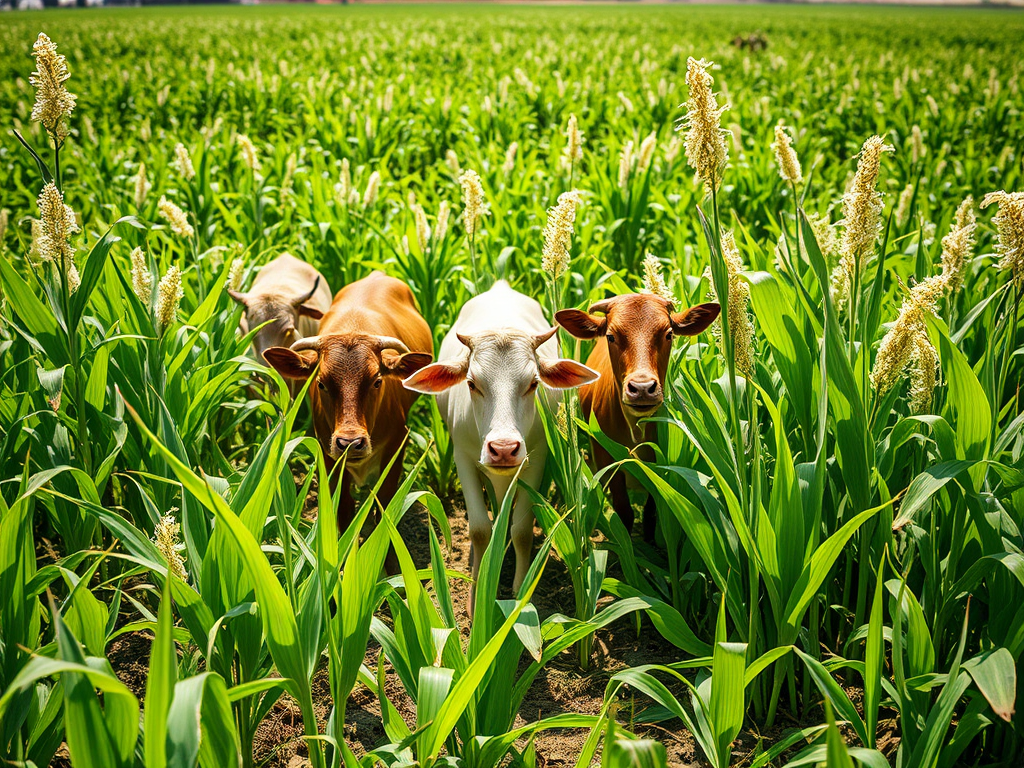
What are Fodder Crops?
Fodder or चारा, meaning food for livestock, or पशुओं का चारा (pashuon ka chara) (animal fodder), while other terms include पशु आहार (pashu aahar) (animal feed) or भूसा (bhusa) (straw/roughage). It refers to any food given to domesticated animals like cattle, buffaloes, sheep, goats, and other livestock, such as hay, grains, or silage. They are essential for improving milk production, animal health, and farm profitability, especially in mixed farming systems.
With India having the world’s largest livestock population, fodder crops are crucial for sustainable dairy and animal husbandry.
Types of Fodder Crops
1. Green Fodder Crops
- Provide fresh and nutritious feed
- Examples:
- Berseem
- Maize (fodder)
- Sorghum (Jowar)
- Napier grass
2. Dry Fodder Crops
- Used mainly during lean periods
- Examples:
- Wheat straw
- Paddy straw
- Maize stover
3. Leguminous Fodder Crops
- Rich in protein
- Improve soil fertility
- Examples:
- Lucerne (Alfalfa)
- Cowpea
- Stylo
Importance of Fodder Crops
Improves Milk and Meat Production
- Balanced nutrition leads to higher milk yield
- Improves animal weight and reproduction
Reduces Feed Cost
- Home-grown fodder reduces dependency on commercial feed
Supports Integrated Farming
- Ideal for crop–livestock integrated systems
- Utilizes crop residues efficiently
Enhances Soil Fertility
- Leguminous fodder fixes atmospheric nitrogen
Fodder Scarcity in India – A Major Issue
- Limited land allocation for fodder
- Seasonal availability
- Low awareness among farmers
Government Initiatives
- National Livestock Mission
- Rashtriya Gokul Mission
- Fodder Development Programs under State Plans
- Promotion of silage and fodder banks
Conclusion
Fodder crops are the foundation of profitable livestock farming. Promoting scientific fodder cultivation can significantly increase farmer income, ensure feed security, and strengthen India’s dairy sector.
 KrishiCenter
Leave a comment