
Plant Nutrition Management – Farming Guide
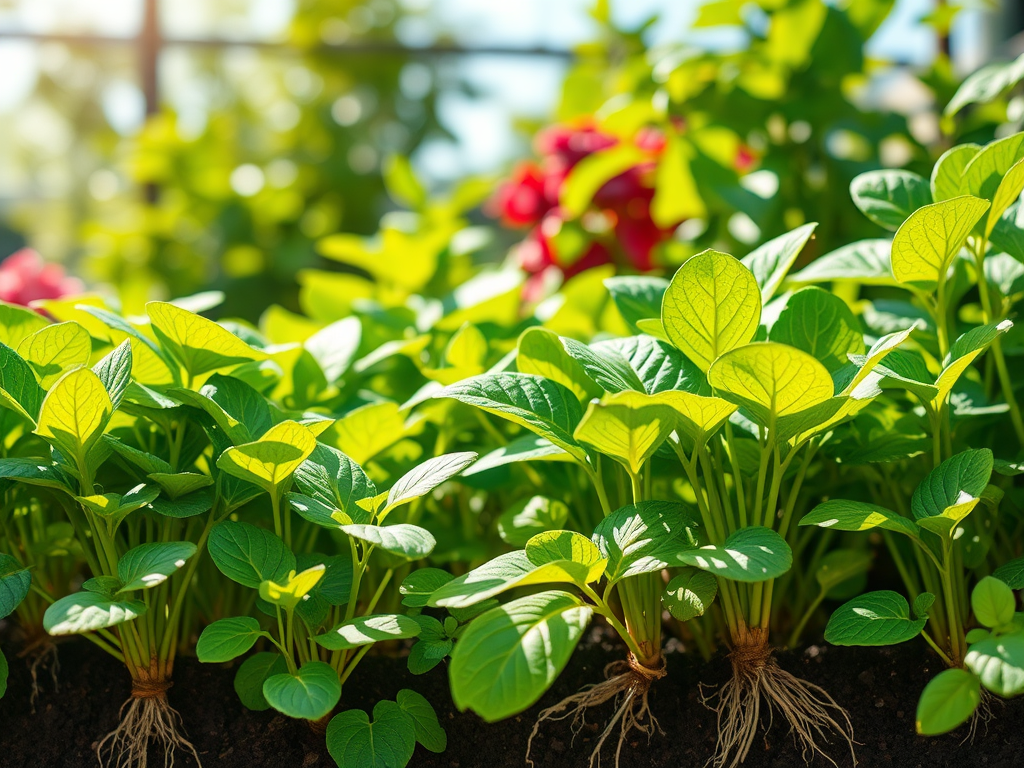
Plants need a series of vital nutrients for growth during their life cycle. These nutrients support plants during different phases from photosynthesis and energy transfer to root development, flowering, and fighting disease.
They are broadly categorized into three groups:
Primary Macronutrients
Secondary Macronutrients
Micronutrients
To grow the plants and crops healthy, these nutrients are needed to be supplied with proper management and care. We will discuss this in detail.
What are Primary Macronutrients? (N, P, K)
These are required in the large quantities as it is the basic food for plants and deficiencies are visible quickly.
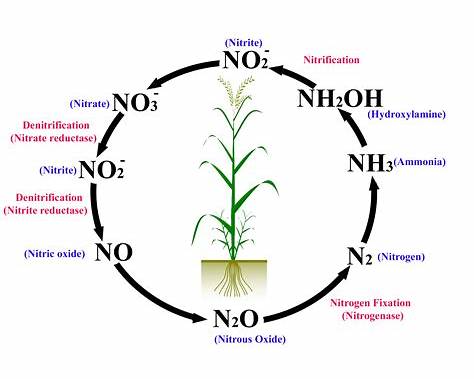
Nitrogen (N) — For Growth and Green Color
Role of Nitrogen:
- Essential part of chlorophyll → enables photosynthesis
- Builds amino acids → protein synthesis
- Drives leaf and shoot growth
- Gives plants their green color
Deficiency of Nitrogen symptoms:
- Yellowing of older leaves (chlorosis)
- Slow growth
- Pale, weak plants
Sources of Nitrogen:
Apply Urea, ammonium nitrate, compost, manure, nitrogen-fixing bacteria.
Phosphorus (P) — For Healthy Roots and Energy
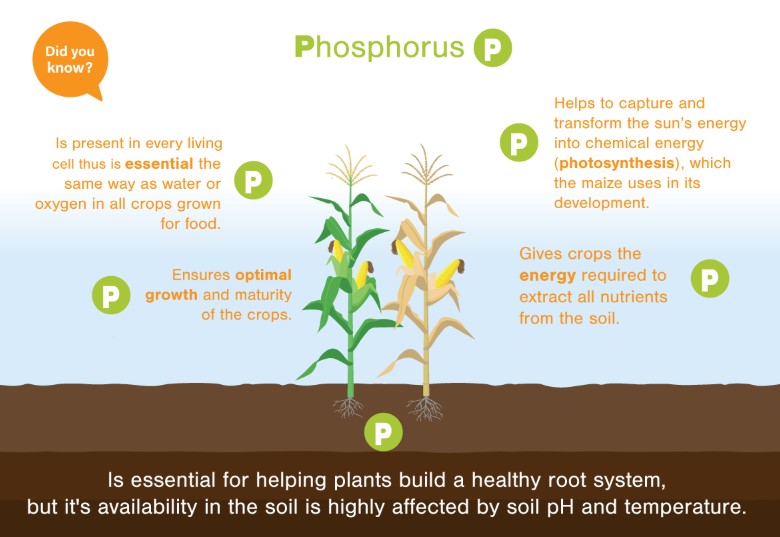
Role of Phosphorus :
- Key component of ATP → energy transfer
- Essential for root development
- Supports flowering and fruiting
- Aids early plant establishment
Deficiency of Phosphorus Symptoms:
- Dark green or purplish leaves
- Poor root growth
- Slow maturity
Sources of Phosphorus:
Bone meal, rock phosphate, superphosphate.
Potassium (K) — For Immunity and Stress Tolerance
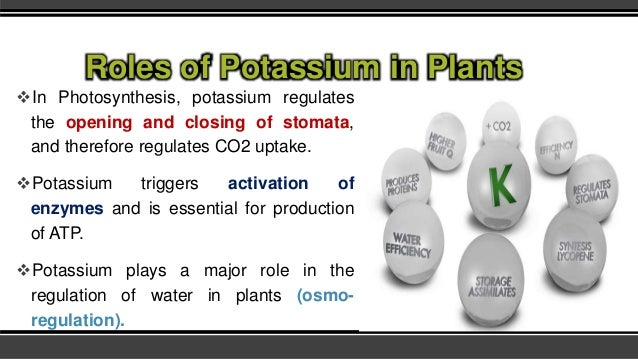
Role of Potassium:
- Regulates water movement in plant tissues
- Improves disease and drought resistance
- Required for enzyme activation
- Increases fruit size, quality, and shelf life
Deficiency of Potassium Symptoms:
- Brown leaf edges
- Weak stems
- Poor flowering and fruiting
Sources of Potassium:
Potash, wood ash, potassium sulfate.
| Nutrient | Function | Deficiency Symptoms |
|---|---|---|
| Nitrogen (N) | Leaf growth, chlorophyll formation | Yellowing of old leaves |
| Phosphorus (P) | Root development, energy transfer (ATP) | Purpling of leaves, slow growth |
| Potassium (K) | Disease resistance, water regulation | Brown leaf edges, weak stems |
What are Secondary Macronutrients? (Ca, Mg, S)
Plants need these in moderate amounts.
Calcium (Ca) — For Cell Walls and Root Tips
Role of Calcium:
- Builds strong cell walls
- Essential for root tip and shoot tip growth
- Aids nutrient transport inside plants
- Prevents fruit disorders (e.g., blossom-end rot in tomatoes)
Deficiency of Calcium Symptoms:
- Deformed young leaves
- Blossom-end rot
- Poor root growth
Sources of Calcium:
Gypsum, lime, calcium nitrate.
Magnesium (Mg) — For Photosynthesis Core
Role of Magnesium:
- Central atom in chlorophyll molecule → required for photosynthesis
- Helps enzyme activation
- Supports formation of carbohydrates
Deficiency of Magnesium Symptoms:
- Yellowing between veins (interveinal chlorosis) on older leaves
- Leaves curl upward
Sources of Magnesium:
Epsom salt (MgSO₄), dolomitic lime.
Sulfur (S) — For Proteins and Flavor
Role of Sulphur:
- Builds amino acids and proteins
- Essential for chlorophyll formation
- Creates flavor and aroma in crops (onions, garlic, mustard)
Deficiency of Sulphur Symptoms:
- Yellowing of young leaves
- Thin, spindly plants
Sources of Sulphur:
Gypsum, elemental sulfur, organic matter.
| Nutrient | Function | Deficiency Symptoms |
|---|---|---|
| Calcium (Ca) | Cell wall strength, root tips growth | Deformed young leaves |
| Magnesium (Mg) | Central atom of chlorophyll | Yellowing between veins |
| Sulfur (S) | Proteins, flavors, chlorophyll | Yellowing of young leaves |
What are Micronutrients?
Even though they’re needed in small quantities, even the deficiency of micro nutrients can also severely affect plant growth.
Iron (Fe) — Chlorophyll & Enzymes
- Vital for chlorophyll synthesis
- Aids energy transfer and enzyme formation
Deficiency: Yellowing of young leaves with green veins (iron chlorosis)
Manganese (Mn) — Photosynthesis & Nitrogen Use
- Helps in splitting water molecules during photosynthesis
- Aids nitrogen assimilation
Deficiency: Interveinal yellowing and small necrotic spots
Zinc (Zn) — Hormones & Growth
- Essential for auxin hormone production
- Helps enzyme systems
Deficiency: Short internodes rosetting, small leaves
Copper (Cu) — Reproduction & Lignin
- Needed for pollen viability
- Strengthens cell walls
Deficiency: Wilting, die back of shoots
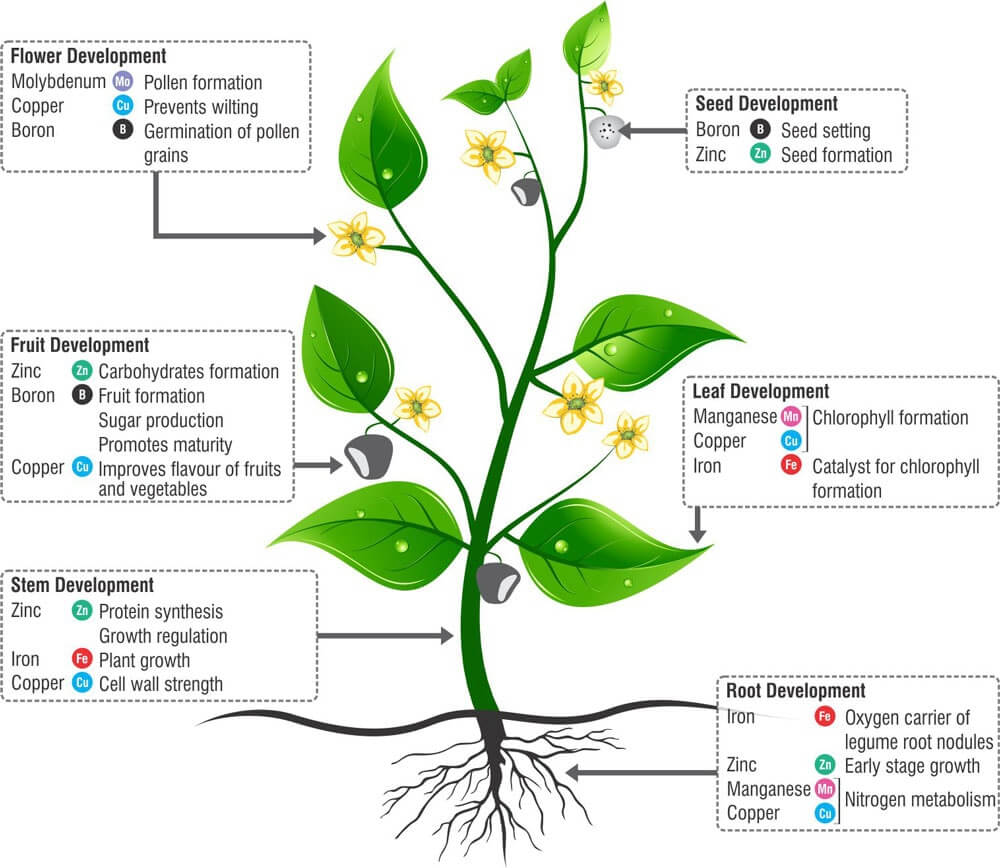
Boron (B) — Flowers, Fruits, Cell Walls
- Essential for flowering, fruit development, and seed formation
- Affects sugar transport
Deficiency: Hollow stems, brittle leaves, poor fruit set
Molybdenum (Mo) — Nitrogen Fixation
- Helps convert nitrate → ammonium inside plants
- Critical for legumes and nitrogen metabolism
Deficiency: Yellowing, leaf margin burn, whiptail in cauliflower
Chlorine (Cl) — Osmosis & Disease Resistance
- Supports water regulation (osmosis)
- Improves disease resistance
Deficiency: Rare; causes wilting and leaf bronzing.
| Nutrient | Function | Deficiency Symptoms |
|---|---|---|
| Iron (Fe) | Chlorophyll synthesis | Yellowing of young leaves |
| Manganese (Mn) | Photosynthesis enzymes | Spotting, interveinal chlorosis |
| Zinc (Zn) | Hormone regulation (auxins) | Stunted leaves, rosetting |
| Copper (Cu) | Reproduction, lignin | Dieback of shoots |
| Boron (B) | Cell walls, fruiting | Poor fruit set, brittle leaves |
| Molybdenum (Mo) | Nitrogen metabolism | “Whiptail” in cauliflower |
| Chlorine (Cl) | Osmosis, disease resistance | Leaf bronzing (rare) |
What are Non-Mineral Nutrients for Plants?
These come from air and water.
Carbon (C)
- From Carbon-dioxide CO₂
- Backbone of all organic molecules
Hydrogen (H)
- From water
- Helps energy transfer and respiration
Oxygen (O)
- From air and soil
- Needed for root respiration
| Nutrient | Function |
|---|---|
| Carbon (C) | Forms sugars, starch, organic molecules |
| Hydrogen (H) | Energy transfer, structure |
| Oxygen (O) | Respiration, root function |
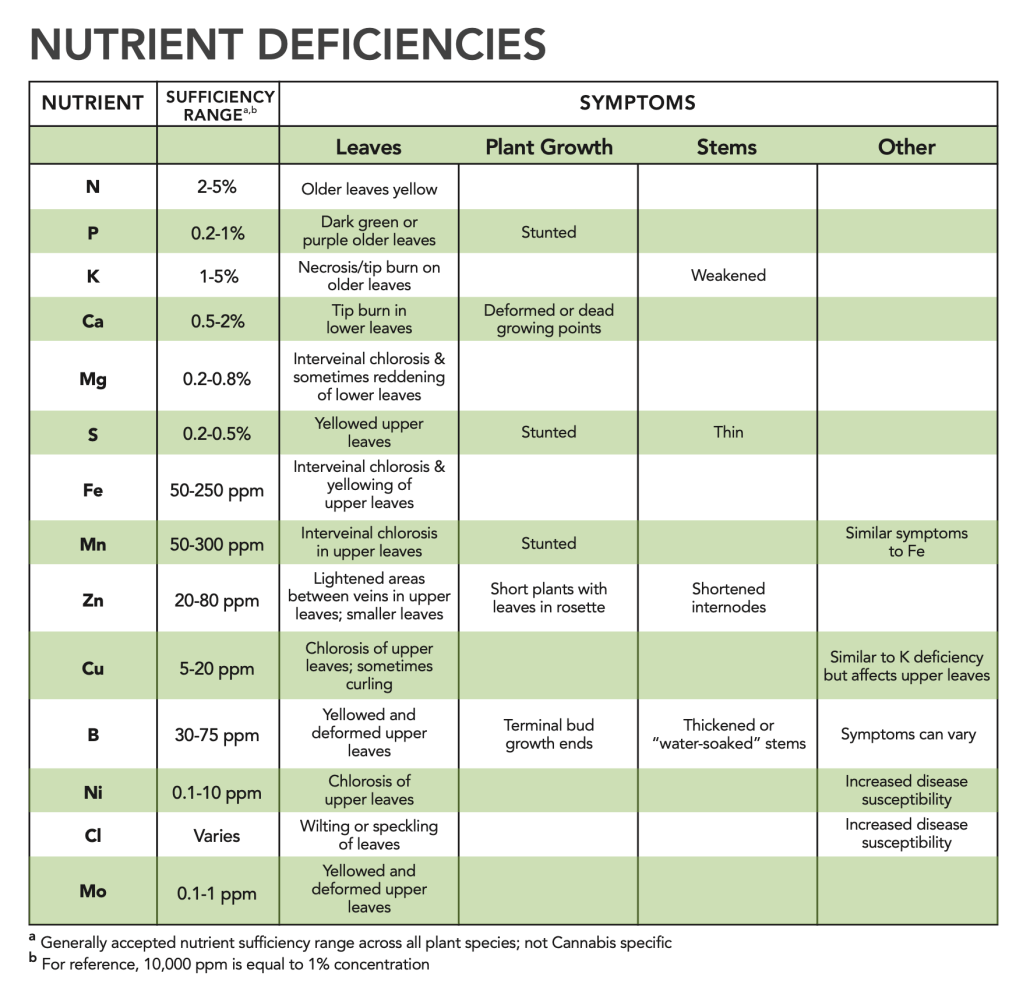
Plant Nutrient Deficiency Diagnosis Guide
Deficiency of any particular nutrient can damage the plant growth or may cause death of plant in severe case. It is important to find the symptoms and cure it with necessary plant food or fertilizer.
Nitrogen (N) Deficiency
PLant Nutrients primary nutrients Nitrogen deficiency – krishicenter
Visual Symptoms
- Pale green → yellow leaves
- Starts on older/lower leaves first
- Thin stems, stunted growth
Fix
- Apply urea, blood meal, compost, or fish emulsion.
Phosphorus (P) Deficiency
Phosphorus Deficiency – krishicenter
Visual Symptoms
- Leaves turn dark green then purple
- Stunted roots and slow growth
- Affects older leaves first
Fix
- Add rock phosphate, bone meal, or superphosphate.
Potassium (K) Deficiency
Potassium Deficiency symptoms – krishicenter
Visual Symptoms
- Brown, burnt edges of leaves
- Weak stems
- Poor flowering & small fruits
Fix
- Use muriate of potash, wood ash, or potassium sulfate.
Calcium (Ca) Deficiency
Calcium Deficiency symptoms -2 krishicenter
Visual Symptoms
- New leaves: distorted, crinkled
- Poor root growth
- Blossom-end rot in tomatoes & peppers
Fix
- Add lime, gypsum, calcium nitrate, or ensure even watering.
Magnesium (Mg) Deficiency
Visual Symptoms
- Yellowing between veins (interveinal chlorosis)
- Older leaves affected first
- Leaf edges may curl upward
Fix
- Use Epsom salt (MgSO₄) or dolomite lime.
Sulfur (S) Deficiency
Sulphur Deficiency symptoms 3- krishicenter
Visual Symptoms
- Uniform yellowing of young leaves
- Looks similar to nitrogen deficiency but starts at the top
- Delayed maturity
Fix
- Apply gypsum, elemental sulfur, or organic matter.
Micronutrient Deficiencies
Iron (Fe) Deficiency
Visual Symptoms
- Young leaves turn yellow but veins stay dark green
- Most common in alkaline soils
Fix
- Use iron chelate (EDDHA or EDTA), acidify soil slightly.
Manganese (Mn) Deficiency
Visual Symptoms
- Interveinal chlorosis with small brown/black spots
- Occurs on young leaves
Fix
- Apply manganese sulfate or reduce soil pH.
Zinc (Zn) Deficiency
Visual Symptoms
- Small leaves
- Shortened internodes → “rosette” appearance
- Leaf tips may be deformed
Fix
- Use zinc sulfate or foliar Zn spray.
Copper (Cu) Deficiency
Visual Symptoms
- Terminal buds die → shoot dieback
- Pale young leaves
- Wilting
Fix
- Apply copper sulfate or Cu-based foliar sprays.
Boron (B) Deficiency
Visual Symptoms
- Hollow stems, cracked roots
- Death of growing tips
- Poor fruit/flower set
Fix
- Use borax sparingly (very low doses).
Molybdenum (Mo) Deficiency
Visual Symptoms
- Whiptail in cauliflower
- Yellowed or scorched leaf edges
- Common in acidic soils
Fix
- Apply ammonium molybdate or raise soil pH (lime).
Chlorine (Cl) Deficiency
Visual Symptoms
- Leaf bronzing
- Wilting and reduced root growth
- Very rare in most soils
Fix
- Usually corrected by normal fertilizers containing chloride.
Complete Fertilizer Schedule for Major Crop Groups
Below are schedules for broad group of farming crops:
- Vegetable Crops
- Fruit Crops
- Field Crops (Rice, Wheat, Maize, Sugarcane)
- General Organic Supplement Plan
Vegetable Crops Fertilizer Schedule
(Tomato, Chili, Cabbage, Spinach, Onion, Potato, Garlic) Vegetable are more prone to disease and pests thus need proper guided fertilization and herbicide or pesticide to ensure healthy plants
| Stage | Time | Fertilizer | Dose |
|---|---|---|---|
| Basal (Before Planting) | Soil prep | FYM/Compost | 10–20 tons/acre |
| NPK 10:26:26 or DAP + MOP | 50–80 kg/acre | ||
| Early Growth | 15–20 days | Urea (N) | 20 kg/acre |
| Vegetative Stage | 30–35 days | NPK 19:19:19 (water-soluble) | 2–3 kg/acre/foliar |
| Flowering | 45 days | NPK 00:52:34 | 2 kg/acre |
| Fruit Set & Bulking | 60+ days | Potassium sulfate or SOP | 20–25 kg/acre |
| Micronutrients | Monthly | Mix (Zn, B, Fe) | Foliar spray: 1–2 g/L |
Fruit Crops Fertilizer Schedule
(Mango, Banana, Apple, Citrus, Grapes)
General Annual Dose (per plant)
(Fruit trees vary by age — here’s a universal formula.)
| Tree Age | FYM | N | P | K |
|---|---|---|---|---|
| 1–2 years | 10–20 kg | 200 g | 150 g | 150 g |
| 3–5 years | 20–40 kg | 500 g | 300 g | 300 g |
| 6+ years | 50 kg+ | 1–1.5 kg | 500–700 g | 700–900 g |
Application Timing
| Season | Fertilizer |
|---|---|
| Spring (Before flowering) | 50% N + entire P + 50% K |
| Fruit Development | Remaining N & K |
| Post-Harvest | Organic matter + micronutrients |
Micronutrient Sprays All fruit crops
- Zinc sulfate: 0.5%
- Boron (Borax): 0.2%
- Calcium nitrate: 0.5% (for fruit quality)
Spray once every 45 days during active growth.
Field Crop Fertilizer Schedules
Various Rabi and Kharif Crops need fertilizer in adequate quantity to better yield.
Wheat Fertilizer Schedule
| Stage | Fertilizer | Dose |
|---|---|---|
| Basal | DAP 18:46:0 | 80 kg/acre |
| MOP | 15 kg/acre | |
| Crown root initiation (CRI) | Urea | 20–25 kg/acre |
| Tillering | Urea | 15–20 kg/acre |
Rice (Paddy) Fertilizer Schedule
| Stage | Fertilizer | Dose |
|---|---|---|
| Basal | DAP | 40–45 kg/acre |
| Tillering | Urea | 15–20 kg/acre |
| Panicle initiation | Urea + MOP | 10–15 kg N + 10–15 kg K |
Zinc sulfate: 8–10 kg/acre once per season.
Maize Fertilizer Schedule
| Stage | Fertilizer | Dose |
|---|---|---|
| Basal | DAP | 50 kg/acre |
| Knee height | Urea | 20–25 kg/acre |
| Pre-tasseling | Urea + MOP | 20 kg N + 10–15 kg K |
Sugarcane Fertilizer Schedule
| Stage | Fertilizer | Dose |
|---|---|---|
| Basal | FYM | 25 tons/acre |
| Early growth | NPK 18:18:18 | 50 kg/acre |
| Tillering | Urea | 40–50 kg/acre |
| Grand growth | MOP | 30–40 kg/acre |
Micronutrient mix: 3 sprays per season.
Organic Fertilization Supplement For Any Crop
| Fertilizer | Dose | Frequency |
|---|---|---|
| Compost / Vermicompost | 1–2 tons/acre | Every 3 months |
| Seaweed Extract | 2–3 ml/L | Every 15 days (foliar) |
| Humic acid | 1–2 kg/acre | Monthly |
| Bone meal | 50–80 kg/acre | Before planting |
| Neem cake | 100–150 kg/acre | Soil pest control |
🌿 Conclusion
Understanding plant nutrient needs is essential for maintaining healthy, productive crops. Each nutrient—whether a macronutrient like nitrogen or a micronutrient like zinc—plays a unique role in plant growth, metabolism, and overall resilience. Deficiencies often reveal themselves through visible symptoms such as yellowing, purpling, spotting, stunted growth, or poor fruit formation. By learning to recognize these signs early, growers can quickly correct imbalances and prevent long-term yield loss.
A balanced nutrient supply, supported by proper soil management, organic matter, and timely fertilization, ensures:
Vigorous growth
Healthy flowering
Better fruit size and quality
Higher crop yields
Improved plant immunity and stress tolerance
Regular soil testing, careful fertilization, and monitoring for early symptoms are key practices that help maintain nutrient harmony. With proper knowledge and timely intervention, you can create optimal growing conditions for virtually any crop.

 KrishiCenter
Leave a comment