
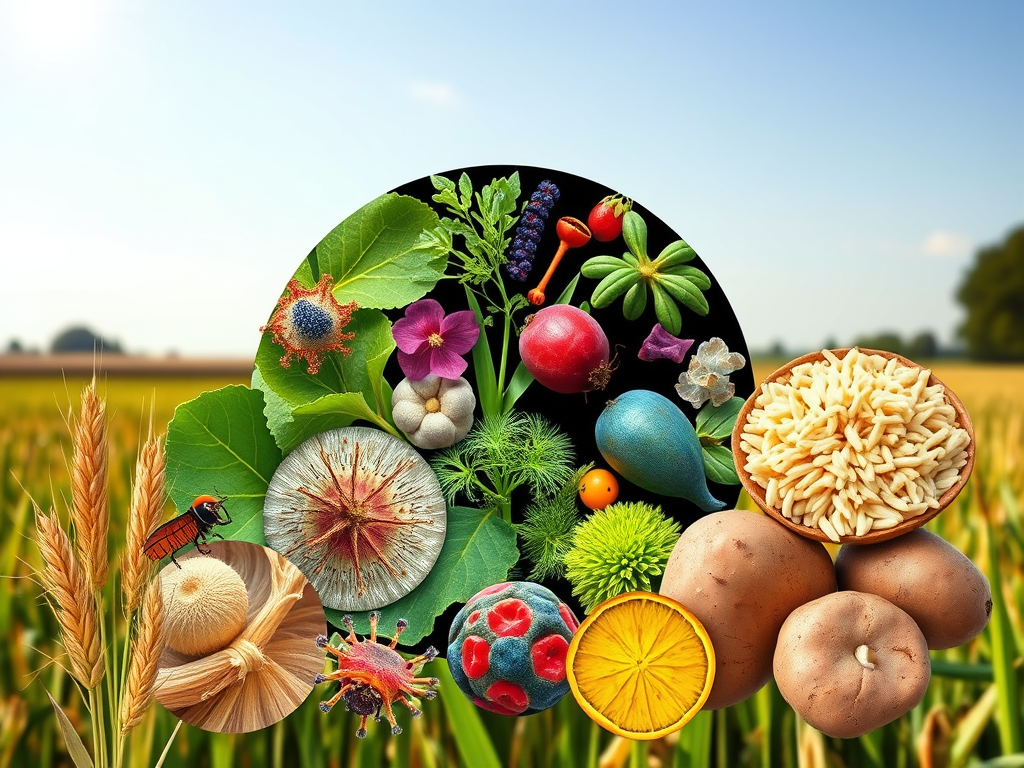
What are Crop Diseases?
Crop diseases are caused mainly by pathogens as fungi, bacteria, viruses, nematodes, and sometimes environmental or nutritional disorders. They reduce yield, damage quality, and can cause huge economic losses if not prevented.
Types of Crop Diseases
Fungal Diseases
- Most common (≈70–80% of plant diseases)
- Thrive in humid, wet conditions
- Spread through spores (air, water, soil)
Examples:
Wheat rust, Rice blast, Late blight of potato
Bacterial Diseases
- Spread rapidly under warm, humid conditions
- Enter plants through natural openings or wounds
Examples:
Citrus canker, Bacterial blight of rice
Viral Diseases
- Smallest pathogens
- Spread by insects (vectors), especially aphids, whiteflies, leafhoppers
Examples:
Mosaic virus, Leaf curl virus
Nematode Diseases
- Caused by microscopic worms
- Attack roots, reducing nutrient uptake
Examples:
Root-knot nematode
Physiological / Nutritional Disorders
- Caused by deficiency/excess of nutrients or environmental factors
- Not infectious
Examples:
Blossom end rot, Chlorosis, Tip burn
Detailed Information on Major Crop Diseases
Below is an easy-to-study, structured breakdown of various crop diseases.
Fungal Diseases
| Disease | Host Crop | Pathogen | Symptoms | Spread | Management |
|---|---|---|---|---|---|
| Late Blight | Potato, Tomato | Phytophthora infestans | Water-soaked spots on leaves, blackened stems, rotting tubers | Spores through wind & rain, moist cool weather | Fungicides (Mancozeb, Metalaxyl), resistant varieties, crop rotation |
| Rice Blast | Rice | Magnaporthe oryzae | Diamond-shaped lesions, neck rot, shriveled grains | Spores in air & rain splash | Resistant varieties, seed treatment, proper spacing, Tricyclazole |
| Wheat Rust (Brown/Yellow) | Wheat | Puccinia spp. | Rusty pustules on leaves & stems | Spores via wind | Resistant varieties (HD2967 etc.), timely fungicide spray |
| Powdery Mildew | Grapes, Vegetables | Erysiphe, Oidium | White powdery coating on leaves | Airborne spores | Sulfur dusting, fungicides, pruning |
| Downy Mildew | Grapes, Cucurbits | Peronospora, Plasmopara | Yellow spots, downy growth under leaf | Cool humid environment | Copper fungicides, resistant varieties |
Bacterial Diseases
| Disease | Host | Pathogen | Symptoms | Spread | Management |
|---|---|---|---|---|---|
| Citrus Canker | Citrus | Xanthomonas citri | Raised lesions with yellow halo | Wind-driven rain, pruning tools | Copper sprays, removal of infected shoots, resistant varieties |
| Bacterial Blight | Rice | Xanthomonas oryzae | Yellowing leaves, wilt, “kresek” stage | Rain, irrigation water | Resistant varieties, seed treatment, field sanitation |
| Black Rot (Vegetables) | Cabbage family | Xanthomonas campestris | V-shaped lesions, black veins | Splashing water | Hot-water seed treatment, crop rotation |
Viral Diseases
| Disease | Host | Virus | Symptoms | Spread | Management |
|---|---|---|---|---|---|
| Mosaic Virus | Many crops | TMV, CMV, etc. | Mosaic pattern on leaves, stunting | Vectors: aphids, whiteflies | Vector control, resistant varieties, rouging |
| Yellow Leaf Curl Virus | Tomato | TYLCV | Leaf curling, yellowing, stunted plants | Whiteflies | Insect-proof nets, neem oil, resistant hybrids |
| Banana Bunchy Top | Banana | BBTV | Bunching of leaves, narrow leaves | Aphids | Use virus-free suckers, control aphids |
Nematode Diseases
| Disease | Host | Pathogen | Symptoms | Spread | Management |
|---|---|---|---|---|---|
| Root-Knot Nematode | Vegetables, Fruits | Meloidogyne spp. | Root galls, stunted growth | Soil, infected seedlings | Soil solarization, neem cake, bio-nematicides, crop rotation |
Physiological Disorders
| Disorder | Cause | Symptoms | Management |
|---|---|---|---|
| Blossom End Rot (Tomato) | Calcium deficiency | Black sunken spots at fruit bottom | Foliar Ca-spray, consistent irrigation |
| Tip Burn (Cabbage/Lettuce) | Ca deficiency | Browning edges of leaves | Mulching, balanced nutrients |
| Chlorosis | Iron deficiency | Yellowing leaves | FeSO₄ spray, soil pH correction |
How Crop Diseases Spread
Through Air
- Spores (fungi)
- Viruses via insect vectors
Through Water
- Splashing rain
- Irrigation contamination
Soil-Borne
- Fungi, bacteria, nematodes
Infected Planting Material
- Seeds, tubers, cuttings
Human Activities
- Tools, machinery, movement across fields
General Disease Management Strategies
Farmers can use one of the common treatment to prevent and control the crop diseases.
Cultural Methods
- Crop rotation
- Resistant varieties
- Clean seeds
- Proper spacing
- Field sanitation
Mechanical Methods
- Rouging (removal of diseased plants)
- Pruning infected parts
Biological Control
- Trichoderma
- Bacillus species
- Neem-based products
Chemical Control
- Fungicides (Mancozeb, Carbendazim)
- Bactericides (Copper compounds)
- Insecticides (to control virus vectors)
Modern Approaches
- Disease forecasting models
- Drone spraying
- Biopesticides
- Integrated Pest Management (IPM)
Conclusion
Crop diseases pose a major challenge to global agriculture, affecting productivity, food security, and farmer livelihoods. It is essential to understand the different types of diseases, including fungal, bacterial, viral, nematode, and physiological. Knowing their symptoms, spread mechanisms, and management strategies is vital for effective crop protection. Early diagnosis is crucial. The adoption of resistant varieties is important. Integrated pest and disease management (IPM) should be practiced. Using modern tools as biological control agents and precision farming technologies is beneficial. These strategies can significantly reduce losses. By combining scientific knowledge with practical field-based solutions, farmers can get healthier crops. This approach also improves yields. Moreover, it ensures sustainable agricultural production for the future.
 KrishiCenter
Leave a comment