
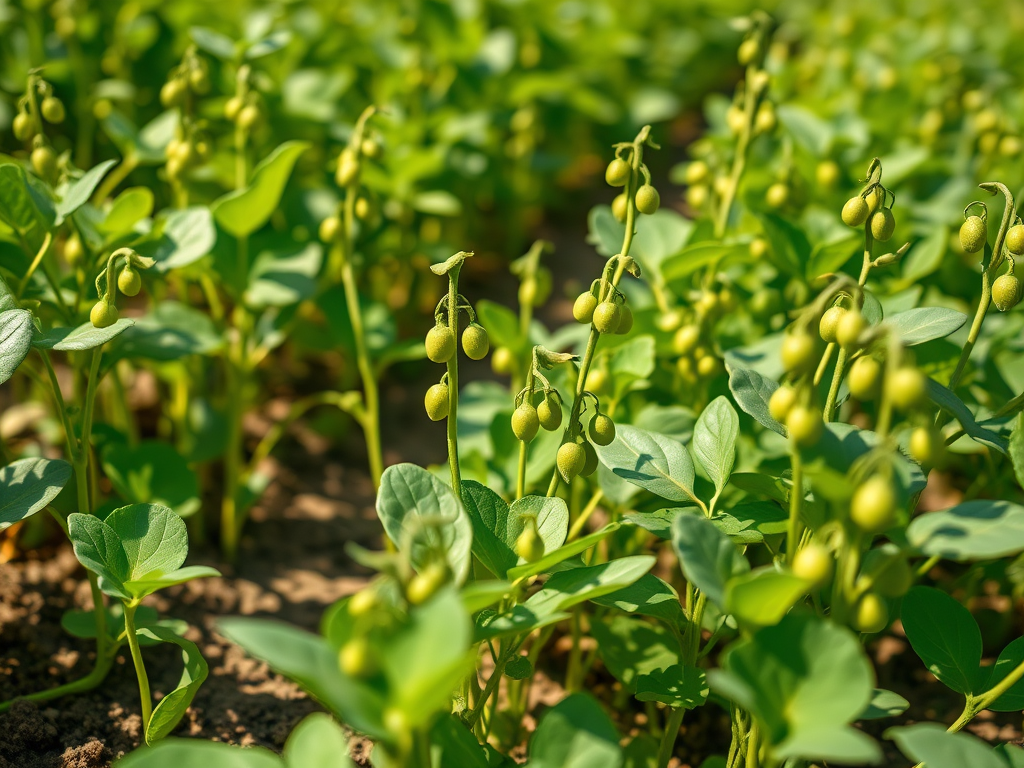
🌱 Pea Sowing and Cultivation in India
1. Introduction
Pea (Pisum sativum L.) is one of the most important cool-season leguminous vegetables grown across India. It belongs to the Fabaceae family and is cultivated both as a vegetable (green pods) and pulse (dry grains). Peas are a rich source of protein (20–25%), carbohydrates, vitamins A, B, and C, and minerals.
India is one of the leading producers of peas, with major cultivation concentrated in the northern plains and hilly regions — including Uttar Pradesh, Madhya Pradesh, Punjab, Haryana, Himachal Pradesh, Bihar, and West Bengal.
2. Climatic Requirements
- Peas thrive in cool and frost-free weather.
- The optimum temperature for growth ranges from 10°C to 25°C.
- High temperatures (>30°C) during flowering and pod formation can cause flower drop and poor pod setting.
- Peas are generally grown as a rabi crop in north India and as a kharif crop in higher altitudes.
3. Soil Requirements
- Peas prefer well-drained loamy soils rich in organic matter.
- Ideal pH range: 6.0–7.5.
- Heavy clay soils with poor drainage can lead to root rot and poor germination.
- Avoid saline and alkaline soils.
Soil Preparation:
- 2–3 deep ploughings followed by harrowing for a fine tilth.
- Incorporate 20–25 tonnes of farmyard manure (FYM) per hectare during the last ploughing.
4. Varieties of Peas in India
Peas are generally grouped into two types:
- Garden Peas (vegetable type) – for green pods
- Field Peas (dry grain type) – for pulses
Popular Varieties:
| Type | Variety | Maturity (days) | Region |
|---|---|---|---|
| Early | Arkel, Matar Ageta-6, Bonneville | 75–90 | North India |
| Mid-season | Rachna, AP-1, Pant P-5 | 100–110 | North & Central India |
| Late | Pusa Pragati, Punjab-89, HFP-4 | 120–130 | Plains & hills |
5. Seed Rate and Sowing
| Type | Seed Rate (kg/ha) | Spacing | Depth |
|---|---|---|---|
| Early varieties | 60–70 | 30 cm × 5 cm | 3–5 cm |
| Late varieties | 80–100 | 45 cm × 5–7 cm | 3–5 cm |
Sowing Time:
- Northern plains: Mid-October to November
- Hills: March to May
- Southern India: October–December (cool season)
Seed Treatment:
- Treat seeds with Rhizobium culture (specific for peas) at 5 g/kg seed for better nodulation and nitrogen fixation.
- For fungal protection, treat with Carbendazim or Thiram @ 2.5 g/kg seed before inoculation.
6. Fertilizer Management
Pea is a legume and fixes nitrogen, but starter doses of N and full doses of P and K improve yield.
| Nutrient | Dose (kg/ha) | Time of Application |
|---|---|---|
| Nitrogen (N) | 20–30 | Basal |
| Phosphorus (P₂O₅) | 60–70 | Basal |
| Potassium (K₂O) | 40–50 | Basal |
Apply FYM (20–25 t/ha) before sowing.
Top-dressing of 20 kg N/ha at flowering may be given in poor soils.
7. Irrigation
- Pea is sensitive to waterlogging; ensure proper drainage.
- First irrigation: Immediately after germination.
- Subsequent irrigations: At flowering and pod formation stages (critical periods).
- Avoid excessive watering.
8. Intercultural Operations
- Weeding: 1st at 20–25 days after sowing, 2nd at 40–45 days.
- Earthing up helps prevent lodging and improves root aeration.
- Herbicides: Pendimethalin (1.0 kg a.i./ha) as pre-emergence control for weeds.
9. Major Pests and Diseases
Pests:
- Aphids – Suck sap; control with Dimethoate 30 EC (1 ml/L).
- Pod borers – Eat pods; control with Spinosad 45 SC (0.3 ml/L).
Diseases:
- Powdery mildew – White fungal growth; spray Sulphur dust @ 25 kg/ha.
- Rust – Brown pustules; use Mancozeb 0.25%.
- Fusarium wilt – Use resistant varieties and seed treatment with Carbendazim.
10. Harvesting
- Vegetable peas: Harvest when pods are green, tender, and seeds are soft.
- Field peas: Harvest when pods turn yellowish and dry.
Yield:
| Type | Average Yield (q/ha) |
|---|---|
| Green pea | 80–120 |
| Dry pea | 15–20 |
11. Post-Harvest Management
- Green peas: Graded, packed, and transported immediately to markets.
- Dry peas: Dried to 12% moisture, cleaned, and stored in gunny bags in cool, dry stores.
- Processing: Freezing, canning, and dehydration industries add high value.
12. Economic Importance
- Pea cultivation enriches soil fertility through biological nitrogen fixation.
- It serves as an excellent crop in rotation with cereals like wheat and maize.
- Provides good returns to small and marginal farmers with relatively low inputs.
🌾 Conclusion
Pea cultivation plays a vital role in India’s food security and sustainable agriculture. With improved varieties, scientific sowing methods, and efficient pest management, farmers can achieve high yields and profitability. Encouraging off-season and processing-oriented cultivation can further boost the income of Indian pea growers.
 KrishiCenter
Leave a comment