
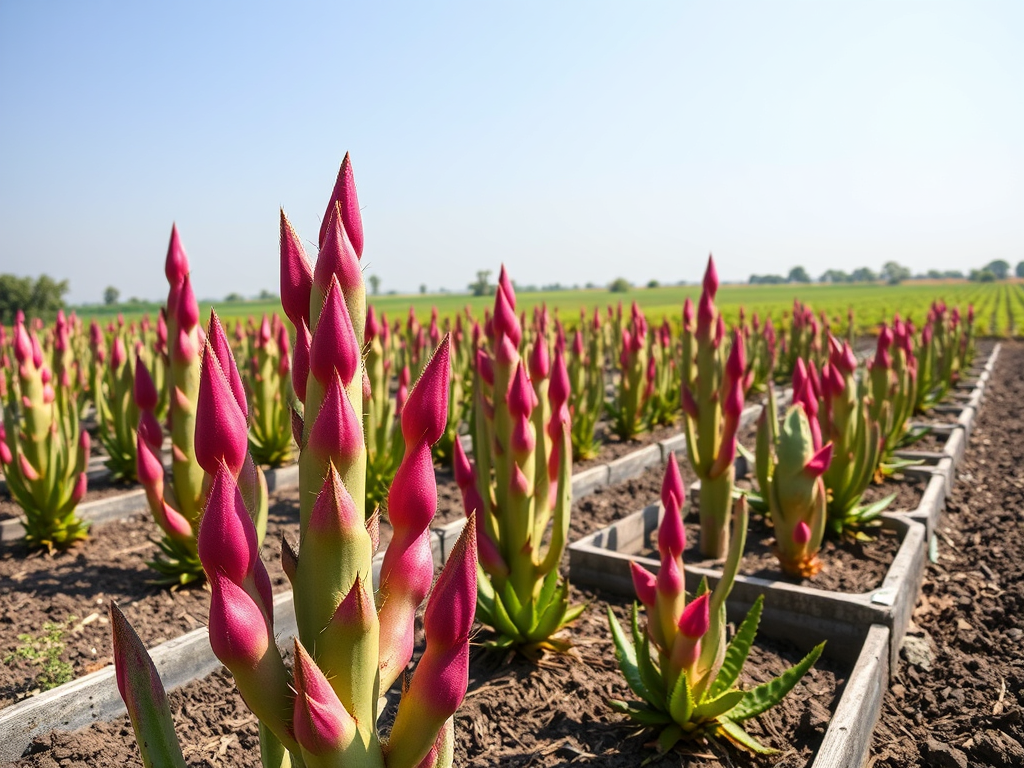
Dragon Fruit (Pitaya) — A Detailed Guide for Growing in India
Introduction
Dragon fruit (pitaya) is an exotic, nutrient-rich tropical fruit known for its vibrant appearance and high market demand. Native to Central and South America, it has adapted well to Indian conditions and is now grown widely across Karnataka, Maharashtra, Gujarat, Odisha, and even parts of the North.
It’s a climbing cactus that produces fruit for over 20 years once established, making it a long-term, high-value crop for small and large farmers alike.
Why Grow Dragon Fruit in India?
- High profitability: Yields premium returns per acre compared to many traditional fruits.
- Low water requirement: Drought-tolerant compared to crops like banana or papaya.
- Long life span: Plants remain productive for 20–25 years.
- Rising demand: Growing domestic and export markets for exotic fruits.
- Government support: Subsidies and training programs through horticulture departments.
1. Climate & Location Requirements
- Temperature: 20–30 °C is ideal. Prolonged cold or frost damages plants.
- Rainfall: Moderate (40–60 cm annually) with good drainage.
- Altitude: Up to 1,500 m above sea level.
- Sunlight: Full sunlight for at least 6–8 hours daily.
Tip: In cooler regions like Himachal Pradesh, grow dragon fruit under polyhouse or in protected areas to avoid frost damage.
2. Soil & Site Preparation
- Soil Type: Sandy loam to loamy soil, rich in organic matter.
- pH Range: 5.5–7 (slightly acidic to neutral).
- Drainage: Excellent drainage is essential. Avoid heavy clay soils.
- Preparation Steps:
- Deep plough the land and remove weeds.
- Mix farmyard manure or compost (10–15 tons per acre).
- Create raised beds or mounds for better drainage.
3. Varieties Common in India
- Red skin with white flesh – Most common and hardy.
- Red skin with red/pink flesh – High market value, sweeter taste.
- Yellow skin with white flesh – Less common but very sweet.
Choose high-yielding, disease-free varieties from a reliable nursery.
4. Propagation & Planting
Propagation:
- Use stem cuttings 20–25 cm long from mature plants.
- Dry the cut ends for 1–2 days before planting.
- Root the cuttings in nursery bags filled with sand, soil, and compost.
Transplanting:
- Once rooted (3–4 weeks), transplant into the field.
- Spacing: 2 m × 2 m or 2.5 m × 2 m between plants.
- Pit Size: 60 cm³ filled with soil and compost.
- Support: Install strong poles or trellises before planting.
5. Trellising System (Supports)
- Dragon fruit vines need vertical support to climb and bear fruit.
- Commercial farms: Use RCC or cement poles (2 m height) with circular or square metal plates at the top.
- Small growers: Use bamboo, iron, or wooden poles with wire mesh.
- Spacing depends on layout: typically 2.5 × 2 m or 3 × 3 m.
6. Irrigation, Fertilization & Plant Care
Irrigation:
- Water regularly but sparingly; avoid stagnation.
- Drip irrigation is recommended.
- During dry spells, water every 10–12 days; reduce frequency in winter.
Fertilization:
| Stage | Organic/Manure | N (Urea) | P (Superphosphate) | K (MOP) |
|---|---|---|---|---|
| Vegetative growth | 10–15 kg compost/plant/year | 70 g | 90 g | 40 g |
| Fruiting stage | 15–20 kg compost/plant/year | 50 g | 50 g | 100 g |
Apply fertilizers in 3–4 split doses through the year.
Pruning & Training:
- Prune diseased, weak, or overcrowded stems regularly.
- Train shoots to climb poles using soft ties.
- After fruiting, cut back old shoots to promote new growth.
Pest & Disease Control:
- Watch for root and stem rot (caused by poor drainage).
- Use well-drained soil and treat cuttings with fungicide before planting.
- Maintain spacing and airflow to prevent fungal infections.
7. Flowering & Fruit Development
- Flowering begins within 8–12 months (cuttings) or later (seedlings).
- Flowers open at night and are often self-pollinating.
- Fruits mature in 30–40 days after flowering.
- Peak fruiting season: June to November in most Indian regions.
8. Harvesting & Yield
- Fruits are ready when the skin turns bright red/pink and scales start to curl.
- Harvest by twisting or cutting the fruit carefully to avoid damage.
- Yield:
- Year 1: 3–5 tons/ha
- Year 2: 8–10 tons/ha
- Year 3 onward: 12–15 tons/ha (well-managed farms)
- One plant can yield up to 6 kg of fruit annually after maturity.
9. Post-Harvest Handling & Marketing
- Sort fruits by size and color.
- Store at 8–10 °C for 15–20 days.
- Pack in ventilated crates for transport.
- Market options: local fruit shops, supermarkets, online stores, and export to Middle East or Southeast Asia.
- Value-added products include juices, jams, ice creams, and wines.
10. Cost & Profit Analysis (Per Acre Estimate)
| Particulars | Approx. Cost (₹) | Remarks |
|---|---|---|
| Land preparation & layout | 15,000 | Ploughing, leveling, pit digging |
| RCC poles / trellis structure | 100,000 | 400 poles with metal ring top |
| Drip irrigation setup | 25,000 | Includes water storage & fittings |
| Planting material (cuttings) | 20,000 | ~2000 cuttings @ ₹10 each |
| Organic manure / compost | 10,000 | 10–12 tons FYM |
| Fertilizers & chemicals | 5,000 | Yearly requirement |
| Labour (planting, pruning, irrigation) | 30,000 | Annual maintenance |
| Miscellaneous (tools, ropes, repair, etc.) | 10,000 | General expenses |
| Total Establishment Cost (Year 1) | ≈ ₹2,15,000 |
Yearly Returns & Profit Projection
| Year | Yield (tons/acre) | Average Price (₹/kg) | Gross Income (₹) | Net Profit (₹) |
|---|---|---|---|---|
| Year 1 | 1 | 100 | 1,00,000 | –1,15,000 (setup phase) |
| Year 2 | 4 | 100 | 4,00,000 | +1,85,000 |
| Year 3 | 6 | 100 | 6,00,000 | +3,85,000 |
| Year 4–20 | 8–10 | 100 | 8–10 lakh | Annual maintenance ~₹60,000 |
💡 Return on Investment (ROI):
The setup cost is typically recovered by the end of Year 2 or early Year 3. From Year 4 onward, net profits can exceed ₹5–8 lakh per acre annually depending on market rates.
11. Tips for Hill & Northern Regions (like Himachal Pradesh)
- Protect plants from frost using polyhouse or shade-net structures.
- Choose sun-facing slopes with well-drained sandy loam soil.
- Raise planting beds (30–40 cm) to prevent waterlogging.
- Avoid cold-air pockets and low-lying areas.
- Use organic mulches to conserve moisture and protect roots in winter.
12. Common Challenges & Practical Solutions
| Problem | Possible Cause | Solution |
|---|---|---|
| Root rot | Poor drainage / excess water | Use raised beds and well-drained soil |
| Poor fruiting | Lack of sunlight or nutrients | Full sun, balanced fertilization |
| Frost damage | Low winter temperature | Grow under polyhouse or cover plants |
| Low pollination | Few insects / night-blooming flowers | Hand-pollinate during bloom |
| High setup cost | Trellis and drip expenses | Avail government horticulture subsidies |
13. Conclusion
Dragon fruit farming in India offers a sustainable, high-profit horticultural option for farmers looking to diversify. Once established, the crop provides consistent income for two decades with low water needs and strong demand.
For regions like Himachal Pradesh, careful site selection, winter protection, and drainage management are key to success. Even small-scale growers can enjoy the dual benefits of beauty and profitability from this unique, health-boosting fruit.
 KrishiCenter
Leave a comment