
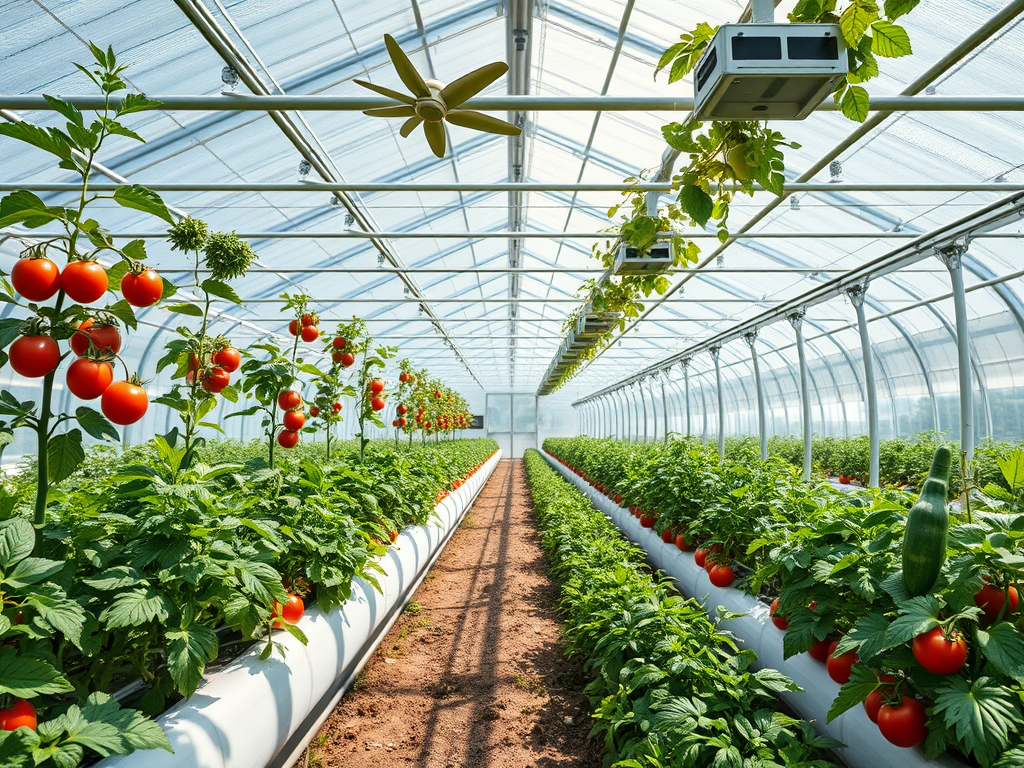
Greenhouse farming is an innovative agricultural method that provides a controlled environment for growing crops, ensuring optimal conditions for growth and enhancing productivity. In India, where climate conditions vary widely, greenhouse farming is gaining momentum as a sustainable farming practice, especially in regions that experience extreme weather conditions. Let’s break down the concept of greenhouse farming, the benefits, and its setup costs in the context of India.
What is Greenhouse Farming?
Greenhouse farming involves growing crops inside a greenhouse—a structure made of glass or transparent plastic that traps sunlight. The enclosed environment can be controlled to optimize factors like temperature, humidity, light, and CO₂ levels, ensuring that crops receive ideal growing conditions year-round, regardless of external weather conditions.
Benefits of Greenhouse Farming in India
- Climate Control: Greenhouses provide a regulated environment, which is essential in areas with extreme temperatures, irregular rainfall, or unpredictable seasons. This is especially important in regions like Rajasthan, Gujarat, and Maharashtra, where erratic weather can hinder crop growth.
- Water Conservation: In a greenhouse, water is used more efficiently. Drip irrigation systems and controlled watering prevent wastage and are ideal for water-scarce regions like Rajasthan and Gujarat.
- Increased Yield: The controlled environment allows for high-density planting, which can increase crop yields. Farmers can grow more per square meter compared to open-field farming.
- Extended Growing Seasons: Greenhouses allow for multiple harvests per year by controlling the temperature and light conditions, which can lead to increased income for farmers.
- Reduced Pesticide Use: Since the crops are grown in a protected environment, there is less exposure to pests and diseases. This can reduce the need for chemical pesticides, making the produce healthier and more environmentally friendly.
- Improved Quality: The consistent environment results in better quality produce with fewer blemishes or deformities, which can be sold at higher prices.
Common Greenhouse Crops in India
- Tomatoes
- Cucumbers
- Peppers (Capsicum)
- Lettuce and leafy greens
- Herbs (like basil, mint, parsley)
- Flowers (like roses, gerberas)
- Strawberries
Setting Up a Greenhouse Farm in India: Cost Breakdown
The setup cost for a greenhouse farm in India can vary depending on factors such as the type of greenhouse, size, location, and the crops to be grown. Below is an overview of the potential costs involved in setting up a greenhouse farm in India.
1. Type of Greenhouse
There are various types of greenhouses, each with different setup costs. The most common types used in India include:
- Polyhouse (Plastic Greenhouses): This is the most common type of greenhouse in India, where the structure is made from metal or steel frames covered with plastic sheets. They are cheaper to set up than glass houses and are ideal for small-scale operations.
- Shade Net House: This is a cheaper alternative to polyhouses, where the roof is covered with shade nets. It’s used for crops that require less heat and sunlight, such as certain leafy vegetables.
- Glasshouse: A high-end type of greenhouse where glass panels are used for the structure. This is the most expensive type and is mainly used for high-value crops and commercial farming operations.
2. Land Costs
Land costs in India vary depending on the region. For example:
- Urban and peri-urban areas: Prices are higher due to increased demand for land.
- Rural areas: Land is cheaper, but infrastructure may be lacking, and logistical challenges could arise.
For a small-scale greenhouse setup of about 1 acre, the land cost could range anywhere from ₹5,00,000 to ₹30,00,000 depending on the location.
3. Structure and Material Costs
The primary costs for setting up the physical structure include:
- Frame Material: Steel frames are commonly used, costing ₹150 to ₹300 per square meter.
- Covering Material: Polyethylene (plastic) sheets or nets cost between ₹30 to ₹80 per square meter.
- Other Materials: Irrigation systems (drip or sprinkler), electric wiring, fans, and humidity control systems add to the cost.
For a 1-acre greenhouse, the total cost of materials and construction can range from ₹20,00,000 to ₹30,00,000.
4. Equipment and Infrastructure
A greenhouse requires various types of equipment for irrigation, ventilation, lighting, and temperature control. Some common items include:
- Drip Irrigation Systems: ₹1,50,000 to ₹3,00,000 (depending on the complexity and automation level).
- Ventilation and Cooling Systems: ₹3,00,000 to ₹5,00,000.
- Automatic Climate Control Systems: ₹2,00,000 to ₹5,00,000.
5. Labor Costs
Labor costs can vary depending on the region and the scale of operation. For greenhouse farming, skilled labor is required for tasks like planting, irrigation, pest management, and harvesting.
- Skilled labor: ₹12,000 to ₹20,000 per month.
- Unskilled labor: ₹8,000 to ₹12,000 per month.
For a 1-acre farm, around 5-10 workers may be required, bringing monthly labor costs to ₹60,000 to ₹2,00,000.
6. Miscellaneous Costs
- Seeds and Saplings: ₹50,000 to ₹1,00,000 annually (depending on the type of crop).
- Fertilizers and Pesticides: ₹1,00,000 to ₹2,00,000 annually.
- Utilities (water, electricity, etc.): ₹1,00,000 to ₹2,00,000 annually.
Total Setup Costs for 1 Acre Greenhouse
To summarize, here’s a rough estimate of the cost involved in setting up a greenhouse farm on 1 acre of land in India:
- Land Cost: ₹5,00,000 to ₹30,00,000 (depending on location)
- Greenhouse Structure and Materials: ₹20,00,000 to ₹30,00,000
- Equipment (Irrigation, Ventilation, etc.): ₹6,00,000 to ₹10,00,000
- Labor Costs (annual): ₹7,20,000 to ₹24,00,000
- Other Costs (Seeds, Fertilizers, Utilities): ₹2,00,000 to ₹5,00,000
Total Estimated Cost: ₹40,00,000 to ₹1 Crore (or more) for the first year.
Ongoing Costs and Maintenance
After the initial setup, ongoing costs will include:
- Maintenance of the greenhouse structure.
- Replacement of materials like plastic sheeting (every 3-5 years).
- Regular irrigation system maintenance.
- Seasonal labor costs.
- Inputs like fertilizers and pesticides.
Profitability and Return on Investment
Greenhouse farming in India can be highly profitable if managed well. Typically, it takes about 2 to 3 years to recover the initial investment, depending on the crop grown, market demand, and the efficiency of the operations. The key to profitability lies in:
- Choosing high-value crops that offer premium market prices.
- Efficient use of resources (water, labor, and inputs).
- Effective pest and disease management.
Challenges
- Initial Capital Investment: High upfront costs can be a barrier for many farmers.
- Technical Expertise: Greenhouse farming requires knowledge of horticulture, climate control, and modern farming technologies.
- Market Access: It’s crucial to have access to reliable markets to sell the produce at good prices.
- Risk of Crop Failure: Despite the controlled environment, factors like system failure, pests, or diseases can still cause crop loss.
Conclusion
Greenhouse farming presents a significant opportunity for Indian farmers to enhance their productivity, reduce dependency on traditional farming, and enter high-value crop markets. However, it requires substantial capital investment, technical knowledge, and access to markets. Government support, subsidies, and funding for agricultural startups can help make this method more accessible to small and medium farmers in India.
As the technology matures and becomes more affordable, greenhouse farming is expected to become a key part of India’s agricultural future, especially as the country faces challenges such as climate change, water scarcity, and a growing population.
 KrishiCenter
Leave a comment