
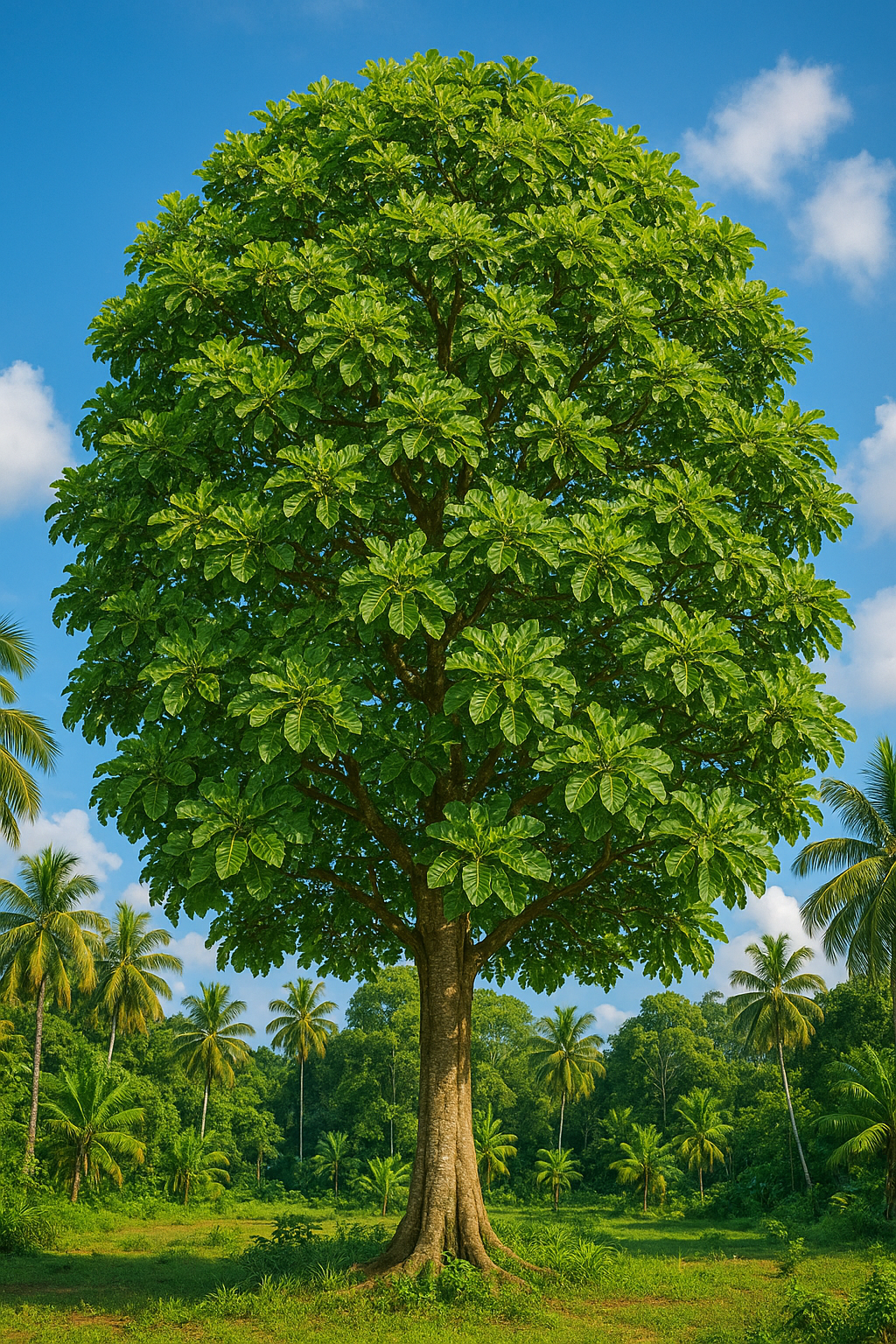
Behra (Terminalia bellerica)
Introduction to Behra Farming
Behra (बेहरा), scientifically known as Terminalia bellerica, is a tree species native to the Indian subcontinent and Southeast Asia. It is a member of the Combretaceae family and is renowned for its medicinal, nutritional, and ecological benefits. Behra is commonly referred to as Belleric Myrobalan or Indian Belleric. It plays a significant role in Ayurvedic medicine, where its fruits are used in various therapeutic formulations. The tree produces small, round fruits that are rich in nutrients, antioxidants, and bioactive compounds, making it highly sought after for both traditional and modern health applications.
In addition to its medicinal uses, Behra has economic potential due to its hardy nature, relatively low maintenance, and adaptability to a variety of soil types and climates. This makes Behra an attractive crop for farmers, especially in agroforestry and medicinal plant cultivation systems. This guide provides a detailed overview of Behra farming, from climate and soil requirements to cultivation, propagation, and economic potential.
1. Understanding Behra (Terminalia bellerica)
Behra (बेहरा) is a medium to large deciduous tree that grows up to 30 meters in height. It is primarily known for its fruits, which have a rich, bitter flavor and are often used in traditional medicine to promote digestive health, enhance liver function, and treat respiratory conditions. The fruit contains high amounts of Vitamin C, tannins, flavonoids, and other active compounds, making it valuable for health supplements, cosmetics, and natural remedies.
- Scientific Name: Terminalia bellerica
- Common Names: Behra, Belleric Myrobalan, Indian Belleric, Baheda, Baheda fruit
- Medicinal Uses: Antioxidant, anti-inflammatory, antimicrobial, digestive health, respiratory tonic, liver support, and skin care.
2. Climatic and Soil Requirements
Behra (बेहरा) is adaptable to a variety of environmental conditions but performs best in tropical and subtropical climates. Its hardy nature allows it to grow in areas with moderate to low rainfall, which makes it an ideal crop for agroforestry systems in drought-prone regions.
- Temperature: Behra thrives in temperatures between 25°C and 35°C. It can tolerate higher temperatures but may not perform well in areas that experience severe frost or freezing temperatures.
- Rainfall: Behra prefers moderate rainfall of around 800 mm to 1,500 mm annually. It can survive in areas with irregular rainfall patterns, as long as the soil is well-drained.
- Soil: Behra can grow in a variety of soil types, including sandy, loamy, and clayey soils. The soil should be well-drained and slightly acidic to neutral (pH 6.0–7.5). While it can tolerate poor soils, providing adequate organic matter improves tree growth and fruit yield.
- Altitude: Behra is found growing naturally at altitudes ranging from sea level up to 1,200 meters, depending on local climate conditions.
3. Land Preparation
Before planting Behra, proper land preparation is crucial to ensure optimal growth and development. Here are the steps involved:
- Site Selection: Choose a site that receives full sunlight, as Behra trees thrive in sunny conditions. Avoid waterlogged areas that may cause root rot.
- Plowing and Tilling: Plow the land to a depth of 20–25 cm to break up compacted soil and improve aeration. This helps the tree’s roots penetrate the soil easily.
- Soil Amendment: Incorporate organic material like farmyard manure (FYM) or compost into the soil before planting to improve fertility and moisture retention.
- Pit or Trench Method: Dig planting pits of about 30 cm × 30 cm dimensions for each tree. For larger plantations, trenches can be dug with 3–4 meters spacing between trees.
4. Propagation of Behra
Behra (बेहरा) is primarily propagated through seeds, though vegetative propagation through grafting or cutting may also be attempted for certain purposes. Seed propagation is the most common method for large-scale farming.
Seed Propagation
- Seed Extraction: After harvesting mature fruits, the seeds are extracted by removing the pulp. The seeds are then washed and dried in the shade for 7–10 days.
- Sowing: Seeds should be sown in a nursery bed or in seed trays at a depth of about 1–2 cm. Use a well-drained seed-starting medium, and keep the soil consistently moist but not waterlogged.
- Germination: Seeds typically take 3–4 weeks to germinate. Once seedlings are 4–6 inches tall, they can be transplanted into the main field.
- Transplanting: Transplant the seedlings when they are strong enough to survive in the field, generally 3–4 months after sowing. Ensure that the root system remains intact during transplantation.
Grafting and Cutting (Alternative Propagation Methods)
- Grafting: This method can be used to propagate superior varieties of Behra for higher-quality fruit production. Grafting can speed up the time to fruiting, but it requires knowledge and expertise in tree propagation.
- Cuttings: Semi-hardwood cuttings can be used for propagation in some cases, but this method is less commonly used compared to seed propagation.
5. Planting Behra Trees
After the seedlings have developed adequately, it is time to plant them in the prepared field.
- Planting Time: The best time to plant Behra trees is during the early monsoon season (June to July). This allows the young trees to establish roots before the dry season begins.
- Spacing: For individual tree planting, space trees about 4–5 meters apart. For dense plantations, a spacing of 3 meters between trees can be used.
- Planting Depth: When planting, ensure that the root collar (the point where the root meets the stem) is slightly above the soil surface. This prevents rotting and ensures proper growth.
- Watering: Water the trees thoroughly after planting to settle the soil around the roots. During the initial establishment phase, regular watering is necessary, especially during dry periods.
Behra-Terminalia Fruit-krishicenter
6. Irrigation and Water Management
Behra (बेहरा) trees are moderately drought-tolerant but require consistent moisture during the initial stages of growth.
- Watering Requirements: Water newly planted trees every 3–4 days to help them establish. Once the trees are mature, they require minimal irrigation and can survive on rainfall.
- Drip Irrigation: For larger-scale operations, drip irrigation is ideal for conserving water while providing deep irrigation to the root zone.
- Rainwater Harvesting: In areas with inconsistent rainfall, farmers can adopt rainwater harvesting techniques to supplement irrigation needs.
7. Nutrient Management
Behra (बेहरा) trees thrive in nutrient-rich soils. Therefore, regular fertilization is necessary to achieve optimal growth and fruiting.
- Organic Fertilization: Use organic fertilizers like FYM or compost during planting and as a top dressing every 6 months.
- Inorganic Fertilizers: Apply a balanced NPK (Nitrogen, Phosphorus, Potassium) fertilizer to promote healthy tree growth. A typical recommendation is 20–30 kg of NPK per hectare, adjusted based on soil test results.
- Micronutrients: Micronutrients like zinc, iron, and manganese can be applied as foliar sprays or soil amendments to prevent deficiencies that may stunt growth.
8. Weed and Pest Management
While Behra is relatively resistant to pests, weeds and occasional infestations can affect tree growth and fruit yield.
- Weed Control: Weeds should be regularly removed, especially during the first two years of growth. Hand weeding or mechanical weeding methods are ideal. Mulching around the base of the trees helps suppress weed growth.
- Pest Control: Common pests include fruit borers, termites, and leaf-eating insects. Neem oil, insecticidal soaps, or organic pest repellents can be used to control pests without harming the environment.
- Disease Management: Behra trees are generally resistant to major diseases, but fungal issues like root rot may occur in areas with waterlogged soils. Ensure good drainage to prevent such problems.
9. Pruning and Maintenance
Pruning is important to maintain tree shape and encourage healthy growth.
- Pruning: Regularly prune dead or diseased branches to maintain the health of the tree. Also, trim any lateral branches that may compete with the main trunk for nutrients.
- Thinning: Thin out crowded areas of the tree to improve sunlight penetration and airflow. This encourages better fruiting and reduces the risk of disease.
- Height Management: For easy harvesting, trees can be pruned to a manageable height of 4–5 meters, especially if they are grown in agroforestry systems.
10. Harvesting Behra
The fruits of Behra (बेहरा) are typically harvested once they ripen and turn brown or yellowish.
- Harvesting Time: Behra fruits are usually harvested in the late summer to early autumn, 6–8 months after flowering. Timing of harvest is critical to ensure the fruits are at their peak quality.
- Harvesting Method: Hand-picking is the most common method for harvesting Behra fruits. Care should be taken not to damage the fruits during the harvest.
- Post-Harvest Processing: The fruits can be dried in the sun for longer shelf life. Alternatively, they can be processed into powders, oils, or extracts for use in
medicinal and cosmetic products.
Harvest Behra-Terminalia Fruit-krishicenter
11. Economic Potential of Behra Farming
Behra (बेहरा) farming can be highly profitable, particularly in regions where the tree grows naturally. Its versatility in medicinal applications, combined with its low input requirements, makes it an attractive crop for both small and large-scale farmers.
- Market Demand: The growing demand for herbal and Ayurvedic products has led to a rise in the use of Behra fruits for supplements, health tonics, and skincare formulations.
- Value-Added Products: Farmers can process Behra fruits into powders, oils, and tinctures, which have higher market value compared to raw fruits.
- Profitability: Behra trees can yield up to 20–25 kg of fruit per tree per year after 3–5 years of growth. For a hectare with 400 trees, this can translate into 8–10 tons of fruit annually, offering substantial income.
Conclusion
Behra (बेहरा) farming presents a profitable and sustainable opportunity for farmers, especially those in agroforestry or medicinal plant production. Its hardy nature, low water requirements, and high medicinal value make it a perfect crop for farmers in tropical and subtropical regions. By following best practices for soil management, propagation, pest control, and harvesting, farmers can achieve excellent yields and tap into the growing market for herbal and Ayurvedic products. With its broad range of uses and potential for value-added products, Behra is an excellent addition to any diversified farming system.
 KrishiCenter
Leave a comment