
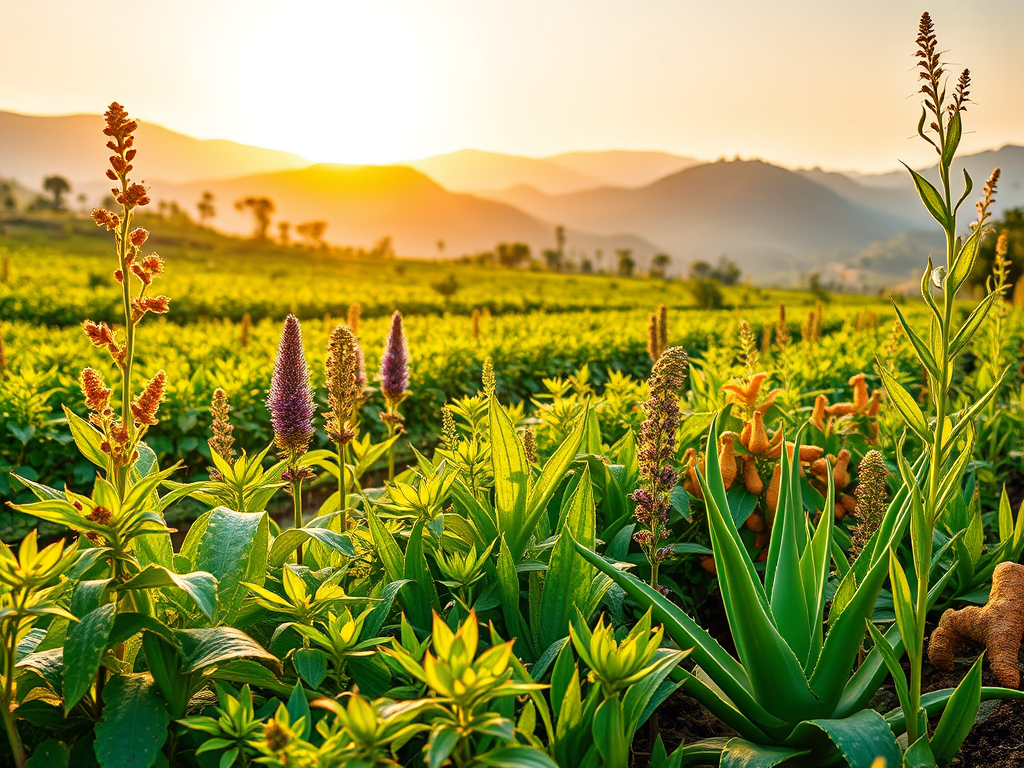
🌿Introduction
In recent years, the demand for natural remedies and holistic healthcare has grown worldwide. With people seeking alternatives to synthetic medicines, medicinal farming and Ayurveda have gained renewed importance. Ayurveda is rooted in ancient Indian tradition. It is one of the world’s oldest holistic healing systems. It emphasizes the balance between mind, body, and nature. Medicinal farming provides the raw foundation for Ayurveda by cultivating herbs and plants with proven therapeutic benefits.
What is Medicinal Farming?
Medicinal farming is the systematic cultivation of medicinal and aromatic plants for health, wellness, and commercial use. These herbs are the backbone of Ayurveda, Unani, Siddha, and even modern herbal medicine. Unlike conventional farming, medicinal farming focuses on growing plants that heal and support human health rather than just providing food.
Popular Medicinal Crops in India:
- Ashwagandha (Withania somnifera) अश्वगंधा – boosts immunity, reduces stress.
- Tulsi (Holy Basil) तुलसी – known as the “queen of herbs,” supports respiratory and mental health.
- Aloe Vera एलोविरा– aids digestion, skin health, and detoxification.
- Brahmi (Bacopa monnieri) ब्राह्मी – enhances memory and brain function.
- Neem नीम – a natural detoxifier with antibacterial and antifungal properties.
- Turmeric हल्दी (Curcuma longa) – a powerful anti-inflammatory and antioxidant.
Ayurveda and Its Connection to Medicinal Farming
Ayurveda, meaning “science of life”, uses medicinal plants as its primary resource for treatments. These herbs are combined in various formulations—powders, oils, decoctions, and pastes—based on an individual’s body type (dosha: Vata, Pitta, Kapha).
Medicinal farming ensures a sustainable supply of pure, pesticide-free raw materials, which is essential to maintain the authenticity and effectiveness of Ayurvedic medicines.
Benefits of Medicinal Farming
- Health & Wellness – Provides natural remedies with minimal side effects.
- Economic Growth – High market demand for Ayurvedic products creates business opportunities for farmers.
- Sustainable Agriculture – Promotes eco-friendly, chemical-free farming practices.
- Employment Generation – Increases rural livelihood through farming, processing, and value addition.
- Global Demand – Ayurveda-based products are exported worldwide, boosting India’s role as a hub for natural medicine.
Challenges in Medicinal Farming
- Lack of awareness among farmers.
- Need for proper training and certification.
- Limited market linkages and price fluctuations.
- Over-harvesting of wild medicinal plants leading to scarcity.
Future of Medicinal Farming & Ayurveda
With growing awareness of holistic wellness, the global herbal medicine market is expanding rapidly. Governments and organizations are encouraging farmers to adopt medicinal farming through subsidies, training, and research. Ayurveda, backed by scientific studies, is gaining recognition as a sustainable healthcare system. Together, medicinal farming and Ayurveda can pave the way for a healthier and eco-conscious future.
🌱 Scope of Medicinal Farming & Ayurveda in India
India has been called the land of Ayurveda, with over 6,000 medicinal plants documented in classical texts and thousands more used in folk traditions. Today, the scope of medicinal farming in India is vast due to rising global demand for natural remedies and India’s unique biodiversity.
🔹 Market Potential
- The Ayurveda market in India is valued at over ₹50,000 crore (and growing rapidly at 15–20% annually).
- India exports Ayurvedic and herbal products to 100+ countries, with the US, Europe, and Middle East being top markets.
- The global herbal medicine market is projected to reach USD 550+ billion by 2030, offering Indian farmers and entrepreneurs massive opportunities.
🔹 Government Support
- The Ministry of AYUSH promotes Ayurveda and herbal medicine through policies, subsidies, and research.
- Farmers cultivating medicinal plants like Ashwagandha, Aloe Vera, and Tulsi are eligible for financial assistance and buy-back guarantees.
- National Medicinal Plants Board (NMPB) provides schemes for cultivation, storage, and processing.
🔹 Agricultural Opportunities
- India’s diverse climates allow the cultivation of a wide variety of medicinal plants across regions.
- Medicinal farming requires less water and fewer chemicals compared to conventional crops, making it sustainable and profitable.
- Contract farming with Ayurvedic companies ensures assured markets for farmers.
🔹 Employment & Entrepreneurship
- Scope for value addition: processing, oils, herbal cosmetics, supplements.
- Rising popularity of Ayurveda resorts, spas, and wellness centers creates demand for authentic raw materials.
- Medicinal farming is becoming a source of rural employment, particularly for women and self-help groups.
Conclusion
Medicinal farming is not just about agriculture—it’s about preserving ancient wisdom, promoting health, and empowering rural economies. Ayurveda continues to inspire the world with its holistic approach, and medicinal farming is the backbone that sustains this ancient healing tradition. By embracing it, we move closer to a future where nature and wellness go hand in hand.
🌿 “When diet is wrong, medicine is of no use. When diet is correct, medicine is of no need.” – Ayurvedic Proverb 🌿
Would you like me to also create a simplified version of this article for social media posting with visuals and bullet points?

 KrishiCenter
Leave a reply to Cultivating Behra: Medicinal and Economic Insights – KrishiCenter Cancel reply