
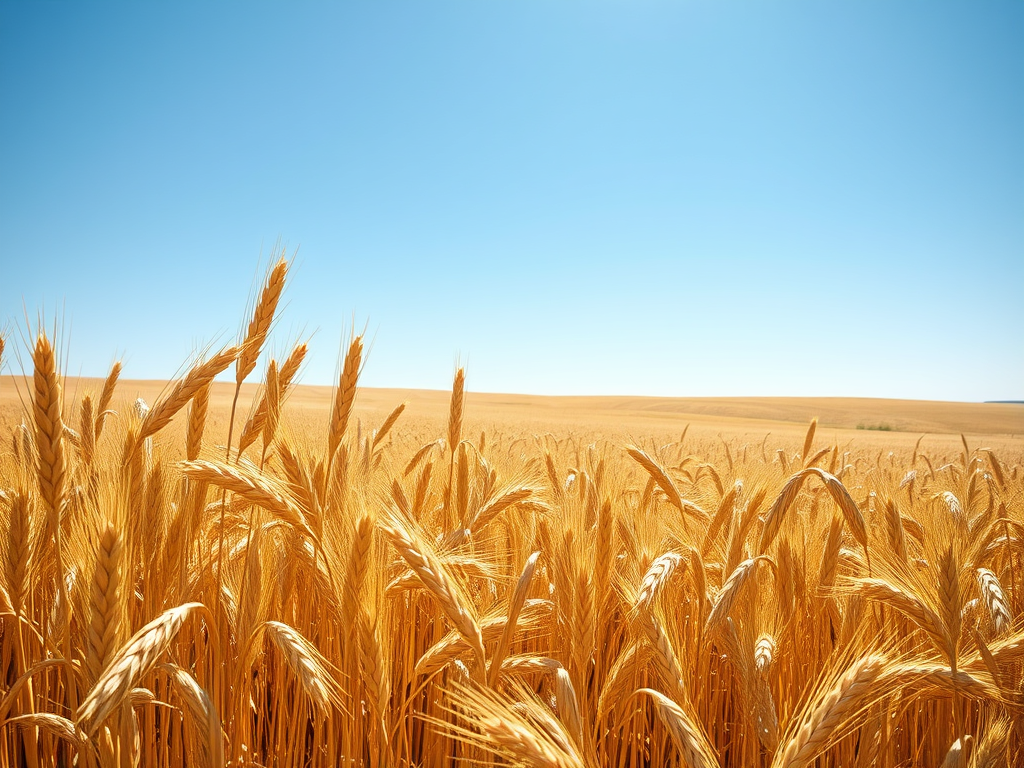
Wheat Crop in India: Detailed Information
Wheat or गेंहू is one of the most important food crops in India and holds significant socio-economic and cultural value. India is the second-largest producer of wheat in the world after China. Wheat plays a crucial role in the nation’s agricultural economy. It is also vital for food security. Below is a detailed analysis of wheat cultivation, production, climate conditions, regions, and challenges in India.
1. Overview of Wheat Cultivation in India
- Scientific Name: Triticum aestivum (for common wheat), Triticum durum (for durum wheat).
- Area of Cultivation: Approximately 30-32 million hectares (as of recent estimates), making it one of the most widely cultivated crops in India.
- Annual Production: India produces about 100-110 million metric tons of wheat annually, depending on the year and climatic conditions.
- Contribution to Agriculture: Wheat accounts for about 10% of India’s total agricultural output and 13-15% of the total cereal production.
2. Wheat Growing Seasons in India
Wheat or गेंहू is grown in India primarily during two seasons:
- Rabi Season (Winter Wheat):
- Sowing Time: The sowing of wheat usually begins after the onset of the winter, around October-November.
- Harvest Time: The crop is harvested in March-April.
- Characteristics: The majority of wheat production in India is from the rabi season.
- Kharif Season:
- Wheat cultivation is minimal during the kharif season because of the high temperature and monsoon rains. However, in certain regions, there is a small amount of wheat grown under irrigation.
3. Top Wheat Producing States in India
Wheat is grown in various regions, but North India dominates wheat production, especially the Indo-Gangetic plains, where the climate is most suitable for its cultivation. The key wheat-producing states are:
- Uttar Pradesh: The largest producer of wheat, contributing around 30-35% of India’s total production.
- Punjab: Known as the “Granary of India,” Punjab is a major contributor, producing 18-20% of India’s total wheat output.
- Haryana: Another significant wheat producer, contributing around 10-12% of the national wheat production.
- Madhya Pradesh: A rapidly growing wheat producer, contributing about 10% of the national wheat production.
- Rajasthan: Produces around 5-7% of India’s wheat.
- Bihar, Uttarakhand, and Gujarat also contribute smaller amounts.
4. Climate and Soil Requirements for Wheat
- Climate: Wheat thrives in temperate regions with cool winters and moderate rainfall. It requires a cool, dry climate during its growing period, with temperatures ranging between 10°C to 15°C during the vegetative and grain-filling stages.
- Ideal Temperature: The optimum temperature for wheat growth ranges from 15°C to 20°C. Temperatures above 30°C during the flowering or grain formation period can lead to a decrease in yields.
- Water Requirement: Wheat requires moderate rainfall, around 450-500 mm during the growing season, but it is sensitive to waterlogging, making irrigation essential in many regions.
- Soil: Wheat grows best in well-drained, loamy soils with a neutral to slightly alkaline pH (6.0 to 7.5). The black soil of the Indo-Gangetic plains and the alluvial soil in regions like Uttar Pradesh and Punjab are ideal.
5. Varieties of Wheat in India
India grows a wide range of wheat varieties suited for different climatic conditions and uses:
- Hard Wheat: Primarily grown in the North-Western Plains. It is used for making bread, chapatis, and biscuits. Examples include varieties like PBW 343, HD 2967, and HD 3086.
- Soft Wheat: More common in the South and South-Western regions. It is used for making cakes, pastries, and noodles. Varieties like Lok 1 and Sharbati are examples.
- Durum Wheat: Grown mostly in Madhya Pradesh and parts of Rajasthan, used for pasta, noodles, and semolina (suji).
- Triticale Wheat: A hybrid of wheat and rye, grown in some regions for its resistance to disease and adverse conditions.
6. Production Techniques
- Land Preparation: Wheat is grown in both rainfed and irrigated lands. In rainfed areas, a proper moisture regime is maintained. In irrigated areas, advanced irrigation techniques like drip irrigation and sprinkler systems are used.
- Sowing: Seeds are sown using tractor-mounted seed drills for precision in depth and spacing. Wheat is usually planted in rows.
- Fertilizer Use: A balanced dose of nitrogen (N), phosphorus (P), and potassium (K) fertilizers is used. Special emphasis is given to nitrogen fertilizers during the vegetative phase for robust growth.
7. Challenges Faced by Wheat Farmers
- Water Scarcity: In many wheat-producing states like Punjab and Haryana, over-reliance on groundwater for irrigation is leading to a depletion of water tables, affecting wheat yields.
- Climate Change: Rising temperatures, erratic rainfall, and extreme weather events like early frost or heat waves during the flowering and grain-filling stages can damage crops.
- Soil Degradation: Continuous wheat cultivation without proper soil health management leads to the depletion of essential nutrients.
- Pests and Diseases: Wheat is vulnerable to pests like hessian fly and aphids and diseases like yellow rust and wheat blast. These can significantly reduce yields.
- Price Fluctuations: Wheat prices can fluctuate, impacting farmers’ profitability. Market forces and government procurement policies also affect prices.
8. Wheat Yield in India
- The average wheat yield in India has improved over the years but remains lower than many developed countries.
- Average Yield: Around 2.5 to 3 tons per hectare, depending on the region, farming practices, and climatic conditions. This is much lower than in countries like Canada or the United States.
- High Yielding Regions: Areas with better irrigation facilities, modern machinery, and efficient farming practices, such as Punjab and Haryana, can achieve yields of 3-4 tons per hectare.
9. Wheat Processing and Uses
- Wheat Milling: The harvested wheat is milled to produce various products, including flour (atta), semolina (suji), and wheat bran.
- Food Products: Wheat is primarily used for making bread, roti, pasta, noodles, and biscuits. It is also used in the preparation of sweets like halwa and cakes.
- Animal Feed: Wheat bran and other by-products are used in animal feed.
10. Government Policies and Support
- Minimum Support Price (MSP): The Indian government sets an MSP for wheat to ensure a guaranteed price to farmers. The MSP for wheat is revised annually and is intended to protect farmers from price fluctuations.
- Procurement: The government, through agencies like Food Corporation of India (FCI), buys wheat from farmers at MSP to ensure food security and maintain buffer stocks for the Public Distribution System (PDS).
- Subsidies: The government provides fertilizer subsidies, irrigation subsidies, and electricity subsidies to wheat farmers.
11. Future Prospects and Innovations
- Genetically Modified (GM) Wheat: Research into developing drought-resistant, high-yielding, and disease-resistant wheat varieties is ongoing.
- Precision Farming: The adoption of drone technology, soil sensors, and automated machinery is expected to improve efficiency and yields in wheat farming.
- Climate-Smart Agriculture: There is a growing emphasis on sustainable practices, such as crop rotation, organic farming, and water conservation techniques, to address the challenges posed by climate change.
Conclusion
Wheat is integral to India’s agricultural landscape, contributing to food security and economic stability. However, challenges such as water scarcity, climate change, and price fluctuations require continuous innovation and policy interventions to ensure sustainable growth and productivity in the wheat sector.
 KrishiCenter