
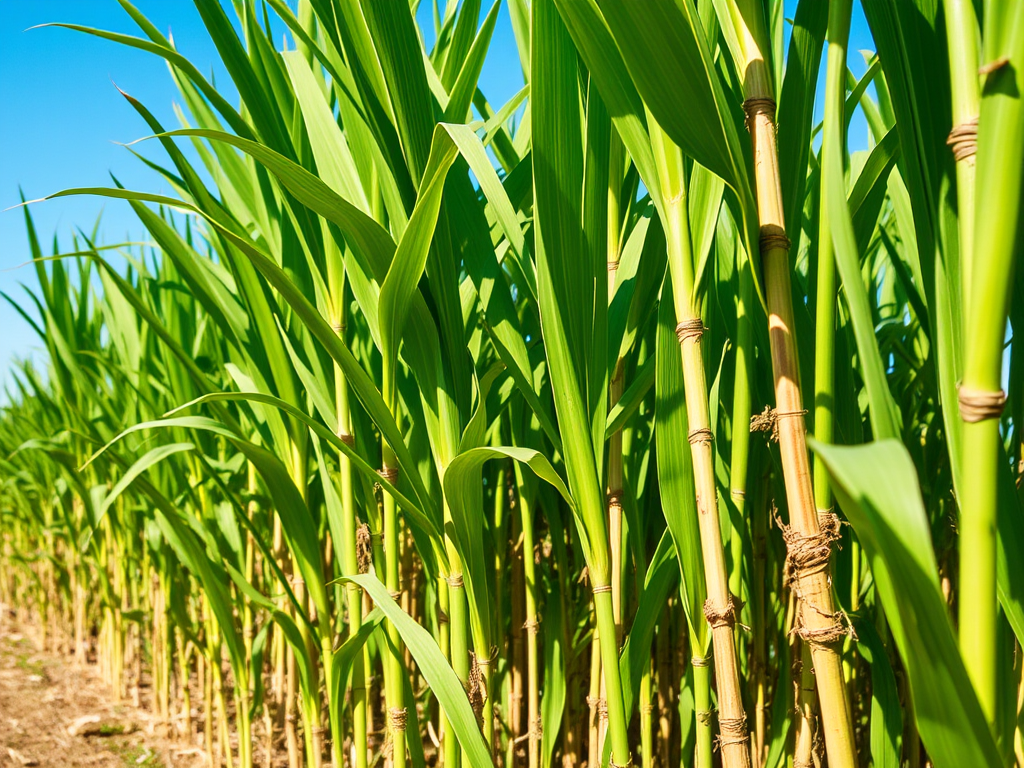
Sugarcane (गन्ना या ईख) is one of the most important cash crops in India, both from an agricultural and an economic perspective. It is the primary raw material for the production of sugar and a variety of by-products, such as jaggery (गुड़), ethanol, and molasses. Below is a detailed overview of sugarcane cultivation in India:
1. Scientific Name and Classification:
- Scientific Name: Saccharum officinarum
- Family: Poaceae (Grass family)
- Common Names: Sugarcane, “Ganna” (in Hindi), “Karkara” (in Kannada), “Sakkarai” (in Tamil), etc.
2. Geographical Distribution:
- India is the world’s second-largest producer of sugarcane, after Brazil.
- Sugarcane is grown across major agricultural states of India. The key producing states include:
- Uttar Pradesh: The largest producer, contributing about 40-45% of the total sugarcane production.
- Maharashtra: Second in production, particularly in the regions of Western Maharashtra.
- Karnataka, Tamil Nadu, Andhra Pradesh, Bihar, and Punjab are other significant producers.
- Sugarcane is primarily grown in the tropical and subtropical regions of India, where the climate is warm and there is a sufficient amount of rainfall.
3. Climate and Soil Requirements:
- Climate: Sugarcane requires a tropical to subtropical climate, with warm temperatures (around 20-30°C) and ample rainfall (1,200 to 1,500 mm annually). It needs a long growing season of 10-12 months to fully mature.
- Soil: Sugarcane grows best in well-drained, loamy soils rich in organic matter. Alluvial soils in river valleys and delta regions are ideal.
- Water Needs: Sugarcane is a high water-consuming crop. It requires consistent irrigation, especially during dry spells. Over the years, water scarcity has become a growing concern for sugarcane farming.
4. Varieties of Sugarcane:
- India grows a variety of sugarcane cultivars, including both sucrose-rich and fibrous varieties.
- Saccharum officinarum (Indian type): High in sucrose content and commonly used for sugar production.
- Saccharum spontaneum: Known for disease resistance, but lower sucrose content.
- Saccharum barberi: Adapted to northern India, especially in states like Punjab.
- Hybrids of the above species, such as Co-86032, Co-0238, and Co-92007, are popular due to their high yield and disease resistance.
5. Crop Duration and Growth:
- The growing period for sugarcane ranges from 10 to 18 months, depending on the variety, climate, and water availability.
- The crop is typically planted during the monsoon season (June to September) and harvested once it matures (usually between February and March for tropical varieties and November to December for subtropical varieties).
- First ratoon (second harvest) and second ratoon crops are often harvested after the initial planting, leading to continuous sugarcane production in some fields.
6. Sugarcane Farming Practices:
- Planting: Sugarcane is usually propagated through setts (cuttings of the cane), which are planted in furrows or trenches.
- Spacing: Proper spacing (about 1 meter between rows) is essential to allow good growth.
- Irrigation: Sugarcane requires abundant water, and many farmers depend on canal irrigation, tube wells, or rainwater harvesting.
- Fertilization: The crop requires high levels of nitrogen, phosphorus, and potassium, and fertilization practices are key to optimizing yields.
- Weeding: Weeds must be controlled to ensure healthy cane growth, especially in the early stages of development.
7. Harvesting and Yield:
- Harvesting: Sugarcane is harvested manually using sickles or mechanical harvesters. The cane is cut at the base, and the leaves are stripped off before the stalk is sent to the mill.
- Yield: The yield varies widely depending on factors like soil health, irrigation, and variety. On average, sugarcane yields around 60-80 tons per hectare, but this can rise up to 120 tons per hectare under ideal conditions.
8. Sugarcane Processing and By-Products:
- Sugar Production: The primary product derived from sugarcane is sugar, extracted by crushing the cane in mills. The juice is then boiled to separate the sucrose content.
- Molasses: A by-product that is used in the production of ethanol, alcohol, and animal feed.
- Bagasse: The fibrous residue left after crushing is used as a fuel for generating power in sugar mills, as well as in the production of paper, boards, and biomass pellets.
- Jaggery: Unrefined sugar, or gur, is made by boiling sugarcane juice, and it is a common sweetener in Indian households.
- Ethanol: Sugarcane is an important feedstock for bioethanol production, which is used as an alternative fuel.
9. Economic Importance of Sugarcane:
- Employment: Sugarcane farming is a major source of employment in rural areas, supporting millions of farmers, laborers, and workers in the sugar mills.
- Sugar Industry: India’s sugar industry is one of the largest in the world. It generates significant revenue from the production of sugar, ethanol, and other by-products.
- International Trade: India is one of the leading exporters of sugar and sugar products, with significant exports to countries like Bangladesh, Middle Eastern nations, and African countries.
- Revenue: The sugar industry contributes significantly to the country’s GDP and is crucial for India’s rural economy.
10. Challenges in Sugarcane Cultivation:
- Water Scarcity: Sugarcane is a water-intensive crop, and depleting groundwater levels in regions like Maharashtra and Uttar Pradesh pose a significant challenge.
- Price Fluctuations: The prices of sugar and by-products are often volatile, impacting the income of farmers.
- Disease and Pests: Sugarcane is susceptible to diseases like Red Rot, Top Shoot Borer, and Sugarcane Mosaic Disease. Pest management is a continuous challenge.
- Soil Degradation: Continuous cultivation of sugarcane in the same field can lead to soil degradation, requiring careful management of crop rotation and soil health.
- Climate Change: Irregular rainfall patterns and rising temperatures may affect the productivity of sugarcane crops.
11. Government Initiatives and Support:
- The Indian government has introduced various schemes to support sugarcane farmers, such as Minimum Support Price (MSP) for sugarcane, subsidies for irrigation, and loan waivers for distressed farmers.
- The National Biofuels Policy aims to increase the use of ethanol in the transport sector, thereby encouraging the use of sugarcane for bioethanol production.
- Government programs focus on improving irrigation efficiency, yield improvements, and research on disease-resistant varieties.
12. Sustainability and Future Prospects:
- Water Management: With sugarcane’s heavy reliance on water, efficient irrigation techniques like drip irrigation and rainwater harvesting are being promoted to ensure sustainable farming.
- Bioethanol Production: As global demand for renewable energy sources rises, India’s focus on bioethanol derived from sugarcane can significantly boost the sector’s growth and sustainability.
- Climate-Resilient Varieties: Research into drought-resistant and high-yielding sugarcane varieties is helping farmers adapt to changing climatic conditions.
- Organic Farming: Organic sugarcane farming is slowly gaining traction, as consumers demand products free from chemical residues.
Conclusion:
Sugarcane cultivation in India plays a critical role in the nation’s agricultural and economic landscape. While it faces challenges such as water scarcity and fluctuating market prices, it continues to be a vital source of livelihood for millions. With the growing emphasis on sustainability, bioenergy, and improved farming techniques, sugarcane cultivation in India is poised for continued growth and development in the future.
 KrishiCenter