
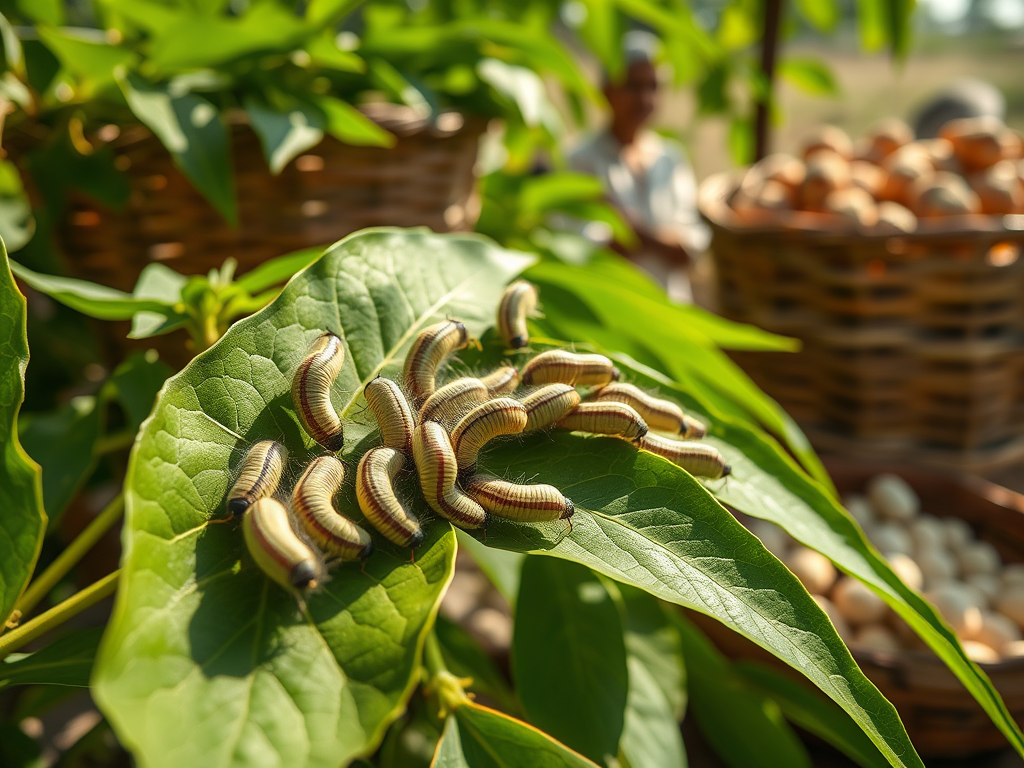
Sericulture in India: A Detailed Guide
Sericulture (रेशम की खेती), the cultivation of silkworms for the production of silk, has a long history in India, dating back to ancient times. India is one of the largest producers of silk in the world, and sericulture is a significant rural industry providing employment to millions of people. This guide will cover the various aspects of sericulture, including its history, types of silk produced, farming techniques, and the challenges faced by the industry.
1. Introduction to Sericulture
Sericulture involves the farming of silkworms to produce silk fibers. The primary raw material used in the production of silk is the cocoon, which is harvested from silkworms. India produces a variety of silk, the most notable being mulberry silk, tussar silk, muga silk, and eri silk.
2. History of Sericulture in India
Sericulture in India can be traced back over 5,000 years, with the earliest records appearing in ancient Chinese and Indian texts. India is credited with the discovery of sericulture, with the country being a major center for silk production for centuries.
- Silk Road Influence: The trade of silk was crucial in the development of the Silk Road, connecting India with China, Central Asia, and Europe.
- Historical Contribution: Indian silk was highly prized by rulers and traders, and the techniques of silk weaving and cultivation were passed down through generations.
3. Types of Silk Produced in India
India produces four major types of silk:
- Mulberry Silk: The most commonly produced silk, derived from the silkworm Bombyx mori. This type of silk is cultivated on mulberry trees, primarily in regions like Karnataka, West Bengal, Tamil Nadu, and Andhra Pradesh.
- Tussar Silk: Produced from the wild silkworm Antheraea mylitta, which feeds on a variety of trees such as oak and sal. Tussar silk is mostly found in Jharkhand, Odisha, and Chhattisgarh.
- Muga Silk: Known for its natural golden color, this silk comes from the Antheraea assamensis silkworm and is exclusive to Assam.
- Eri Silk: Eri silk is produced by the Samia ricini silkworm, which feeds on castor leaves. This type of silk is produced mainly in the northeastern states of India, particularly Assam, Arunachal Pradesh, and Manipur.
4. Stages of Sericulture
Sericulture consists of several stages, from rearing silkworms to harvesting silk fibers.
- Egg Production (Seed Technology):
- Selection of Silkworm Eggs: The first stage of sericulture involves obtaining quality silkworm eggs. These eggs are selected carefully based on the breed and characteristics required for the desired type of silk.
- Incubation: Eggs are incubated in a controlled environment with specific temperature and humidity until they hatch into larvae.
- Rearing of Silkworms (Larvae Stage):
- Hatching: Silkworm eggs hatch into larvae, also called caterpillars. The larvae need to be fed regularly, primarily with mulberry leaves in the case of Bombyx mori.
- Feeding: Silkworms need fresh mulberry leaves (or other tree leaves depending on the species) multiple times a day. This is a crucial phase for their growth and the production of silk.
- Molting: Silkworms molt multiple times during their growth, shedding their skin as they grow in size.
- Cocoon Formation (Pupation Stage):
- When the silkworm reaches full maturity (usually after 25-30 days), it begins to spin its cocoon. The silk is produced by a gland in the worm’s mouth and is extruded as a continuous thread.
- The cocoon is made up of a single long strand of silk, which can reach up to 1,000 meters in length.
- Silkworms spend about 3-4 days spinning the cocoon.
- Harvesting the Cocoon:
- Once the cocoon is fully formed, it is carefully harvested. It is important to harvest the cocoon before the silkworm emerges, as the process of emerging would break the silk thread and reduce the quality of the product.
- Reeling and Spinning:
- The harvested cocoons are boiled to soften the sericin (the protein that holds the silk threads together). This allows the thread to be unspooled or reeled.
- After reeling, the threads are twisted together to form threads suitable for weaving or spinning into fabrics.
- Dyeing and Weaving:
- Once the silk threads are ready, they are dyed and then woven into various forms of fabric like sarees, scarves, and other textiles.

5. Sericulture Farming Techniques
- Mulberry Cultivation: The main food of silkworms is mulberry leaves. Cultivating mulberry trees is an essential part of sericulture, particularly for mulberry silkworms. The trees are usually grown in well-drained, fertile soil. Pruning is important to maintain leaf quality and yield.
- Silkworm Rearing Houses: Rearing silkworms requires clean, well-ventilated, and temperature-controlled environments. The silkworms are kept in trays and must be shielded from diseases, pests, and humidity.
- Climate Requirements: Silkworms thrive in tropical and subtropical climates, with moderate temperatures (around 25-28°C). The humidity levels also need to be maintained to ensure optimal growth.
6. Challenges in Sericulture in India
Despite its historical importance and economic value, the sericulture industry in India faces several challenges:
- Fluctuating Prices: The price of silk can be volatile, affected by domestic and international market conditions.
- Pest and Disease Issues: Silkworms are prone to various diseases and pests, including bacterial infections, fungal diseases, and viruses, which can decimate a crop.
- Climate Change: Changes in weather patterns, including excessive rainfall, drought, or heatwaves, can impact mulberry cultivation and the health of the silkworms.
- Competition from Synthetic Fibers: Synthetic fabrics, such as polyester and nylon, have become cheaper alternatives to silk, reducing demand for natural silk.
- Lack of Skilled Labor: There is a need for skilled labor in various stages of sericulture, from egg production to reeling and weaving, which is often in short supply.
7. Government Initiatives and Support
To support the sericulture industry, the Indian government has introduced several initiatives:
- Sericulture Development Schemes: Programs like the National Sericulture Program and various state-level initiatives aim to provide financial support, training, and research.
- Financial Assistance: Loans and subsidies are provided to sericulture farmers to encourage them to expand and improve production.
- Research and Development: The Central Silk Board (CSB) and state sericulture research centers work to improve silkworm breeds, farming techniques, and post-harvest processing methods.
8. Future of Sericulture in India
India has the potential to further strengthen its position as a global leader in silk production. The key to success lies in:
- Sustainable Practices: Emphasizing eco-friendly practices in silkworm rearing and mulberry cultivation.
- Technological Advancements: Modernizing production techniques, including mechanization of mulberry harvesting, cocoon sorting, and reeling.
- Quality Improvement: Focus on improving the quality of silk produced, such as developing better breeds of silkworms and reducing defects in the silk.
Conclusion
Sericulture remains an essential industry in India, combining traditional practices with modern advancements. By promoting sustainable and efficient farming methods, improving silk quality, and addressing challenges such as pests and climate change, India can continue to thrive as a global silk producer.
 KrishiCenter