
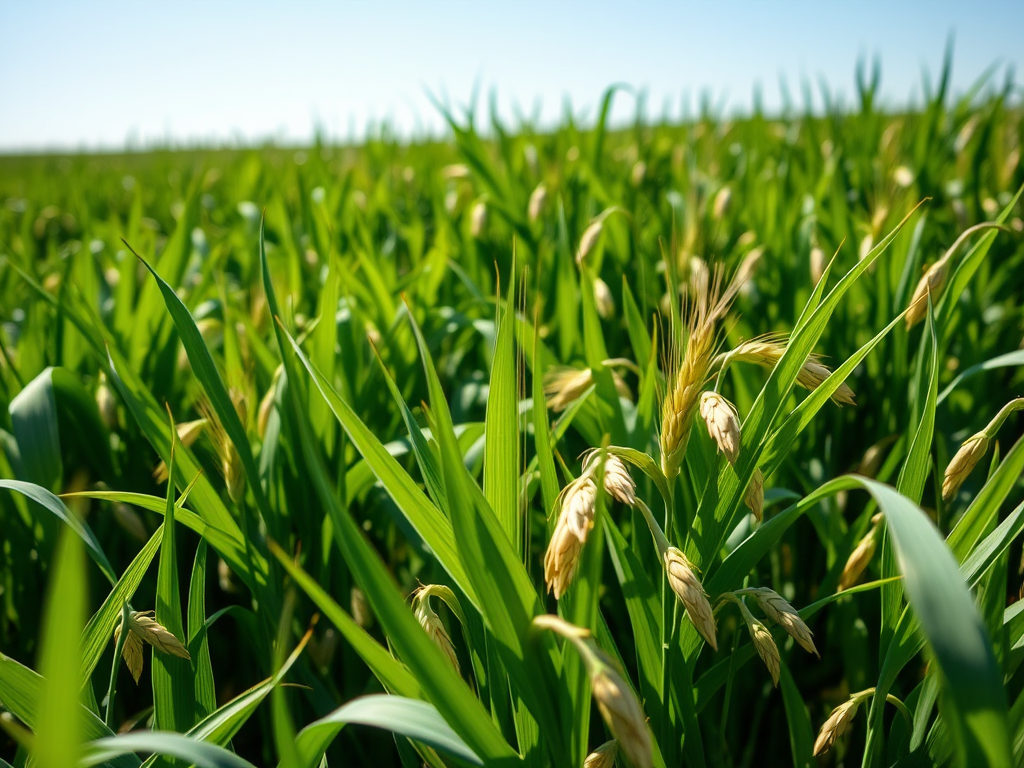
Oats Crop in India: Detailed Overview
Oats (Avena sativa) or जई is a cool-season cereal grain. It is gaining popularity in India for its nutritional value. It is also valued for its versatility. While oats cultivation in India is not as widespread as wheat or rice, it is an increasingly important crop. Its importance is due to its use as a health food. This is particularly true in the growing health-conscious and fitness segments. Oats are consumed in various forms including rolled oats, oat flour, and oat bran. They are also used as livestock feed. Oats are additionally found in industrial products.
1. Overview of Oats Cultivation in India
India is not one of the top global producers of oats (जई) , but its cultivation is increasing steadily due to rising domestic demand for healthy food options and increased awareness of the nutritional benefits of oats. Oats are grown primarily during the rabi (winter) season and are often part of a crop rotation system, especially in cooler regions of the country. The growing demand for oatmeal, instant oats, and oat-based snacks has spurred interest in its cultivation.
2. Major Oats-Producing States in India
Oats are grown in various parts of India, though the crop is mostly confined to the northern, north-western, and central regions, where cooler temperatures are conducive to growth. Some of the major oats-producing states in India include:
- Himachal Pradesh: The hill areas of Himachal Pradesh, such as Kullu and Mandi, are some of the leading producers of oats. The cool climate is well-suited for oats cultivation.
- Uttarakhand: Oats are grown in the hilly areas of Uttarakhand, particularly in Almora, Nainital, and Pauri Garhwal, where the cool, moist climate is ideal.
- Rajasthan: Oats are cultivated in cooler regions of Rajasthan, including Ajmer, Churu, and Sikar. The crop is grown mainly in the rabi season.
- Punjab: Oats cultivation is gaining popularity in regions like Amritsar, Ludhiana, and Patiala.
- Madhya Pradesh: In states like Madhya Pradesh, oats are grown on a small scale, particularly in areas with cooler climates.
- Haryana: Oats are cultivated in parts of Haryana, particularly in districts like Hisar and Fatehabad.
- Maharashtra: Oats farming is practiced in parts of Maharashtra, including Nagpur and Wardha, though it is less widespread.
3. Climate and Soil Requirements
Climate
- Temperature: Oats are a cool-season crop and thrive in temperatures ranging from 15°C to 25°C. They are sensitive to high temperatures during the growing season, which may lead to reduced yields. Therefore, the rabi season (winter) is ideal for oats cultivation in India, as it provides the necessary cooler temperatures.
- Rainfall: Oats require moderate rainfall, around 600–800 mm during the growing season. While oats can grow in dry conditions, excessive waterlogging or heavy rains during the growing period can negatively affect yield.
- Frost Tolerance: Oats are somewhat frost-tolerant and can withstand mild frost, which helps them grow well in the cooler months.
Soil
- Soil Type: Oats grow best in well-drained, loamy soils. They are not particularly demanding in terms of soil quality but prefer soils with good organic content. Ideal soil for oats should have good aeration and moisture retention.
- pH Range: Oats prefer slightly acidic to neutral soils, with an optimal pH range of 6.0 to 7.0. Highly alkaline or acidic soils may reduce yield and affect plant growth.
- Drainage: Well-drained soils are essential to avoid waterlogging, which can lead to root rot and other diseases.
4. Varieties of Oats in India
There are different varieties of oats grown in India, which vary in terms of their yield potential, disease resistance, and quality of grain. Some of the most popular varieties include:
- JHO-822: A commonly grown high-yielding variety in India.
- UPO-12: Known for its better adaptation to Indian climatic conditions and high yield.
- DL-56: A popular variety for areas like Punjab and Himachal Pradesh.
- K-10: A variety with good quality grains and suitable for small-scale farming.
- Kashmir Oats: A variety grown in the cooler regions of Kashmir and Uttarakhand.
There are also hybrid varieties that have been developed to enhance disease resistance and yield.
5. Cultivation Practices
Season: Oats are mainly grown in the rabi season, from October-November to February-March. In some regions with irrigation facilities, oats may also be grown in the kharif (monsoon) season, but this is relatively less common.
Land Preparation: Oats require fine seedbeds, so land is typically plowed followed by harrowing and leveling. This ensures proper seed-to-soil contact and helps in uniform germination.
Sowing: The seed rate for oats is typically around 50–60 kg per hectare. Oats are usually sown with a seed drill or by broadcasting, with a spacing of 15–20 cm between rows. The depth of sowing is usually about 2-3 cm.
Fertilization: Oats require adequate nutrition for optimal growth. The general fertilizer recommendation is:
- Nitrogen (N): Around 30-50 kg/ha to promote vegetative growth.
- Phosphorus (P): 25-30 kg/ha to support root development and early growth.
- Potassium (K): 20-30 kg/ha to improve grain filling and quality.
- Micronutrients: If deficiencies are noted, additional micronutrients such as zinc, boron, and iron can be added.
Irrigation: Oats are a relatively drought-tolerant crop. However, they require sufficient moisture during germination and early growth stages. Depending on the climatic conditions, 2-3 irrigations may be required, particularly in dry regions.
Weed Control: Weeds are a significant problem in oats cultivation, particularly during the early stages. Weeds are controlled through manual weeding, herbicides, or by intercropping with legumes such as peas.
Pest and Disease Management: Oats are prone to several pests and diseases, including:
- Pests:
- Aphids: Can reduce the yield by sucking sap from the plants.
- Armyworms: They damage the plant by feeding on leaves and stems.
- Rootworms: These pests attack the root system and can stunt plant growth.
- Diseases:
- Rust: A fungal disease that affects the leaves and reduces photosynthetic efficiency.
- Powdery Mildew: A fungal disease that causes white patches on leaves, reducing plant growth and yield.
- Downy Mildew: Another fungal infection that stunts growth.
- Leaf Spot: Caused by fungi, this disease can lead to defoliation.
6. Harvesting and Yield
Harvesting: Oats are harvested when the grains mature and turn light brown or golden. The plant is ready for harvesting when the seeds are firm but not fully dried. Threshing is done by mechanical means to separate the seeds from the plants.
Yield: The average yield of oats in India ranges between 1.0 to 1.5 tons per hectare under rain-fed conditions. With proper irrigation, better management, and high-yielding varieties, the yield can go up to 2.0–2.5 tons per hectare.
7. Uses of Oats
Human Consumption:
- Oats for Breakfast: Oats are widely consumed as breakfast foods, particularly in the form of oatmeal, muesli, and porridge.
- Processed Products: Oats are used to make various processed products like instant oats, oat-based snacks, biscuits, cakes, and oat flour.
- Health Food: Oats are rich in soluble fiber (beta-glucan), which helps lower cholesterol and improve heart health. Oats are also gluten-free (though cross-contamination may occur in processing) and are considered an excellent option for people with gluten sensitivity.
Animal Feed:
- Oat Straw: After harvesting the grain, the remaining plant material is used as fodder for livestock, particularly cattle and horses.
- Oat Hay: The leaves and stems of the oats plant are used to produce hay for animal feed.
Industrial Use:
- Oat Bran: Used in food processing, oat bran is a high-fiber by-product that is often incorporated into baked goods or cereal products.
8. Economic Importance of Oats in India
- Nutritional Value: Oats are increasingly recognized as a
healthy food item, which is contributing to the growth of its market in India. The increasing awareness of its nutritional benefits, such as its role in lowering cholesterol and promoting heart health, is expanding its demand.
- Market Growth: With the rise of the health-conscious consumer, especially in urban areas, demand for oats-based products like instant oats and ready-to-eat oatmeal is rising steadily.
- Employment: Oats cultivation provides employment opportunities, especially in the cooler regions where other crops may not be viable. It supports both small-scale farmers and industries related to oat processing.
9. Challenges in Oats Cultivation
- Limited Awareness: While oats are gaining popularity, many farmers are still unaware of its potential as a commercial crop.
- Climate Sensitivity: Oats are sensitive to high temperatures and require a cool climate for optimum growth. Global warming and temperature variations could pose risks to future production.
- Low Yields: The yields of oats in India are generally lower compared to other countries, such as the United States and Canada, which may hinder the growth of commercial oats farming.
- Pests and Diseases: Oats are susceptible to several pests and diseases, which can lower the yield and quality of the crop.
10. Future Prospects
- Increased Demand: With rising health consciousness among Indian consumers, the demand for oats is likely to continue increasing.
- Research and Development: Ongoing research is focused on developing high-yielding and disease-resistant oat varieties suited to the Indian climate.
- Export Potential: As demand for oats-based products increases globally, India could explore opportunities for exporting oats and its by-products to international markets.
Conclusion
Oats is a promising crop for India due to its growing demand as a health food. While its cultivation is currently limited to specific regions, its role in the agricultural sector is poised to grow, driven by changing dietary patterns and increased awareness of its nutritional benefits. With better farming practices, research into high-yielding varieties, and improved pest management, oats cultivation in India could see significant expansion in the future.
 KrishiCenter