
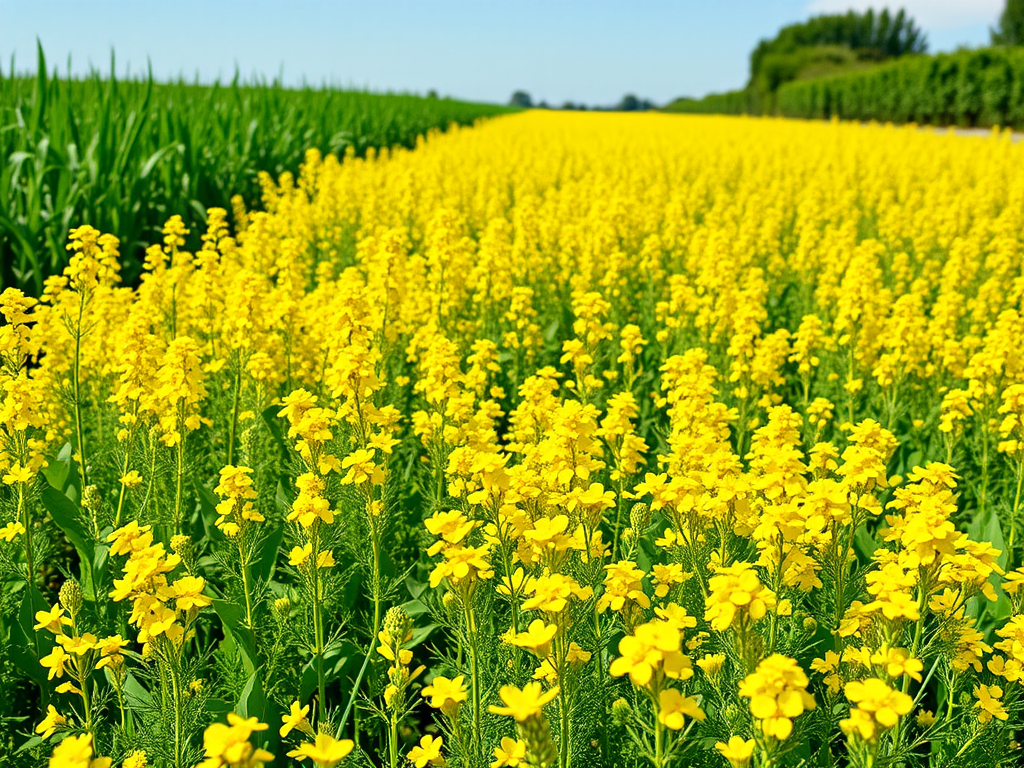
Mustard Crop in India: Detailed Overview
Mustard (Brassica juncea) or सरसों, commonly known as rapeseed in some parts of the world, is one of the most important oilseed crops in India. It holds significant economic and agricultural value, both in terms of food and industrial use. Mustard oil is widely consumed as a cooking medium, while the seeds are processed for oil extraction. The crop is grown primarily in the rabi (winter) season and is a key component of India’s agricultural production. Mustard cultivation is spread across various regions, making it a versatile crop that supports the livelihood of millions of farmers.
1. Overview of Mustard Cultivation in India
India is one of the largest producers of mustard (सरसों) in the world, with Rajasthan being the top producer, followed by Haryana, Punjab, Uttar Pradesh, and Madhya Pradesh. Mustard is an oilseed crop with a short growing cycle (about 3-4 months), making it well-suited for India’s farming systems, particularly in areas where other crops may not be viable due to the cooler winter conditions.
2. Major Mustard-Producing States in India
Mustard cultivation in India is concentrated in the northern, north-western, and central regions, particularly in the following states:
- Rajasthan: The largest producer of mustard, contributing about 40-50% of India’s total mustard production. The states of Ajmer, Bikaner, Churu, and Sikar are major mustard-growing regions.
- Haryana: A significant mustard producer, particularly in districts like Sirsa, Fatehabad, and Hisar.
- Punjab: Mustard is grown in districts such as Ludhiana, Patiala, and Bathinda, where the crop is sown as part of the crop rotation system with wheat.
- Uttar Pradesh: Mustard is grown in areas like Meerut, Saharanpur, and Bareilly. It’s an important crop in the state’s rabi season.
- Madhya Pradesh: Mustard is cultivated in regions like Ujjain, Mandsaur, and Neemuch.
- Maharashtra: Although not as significant as the northern states, Maharashtra has started contributing more to mustard production in recent years, especially in Nagpur, Amravati, and Akola.
3. Climate and Soil Requirements
- Climate: Mustard is a cool-season crop that grows best in moderate temperatures ranging from 15°C to 25°C. It is sensitive to frost and high temperatures during flowering and pod development. The crop requires a well-distributed amount of rainfall during its growing period, ideally between 500-800 mm. In regions with a dry climate, it is typically grown during the rabi (winter) season to take advantage of cool temperatures and available moisture.
- Soil: Mustard grows well in loamy, well-drained soils with good organic matter content. It prefers slightly alkaline soils with a pH range of 6 to 8. Well-prepared soil is necessary to avoid waterlogging, which can affect the growth of the roots and reduce yield.
4. Varieties of Mustard in India
India grows a range of mustard varieties, classified based on the oil content, disease resistance, and yield potential. Some of the most common varieties are:
- Yellow Mustard (Brassica juncea): This is the most common variety grown in India, used primarily for oil extraction. Some popular varieties include:
- Pusa Mustard 26
- Varuna
- Kranti
- Rajasthan Mustard-1
- T-59
- Brown Mustard (Brassica nigra): This variety is less commonly grown but used for pickling and culinary purposes. It has a stronger, more pungent flavor compared to yellow mustard.
- Hybrid Mustard Varieties: Recent developments in hybrid mustard varieties have led to an increase in yield and oil content. These hybrids are more resistant to diseases and provide higher-quality oil.
- Examples include NRCHB 101 and Dr. T-9.
5. Cultivation Practices
- Season: Mustard is predominantly grown in the rabi (winter) season, starting in October-November and harvested in February-March. It can be grown as a pure crop or as part of a crop rotation system with wheat or pulses.
- Land Preparation: The land is prepared by plowing, followed by harrowing to ensure a fine seedbed. This is important for proper seed germination. Fertilizer application is based on soil testing, and must be managed properly to avoid excessive nitrogen.
- Sowing: The ideal seed rate for mustard is about 4-5 kg per hectare. It is sown using seed drills, with rows spaced about 30 cm apart and seeds planted at a depth of 2-3 cm. In some areas, mustard is sown by broadcasting.
- Irrigation: Mustard requires very minimal irrigation, primarily for seed germination and flowering. In regions with insufficient rainfall, one to two irrigations may be required. Over-irrigation should be avoided to prevent diseases like downy mildew and white rust.
- Fertilization: Mustard requires essential nutrients like nitrogen, phosphorus, and potassium. In addition, micro-nutrients like boron are essential for better pod formation. Farmers are encouraged to use balanced fertilizers to improve soil fertility and enhance yield.
- Weed Control: Mustard is susceptible to weed competition, especially during the early stages of growth. Weed management is typically achieved through herbicides, manual weeding, or intercropping with legumes.
6. Pests and Diseases
Mustard is vulnerable to several pests and diseases, which can affect yield and oil quality.
- Pests:
- Mustard aphid: A major pest that causes damage to the leaves and transmits diseases.
- Whitefly: Known to cause yellowing of leaves and can spread viral diseases.
- Cutworms: They attack young plants, cutting them off at the soil level.
- Diseases:
- Downy mildew: A fungal disease that causes yellowing and stunted growth. It is prevalent in humid conditions.
- White rust: A fungal infection that affects the leaves, stems, and pods, reducing overall productivity.
- Alternaria blight: A fungal disease that causes dark spots on leaves and stems, leading to defoliation.
- Sclerotinia rot: A disease caused by a fungus, leading to stem rot and poor pod development.
7. Harvesting and Yield
- Harvesting: Mustard is harvested when the plants turn yellow, and the pods become brittle and break upon slight pressure. The plants should be allowed to dry in the field for a few days before harvesting to reduce moisture content in the seeds. The crop is usually harvested in February-March.
- Yield: The average yield of mustard in India ranges between 800-1200 kg per hectare in rain-fed areas. Under irrigated conditions and with good management practices, yields can reach up to 1500-2000 kg per hectare.
8. Uses of Mustard
- Mustard Oil: The primary use of mustard seeds is for oil extraction. Mustard oil is widely used in cooking, especially in northern and eastern India, and is known for its pungency and distinctive flavor. It is also used in massage oils and cosmetics.
- Culinary Use: In addition to oil, mustard seeds are used as a spice in cooking, particularly in Indian, Bangladeshi, and Pakistani cuisines. The seeds are used in pickles, curries, and seasonings.
- Mustard Cake: After oil extraction, the residual cake is used as animal feed and organic fertilizer. It is high in protein and can be used in crop rotation systems to improve soil health.
- Medicinal Uses: Mustard is believed to have anti-inflammatory and antioxidant properties. Mustard oil is sometimes used in traditional medicine for treating ailments such as muscle pain, joint pain, and even respiratory issues.
9. Economic Importance of Mustard in India
- Oilseed Production: Mustard is the second-largest oilseed crop in India after soybean, and it is the primary source of vegetable oil in northern India. The mustard oil industry is a major contributor to the country’s edible oil market.
- Employment Generation: Mustard cultivation provides livelihood to millions of farmers, especially in the northern and central regions of India. The crop also supports industries related to oil extraction, processing, and packaging.
- Exports: India exports mustard oil and other mustard-based products to countries like Nepal, Bangladesh, and the Middle East. However, the export of mustard seeds is relatively less significant compared to the production of oil.
10. Challenges in Mustard Cultivation
- Climate Change: Unpredictable weather
patterns, including delayed monsoon and higher temperatures, are impacting the timing and growth of mustard crops.
- Low Yield: Despite being a major oilseed crop, the yields of mustard in India are lower than those in countries like Canada or China, where improved varieties and better cultivation practices are in place.
- Pests and Diseases: Outbreaks of aphids, white rust, and downy mildew continue to challenge mustard growers, leading to reduced quality and yield.
- Price Fluctuations: The prices of mustard often fluctuate due to market dynamics, affecting farmer income and stability in production.
11. Future Prospects
- Hybrid Varieties: Research on hybrid mustard varieties with higher oil content, disease resistance, and better yields is underway. These can significantly improve productivity and economic returns for farmers.
- Sustainability: There is growing interest in organic mustard farming and sustainable agricultural practices to reduce pesticide use and improve soil health.
- Export Potential: As global demand for mustard oil and other mustard products rises, India can increase its exports and improve its position in the global oilseed market.
Conclusion
Mustard is a vital crop for India’s agricultural economy, particularly for oil production and culinary uses. It plays an important role in supporting millions of farmers and contributing to the country’s oilseed industry. With continued research, improved management practices, and better pest control measures, mustard cultivation has the potential to become even more productive and economically viable in the future.
 KrishiCenter