
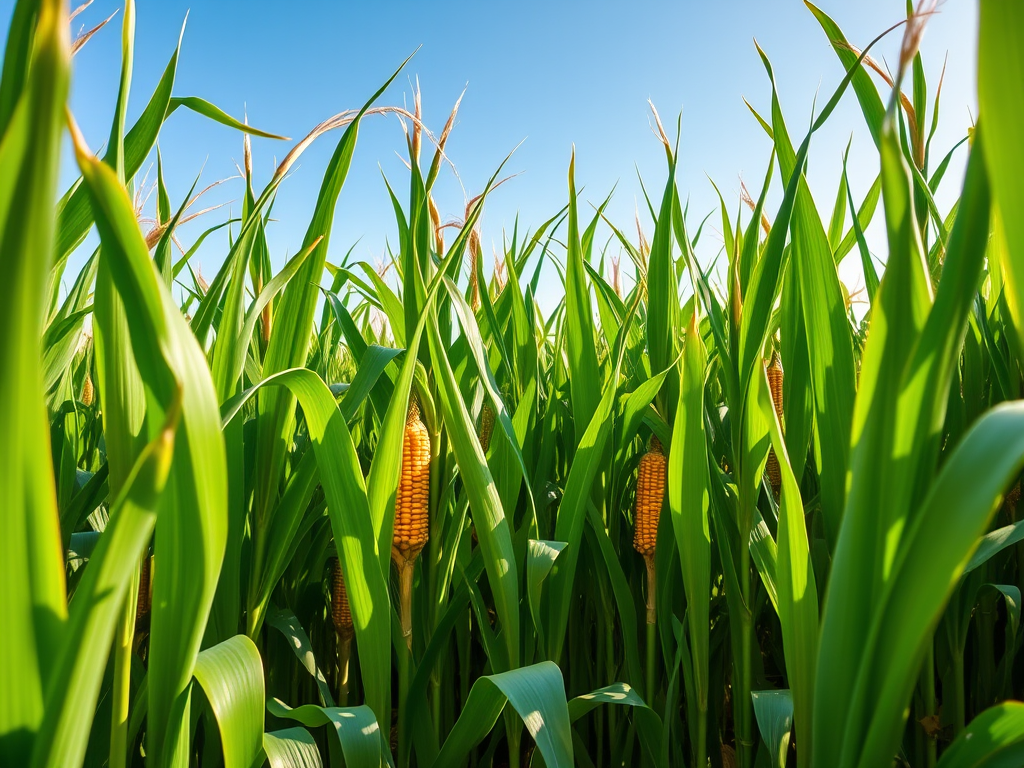
Maize Crop in India: Detailed Overview
Maize (Zea mays) or मक्का, also known as corn, is one of the most important cereal crops in India. It is the third most cultivated cereal in the country, after rice and wheat. It plays a significant role in the economy as both a food and industrial crop. It is cultivated in a wide range of agro-climatic zones across India. It is an essential part of the agricultural landscape, especially in the rainfed and irrigated regions.
1. Overview of Maize Cultivation in India
Maize (मक्का) is grown for a variety of purposes. It is used for food, fodder, and industrial use. Maize also serves as a cash crop for farmers. In addition to being a staple food for millions of people, it is widely used as a raw material in the food processing industry, animal feed, and as biofuel. Maize is very versatile. It has a relatively short growing cycle. It also has high adaptability to different climates. These qualities make it a vital crop in Indian agriculture.
2. Major Maize-Producing States in India
Maize is grown in almost all states of India, but some of the major producers are:
- Karnataka: Karnataka is one of the top producers of maize, particularly in the Dharwad, Bagalkot, Haveri, and Belagavi regions. The state has favorable agro-climatic conditions for maize cultivation.
- Bihar: Maize is an important crop in Bihar, particularly in the Patna, Vaishali, and Nalanda districts. It is mainly grown in rainfed areas.
- Madhya Pradesh: The state has a significant area under maize cultivation, especially in districts like Indore, Sehore, and Ujjain.
- Uttar Pradesh: Maize is grown in Mirzapur, Jaunpur, and Azamgarh. It is an important crop in both the rainfed and irrigated regions.
- Rajasthan: In regions like Kota, Ajmer, and Bhilwara, maize is cultivated, particularly in the arid zones.
- Andhra Pradesh: Khammam, Warangal, and Nalgonda are key districts in maize production.
- Punjab and Haryana: These states also grow maize, though the area is comparatively smaller. In Punjab, the crop is mainly grown in Hoshiarpur and Muktsar districts.
- Tamil Nadu: Coimbatore, Erode, and Tiruppur are significant maize-growing regions.
- West Bengal: Purulia, Bankura, and Medinipur are some of the important maize-growing areas.
3. Climate and Soil Requirements
Climate
- Temperature: Maize grows best in regions with a temperature range of 20°C to 30°C. The crop is sensitive to frost and requires a warm growing season. High temperatures above 40°C can reduce yield, particularly during the flowering and pollination stages.
- Rainfall: Maize is a rainfed crop but requires adequate moisture during the growing season. The ideal rainfall for maize cultivation is between 600 mm and 1000 mm annually. However, it can also be grown in irrigated conditions, where water availability is controlled.
- Frost Sensitivity: Maize is very sensitive to frost during the early stages of growth and flowering. Frost can damage both young plants and the cob.
Soil
- Soil Type: Maize grows well in well-drained, loamy soils with good water retention capacity. It is adaptable to a range of soil types, including sandy, clayey, and loamy soils.
- pH Range: The crop prefers slightly acidic to neutral soils with a pH range of 5.8 to 7.5. High salinity or acidic conditions may affect growth and yield.
- Drainage: Well-drained soils are essential as waterlogging can severely damage the maize plant. In regions with poor drainage, the use of raised beds or contour farming can improve yields.
4. Varieties of Maize in India
India grows both yellow and white maize, with a range of varieties suited for different purposes, such as food, fodder, and industrial use. Some popular varieties of maize include:
- Hybrid Varieties: These varieties are high-yielding, disease-resistant, and better suited for commercial farming. Some notable hybrid varieties include:
- Pioneer 3736
- NK 6240
- DEKALB DKC 9126
- Kaveri 434
- Open Pollinated Varieties:
- JH-345
- Ganga-2
- Vijaya
- Rajendra Makka-1
- Special Varieties:
- Sweet Corn: Used primarily for processing into canned or frozen products, sweet corn varieties like Vivek 20 and Vivek 21 are gaining popularity.
- Popcorn: Popcorn maize varieties are cultivated in specific regions for snack production.
5. Cultivation Practices
Season:
- Kharif (Monsoon) Season: Maize is primarily grown during the Kharif season (June to September), relying on the monsoon rains for moisture.
- Rabi Season: In areas with adequate irrigation, maize is also grown in the rabi season (October to March), with better control over water supply.
Land Preparation:
- Land is usually plowed followed by harrowing to break clods and prepare a fine seedbed.
- Organic manures like compost or farmyard manure (FYM) are often incorporated into the soil before sowing to improve fertility.
Sowing:
- Seed Rate: The typical seed rate for maize is 20–25 kg per hectare for hybrid varieties and 25–30 kg per hectare for open-pollinated varieties.
- Spacing:
- Row-to-row spacing: 60–75 cm
- Plant-to-plant spacing: 20–25 cm.
This ensures proper aeration and growth.
- Depth: Seeds are usually sown at a depth of 3–5 cm.
Irrigation:
- In rainfed areas, maize depends largely on rainfall, but in regions with irrigation facilities, 2–3 irrigations can increase yields.
- Critical stages that require irrigation include:
- Sowing (to ensure uniform germination).
- Knee-high stage (to promote healthy vegetative growth).
- Cob formation (to ensure proper grain filling).
Weed and Pest Management:
- Weed Control: Weeds can be controlled through manual weeding, pre-emergence herbicides like Atrazine, and post-emergence herbicides like 2,4-D.
- Pest Control: Maize is vulnerable to pests like:
- Armyworm: Attacks leaves and reduces yield.
- Stem Borer: Affects the stalk and impairs growth.
- Rootworm: Damages roots and reduces plant stability.
- Fall Armyworm: A relatively new pest causing significant damage in India.
- Diseases: Maize is susceptible to diseases such as:
- Downy Mildew: Causes yellowing and wilting of leaves.
- Maize Rust: Fungal disease that affects leaves and reduces photosynthesis.
- Fusarium Ear Rot: Causes grain rotting and loss of quality.
6. Harvesting and Yield
Harvesting:
- Maize is typically harvested when the cobs are fully mature and the kernels turn hard and dry.
- The leaves of the plant turn yellow or brown, and the husks around the cob become dry. This is usually around 90–120 days after sowing, depending on the variety.
- Manual harvesting is commonly done, but mechanized harvesting methods like combine harvesters are also becoming popular in large-scale farming.
Yield:
- The average yield of maize in India varies significantly depending on the region, variety, and farming practices. In rainfed conditions, the yield typically ranges from 1.5 to 2 tons per hectare.
- With irrigation and improved practices, yields can reach 3 to 4 tons per hectare, and for hybrid varieties, yields can go as high as 5 to 6 tons per hectare.
7. Uses of Maize
Human Consumption:
- Food: Maize is widely consumed as roti, porridge, and upma in rural areas. It is also used in maize flour and as grits.
- Snack Foods: Maize is used to make cornflakes, corn snacks, and popcorn.
- Sweet Corn: Grown for processing into canned, **f
rozen**, and fresh products.
Animal Feed:
- Maize is widely used as fodder for livestock, particularly in the form of silage. The crop is a high-energy feed, ideal for dairy cattle, poultry, and swine.
Industrial Use:
- Maize Starch: Maize starch is used in the textile, paper, and food industries.
- Biofuels: Maize is used in the production of ethanol, contributing to India’s renewable energy goals.
- Corn Oil: Extracted from maize germ, it is used in cooking and as an ingredient in processed foods.
8. Economic Importance of Maize
- Income Source: Maize cultivation provides a major source of income for farmers, especially in rainfed areas where other crops may not be viable.
- Food Security: It is an important part of India’s food security, especially in areas where rice and wheat are less suitable due to climatic conditions.
- Industrial and Export Potential: With growing industrial demand for maize-based products and biofuels, India has substantial export potential in global maize markets.
9. Challenges in Maize Cultivation
- Pests and Diseases: Insect pests like armyworm, stem borer, and rootworm, and diseases like downy mildew and rust, pose significant challenges to maize farmers.
- Water Management: In rainfed areas, irregular rainfall and water scarcity can significantly affect yields.
- Low Yield Potential: Compared to global standards, maize yields in India are relatively low, and improving productivity remains a key challenge.
- Market Price Volatility: Maize prices can fluctuate greatly, which impacts the income stability of farmers.
10. Future Prospects
- Hybrid Varieties: The development of high-yielding and pest-resistant hybrid varieties is expected to boost production.
- Increased Demand: The growing demand for maize-based products in the food, feed, and industrial sectors is expected to provide a stable market for maize in the future.
- Research and Development: Continued research into improved varieties, disease-resistant crops, and sustainable agricultural practices will contribute to the future growth of maize cultivation.
Conclusion
Maize is a vital crop for India, with significant potential for growth in food production, livestock feed, and industrial use. With improved varieties, better pest and disease management, and sustainable water use practices, maize cultivation can be further optimized to meet the demands of the growing population and economy.
 KrishiCenter