
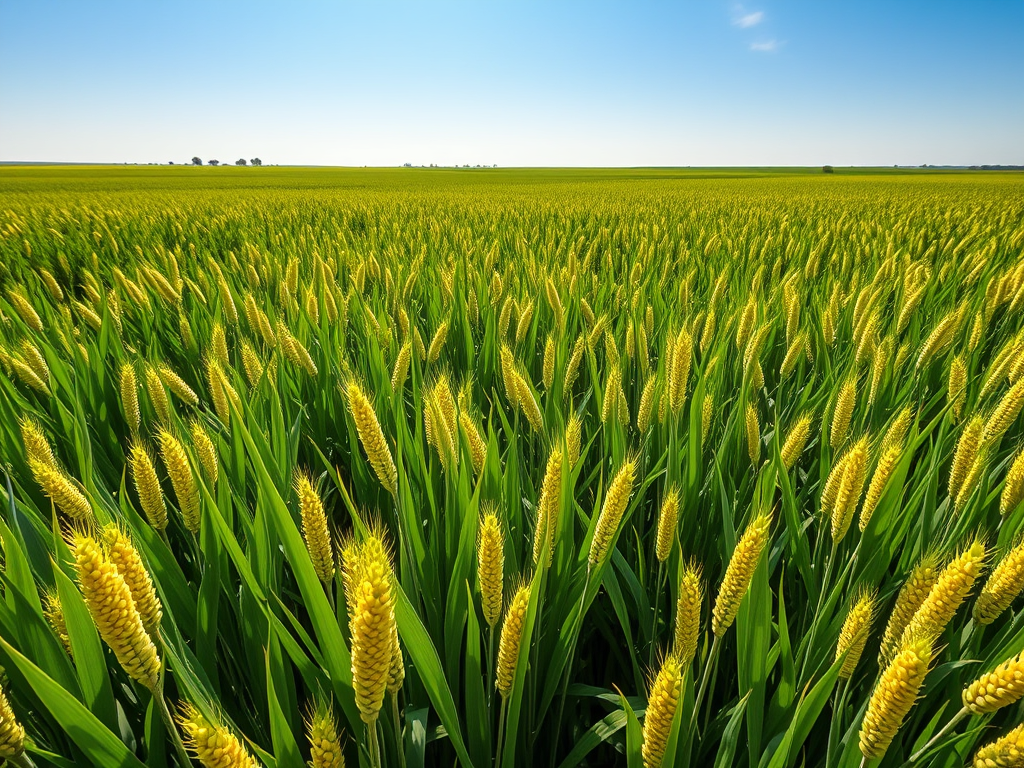
Jowar Crop in India: Detailed Overview
Jowar (Sorghum bicolor) or ज्वार is one of the oldest and most important cereal crops in India. It is widely grown in both rainfed and irrigated areas, particularly in regions with hot and dry climates. Known for its drought-resistant properties, Jowar plays a critical role in the food security and livelihood of millions of farmers, especially in the semi-arid and rainfed areas of India. It is a staple food in many parts of the country, used for making roti, porridge, upma, and bhakri. Additionally, Jowar is important as fodder for livestock, and its grain is used in the production of ethanol, biofuels, and alcohol.
1. Overview of Jowar Cultivation in India
India is the world’s largest producer of Jowar (ज्वार), contributing about 40% of the global production. Despite a decrease in its area of cultivation over the past few decades, Jowar continues to be an essential crop for the agricultural economy, particularly in rain-fed and arid regions. The crop is cultivated mainly in the Kharif (monsoon) season, and it is grown in diverse agro-climatic conditions across India.
2. Major Jowar-Producing States in India
The main states where Jowar is cultivated include:
- Maharashtra: The largest producer of Jowar in India, accounting for around 40% of the total area under Jowar cultivation. Key districts include Nanded, Solapur, Beed, Ahmednagar, and Aurangabad.
- Karnataka: Jowar is grown extensively in Bagalkot, Dharwad, Bijapur, and Belgaum.
- Telangana: The crop is also important in Adilabad, Karimnagar, and Nalgonda.
- Andhra Pradesh: Particularly in areas like Prakasam, Guntur, and Anantapur, Jowar plays a significant role in the state’s agricultural economy.
- Rajasthan: In regions like Jodhpur, Barmer, and Bikaner, Jowar is grown in arid and semi-arid regions.
- Madhya Pradesh: Jowar is grown in areas like Shivpuri, Gwalior, and Datia.
- Uttar Pradesh: While Uttar Pradesh is primarily known for other crops, Jowar is cultivated in pockets of Chitrakoot, Banda, and Mirzapur.
3. Climate and Soil Requirements
Climate
- Temperature: Jowar is a heat-loving crop that thrives in high temperatures. It requires a temperature range of 25°C to 35°C during the growing season.
- Rainfall: Jowar is considered a drought-resistant crop, making it ideal for areas with unpredictable rainfall. However, it does require adequate moisture during germination and early growth stages. It is usually grown in regions with 300–800 mm of annual rainfall, typically in semi-arid regions.
- Frost Sensitivity: Jowar is highly sensitive to frost, especially during flowering and grain-filling stages. Frost can damage the crop significantly.
Soil
- Soil Type: Jowar grows well in well-drained, loamy soils, but it can tolerate a wide range of soil types, including sandy, clay, and alkaline soils.
- pH Level: The crop prefers soils with a pH between 6.0 and 7.5. Highly acidic or saline soils may result in poor growth.
- Drainage: Good drainage is essential as Jowar is sensitive to waterlogging, which can lead to root rot and other diseases.
4. Varieties of Jowar in India
India grows several varieties of Jowar, developed for high yield, disease resistance, and adaptability to different agro-climatic conditions. Some of the commonly grown varieties are:
- Madhya Pradesh Local: A well-known variety in Madhya Pradesh.
- M-35-1: Developed for high yield and good disease resistance.
- SPV 462: Popular in Maharashtra for its high yield and drought resistance.
- CSV 15: Commonly grown in Karnataka and Maharashtra due to its excellent grain quality.
- R-522: A hybrid variety with higher yield potential.
- N2-1: Known for its tolerance to water stress and good grain quality.
- CSV 22: A high-yielding, drought-resistant variety, particularly suited to semi-arid regions.
5. Cultivation Practices
Season:
- Kharif Season: Jowar is primarily grown during the Kharif season, from June-July to October-November, using the monsoon rains. It can also be grown in some parts during the rabi season, especially with irrigation.
Land Preparation:
- Land should be prepared by plowing, followed by harrowing and levelling to create a fine seedbed.
- Fertilization: Based on soil testing, fertilizers should be applied in balanced amounts. Jowar requires nitrogen, phosphorus, and potassium to boost growth and yield. Organic fertilizers and green manuring practices are encouraged to enhance soil fertility.
Sowing:
- Seed Rate: The recommended seed rate is 7–8 kg per hectare for rainfed areas and 6–7 kg per hectare for irrigated areas.
- Spacing: The rows should be spaced around 45–60 cm apart, and seeds should be sown at a depth of 3–5 cm.
- Sowing Method: Jowar can be sown using a seed drill or by broadcasting. In rainfed areas, broadcasting is common, while in irrigated fields, seed drills are used for better germination.
Irrigation:
- Jowar is typically a rainfed crop and does not require frequent irrigation. However, in drought-prone areas or during dry spells, 2-3 irrigations can improve yields.
- In the rabi season, irrigation is essential for optimum growth.
Weed Control:
- Weeds can compete with Jowar, especially during the early growth stages. Weed control is essential through:
- Pre-emergence herbicides like Pendimethalin or Atrazine.
- Manual weeding or inter-cropping with legumes.
Pests and Diseases:
Jowar is vulnerable to several pests and diseases, including:
- Pests:
- Shoot fly: It damages the young plants, causing stunted growth.
- Armyworm: This pest feeds on the leaves, affecting photosynthesis.
- Grain weevils: These are found in the stored grain and damage it.
- Diseases:
- Leaf spot: A fungal disease that causes lesions on leaves, reducing photosynthetic efficiency.
- Smuts: Sorghum smut is a fungal infection that infects the plant’s ears and reduces grain quality.
- Rust: Fungal disease that affects the leaves, leading to yellowish-orange patches.
6. Harvesting and Yield
Harvesting:
- Maturity: Jowar is ready for harvest when the grains are firm and the plants turn yellow. The crop is typically harvested in October-November for the Kharif season.
- Harvesting Method: Jowar is harvested by manual cutting or with the help of harvesting machines.
- After harvesting, the crop is threshed to separate the grains from the stalks.
Yield:
- The average yield of Jowar in India ranges from 1.0 to 1.5 tons per hectare in rainfed areas.
- With irrigation and improved practices, yields can go up to 2.5 to 3.0 tons per hectare.
- Hybrid varieties and improved cultivation practices can increase the yield significantly.
7. Uses of Jowar
Human Consumption:
- Staple Food: Jowar is used as a staple food in many parts of India, particularly in the form of roti, bhakri, and upma. It is considered a gluten-free alternative to wheat.
- Flour: The grain is ground into flour to make pancakes, cakes, and other food products.
- Snacks: Jowar is used to make snacks like puffed Jowar and crispies.
- Beverages: Jowar-based beverages, such as sorghum beer and sorghum syrup, are common in certain regions
.
Animal Feed:
- Fodder: The plant’s stalks are used as fodder for cattle, sheep, and goats, particularly in dry regions.
- Silage: Jowar can be used to make silage, a fermented feed for livestock.
Biofuels:
- Ethanol Production: Jowar is used in the production of ethanol and biofuels, contributing to the growing renewable energy sector in India.
Industrial Use:
- Starch: Jowar starch is used in the textile, paper, and food processing industries.
8. Economic Importance of Jowar in India
- Food Security: Jowar is an important food crop for many farmers, particularly in drought-prone areas where other crops may not be viable.
- Livelihood Support: Millions of small-scale farmers depend on Jowar cultivation for their livelihoods. The crop is a key component of agricultural diversification and crop rotation systems.
- Market Demand: There is growing domestic and international demand for gluten-free foods, which is driving the market for Jowar products, especially in health-conscious urban centers.
- Livestock Feed: Jowar is a major feed crop, especially in semi-arid regions where other fodder crops may not be available.
9. Challenges in Jowar Cultivation
- Decreasing Area: Due to the rise of other crops like maize and wheat, Jowar’s cultivated area has decreased over the years.
- Pest and Disease Management: Pests like shoot fly, armyworm, and diseases like smut can reduce the yield and quality of Jowar.
- Water Scarcity: In some regions, inconsistent rainfall and water scarcity are major challenges to Jowar cultivation.
10. Future Prospects
- Climate Resilience: Jowar’s drought resistance makes it an important crop for climate change mitigation, particularly in semi-arid and drought-prone regions.
- Research and Development: Ongoing research on improving hybrid varieties, disease resistance, and yield potential is expected to boost Jowar production.
- Health Trends: With the rise of gluten-free and high-fiber diets, Jowar’s popularity is likely to grow in the health food sector.
Conclusion
Jowar is an essential crop for India, particularly in arid and semi-arid regions. Despite challenges like decreasing cultivated area and pest issues, its potential as a drought-tolerant, nutritious crop makes it highly significant for food security, livestock feed, and industrial uses. With ongoing research and better farming practices, Jowar can continue to play an important role in India’s agricultural and economic landscape.
 KrishiCenter