
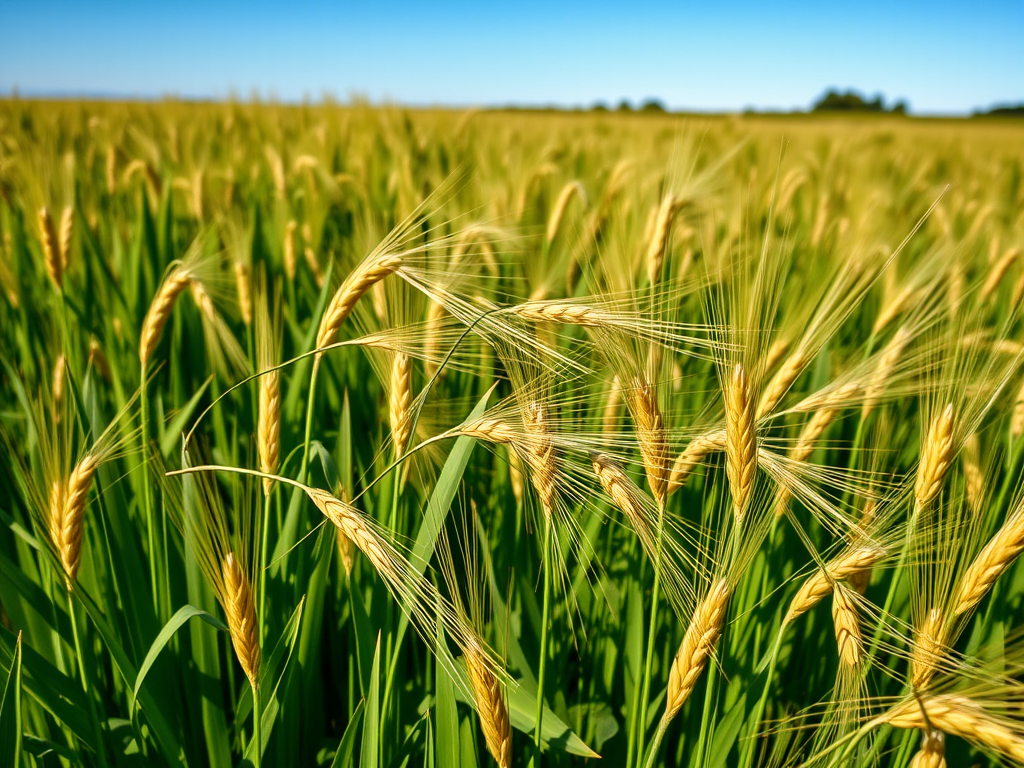
Barley Crop in India: Detailed Overview
Barley (Hordeum vulgare) or जौ is an important cereal crop in India. It is primarily grown for its use in food, fodder, and the malting industries. Although not as prominent as rice or wheat, barley significantly contributes to agriculture. This is especially true in the northern and north-western states. It is mainly cultivated in dry and semi-arid regions. It requires less water compared to rice and wheat. This makes it an ideal crop for regions facing water scarcity.
1. Overview of Barley Cultivation in India
India is one of the major producers of barley, though the country’s production is relatively small compared to other global producers such as Russia, China, and Europe. Barley cultivation in India is mostly concentrated in the north-western regions, where the climate and soil conditions are favorable. Barley is grown both in the rabi (winter) and kharif (summer) seasons, but the majority of the crop is planted in the rabi season.
2. Major Barley-Producing States in India
Barley or जौ is grown in several states across India, with the highest production concentrated in the following regions:
- Rajasthan: The state is the largest producer of barley in India, accounting for nearly 50-60% of the total barley production. Barley is grown extensively in regions like Jaipur, Barmer, and Churu.
- Haryana: A significant producer of barley, especially in districts like Hisar, Fatehabad, and Sirsa.
- Punjab: Barley is cultivated in districts such as Amritsar, Patiala, and Ludhiana, with farmers often using it as a rotational crop with wheat.
- Uttar Pradesh: Barley cultivation is practiced in regions like Meerut, Saharanpur, and Agra.
- Madhya Pradesh and Bihar: Smaller, yet notable contributors to India’s barley production.
3. Climate and Soil Requirements
- Climate: Barley is a cool-season crop and thrives in temperate climates. It prefers cool, dry conditions with temperatures ranging between 15°C and 25°C. The plant is relatively resistant to drought, making it suitable for semi-arid and dry regions. However, it is sensitive to high humidity during the growing period, which can lead to fungal diseases.
- Soil: Barley grows well in loamy and well-drained soils with a pH range of 6 to 7.5. It is tolerant of slightly alkaline conditions, and the soil should not retain water for long periods. Good soil preparation, including plowing and leveling, is necessary to avoid waterlogging, which can negatively impact the crop.
4. Varieties of Barley in India
There are different varieties of barley grown in India, catering to both the food and industrial (malting) sectors. The varieties are classified into two broad categories:
- Food Barley: Primarily used for consumption, either as a whole grain or processed into flour, soup mixes, or barley-based products.
- Common varieties include: PL 426, PL 172, K-307, and DWRB 92.
- Malting Barley: Used in the malting industry for beer, whiskey, and other beverages.
- Prominent malting varieties include: DWRB 91, DWRB 92, and M-502.
5. Cultivation Practices
- Season: Barley is mainly grown as a rabi (winter) crop, sowed in October-November and harvested in February-March. Some regions in the Deccan Plateau and parts of central India grow barley during the kharif season, but this is less common.
- Land Preparation: Barley requires a well-prepared seedbed. The land is plowed, harrowed, and leveled to facilitate proper seed germination. If irrigated, bunds are often made to control water flow. In dry regions, dryland farming practices are followed.
- Sowing: Barley is typically sown with seed drills, though broadcasting is also practiced in certain areas. The ideal seed rate is about 80-100 kg/ha for irrigated conditions and 60-80 kg/ha for rain-fed areas. Barley seeds are planted at a depth of about 3-4 cm.
- Spacing: A spacing of 20-25 cm between rows and about 5-6 cm between plants is recommended for optimal growth.
- Fertilization: Barley requires moderate fertilization. The main nutrients needed are nitrogen (N), phosphorus (P), and potassium (K), but the levels of application depend on soil fertility and the specific variety grown.
- Irrigation: Barley is drought-tolerant, but it requires adequate moisture during germination and tillering stages. In irrigated areas, two to three irrigations are typically given: one at the time of planting and one at tillering. Waterlogging should be avoided to prevent root diseases.
6. Barley Diseases and Pests
- Diseases:
- Rust: A fungal disease that affects barley leaves, causing yellow to reddish-brown lesions. Rust can reduce the quality of the barley grains.
- Blight: Fungal infections, especially powdery mildew and leaf blight, affect barley crops, leading to stunted growth and yield loss.
- Fusarium Head Blight: Caused by a fungus, this disease results in poor grain quality, and the grains become unsuitable for malting.
- Downy Mildew: Affects the plant’s growth and yield, particularly under cool, moist conditions.
- Pests:
- Stem Borer: This pest damages barley by boring into the stem, leading to poor grain development.
- Aphids: These tiny insects can transmit viral diseases and reduce the crop’s vigor.
- Cutworms: These pests damage seedlings and young plants by cutting them off at the soil level.
7. Barley Harvesting and Yield
- Harvesting: Barley is harvested when the grains become firm and turn golden yellow. Harvesting is typically done in February-March, depending on the region and sowing time. It is important to harvest barley when the grains are at full maturity to prevent loss due to shattering.
- Yield: The average yield of barley in India ranges from 1.0 to 2.5 tons per hectare in rain-fed areas. However, in irrigated conditions with optimal inputs, yields can exceed 3 tons per hectare. Yields tend to be higher in states like Punjab and Haryana due to better management practices.
8. Uses of Barley
Barley has diverse uses across various sectors:
- Food Use: Barley is a nutritious grain, rich in dietary fiber, vitamins (B-complex), and minerals (iron, magnesium). It is used in soups, porridges, and as a substitute for rice or wheat in certain regions.
- Malting: Barley is a primary raw material for the malting industry, which processes barley into malt for the brewing of beer and alcoholic beverages. India’s growing beer industry and export demand have increased the significance of malting barley.
- Fodder: The green fodder (barley straw) is an important feed for livestock, particularly in dryland farming regions where other forage crops may not be available.
- Barley Flour: Barley flour is used in making biscuits, bread, and other food items, especially for people with wheat allergies or gluten intolerance.
- Health Benefits: Barley is considered a superfood due to its high fiber content, which helps in controlling blood sugar levels, improving digestion, and reducing cholesterol.
9. Barley and the Indian Economy
- Economic Importance: Barley contributes to the food and fodder supply in India and plays an important role in the malting industry. It is a crucial crop for small and marginal farmers in dryland regions.
- Exports: Barley is exported to several countries, primarily for malting purposes. India has a growing barley export market, with exports to countries like Saudi Arabia, Nepal, and Japan.
10. Government Support and Policies
The government of India provides various support mechanisms for barley farmers, such as:
- Minimum Support Price (MSP): The MSP for barley is set by the government to ensure farmers receive a fair price for their produce.
- Research and Development: The Indian Council of Agricultural Research (ICAR) and other state agricultural universities are working to develop better barley varieties that are disease-resistant, drought-tolerant, and high-yielding.
- Subsidies and Loans: Financial assistance, subsidies for inputs like fertilizers, and credit facilities are provided to encourage barley cultivation.
11. Challenges in Barley Cultivation
- Water Scarcity: Despite its drought tolerance, barley still requires some irrigation, and water scarcity in dry regions poses a challenge for its cultivation.
- Climate Change: Changes in temperature and rainfall patterns have affected barley yields, with rising temperatures and erratic rainfall leading to crop stress.
- Pest and Disease Management: Barley is prone to pests and diseases, and management practices need to be improved to reduce crop losses.
12. Future Prospects
The future of barley in India looks promising due
to growing demand for malting barley from the beer industry, as well as increasing awareness about the health benefits of barley-based foods. Additionally, barley is well-suited to climate-resilient farming systems, and its role in crop rotation with wheat and other cereals will continue to be vital.
Conclusion
Barley is an important crop in India, offering diverse benefits across food, fodder, and industrial sectors. Although the production is not as large-scale as that of other cereals, it plays a vital role in water-scarce areas and is essential to India’s malting and brewing industries. With improvements in technology, pest management, and better water conservation practices, the future of barley cultivation in India holds significant potential.
 KrishiCenter