
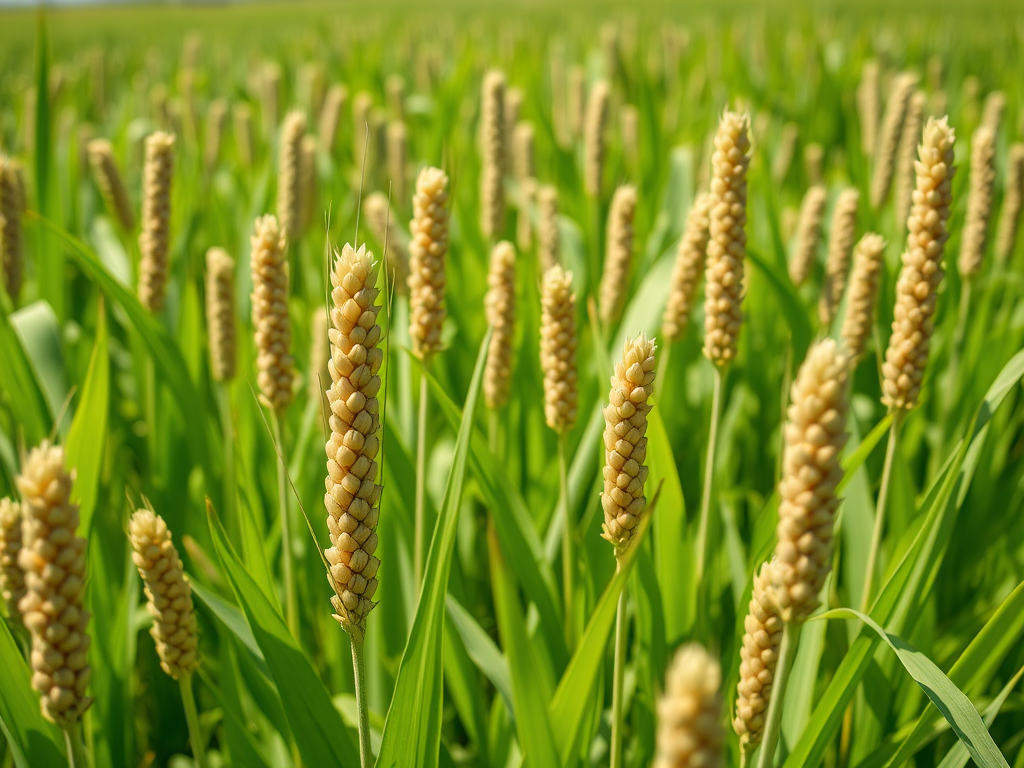
Bajra Crop in India: Detailed Overview
Bajra (Pennisetum glaucum) or बाजरा is commonly known as pearl millet. It is an important cereal grain primarily grown in arid and semi-arid regions of India. It is one of the most drought-tolerant crops. This makes it a staple food in areas with irregular rainfall patterns. It is also essential in regions where water is scarce. Bajra is highly nutritious. It is rich in fiber, proteins, and micronutrients like iron and calcium. This makes it especially valuable in rural diets. In addition to its use as food, it is also an important fodder crop. It serves as a raw material in the biofuel industry.
1. Overview of Bajra Cultivation in India
India is the largest producer of Bajra (बाजरा) in the world, contributing around 40-50% of global production. Bajra is grown across large areas of India, especially in the dryland and rainfed regions. It is often called a “poor man’s crop” because it can thrive in marginal soils. It can also withstand harsh climatic conditions where other crops like wheat and rice may fail.
2. Major Bajra-Producing States in India
The following states are the leading producers of Bajra in India:
- Rajasthan: The largest producer of Bajra, contributing about 40-50% of the total production. Key districts include Barmer, Jodhpur, Pali, and Churu.
- Maharashtra: Significant Bajra production occurs in regions like Aurangabad, Nanded, Jalna, and Latur.
- Uttar Pradesh: Saharanpur, Bijnor, Muzaffarnagar, and Meerut are important Bajra-producing areas.
- Gujarat: Districts such as Kutch, Saurashtra, and Ahmedabad see considerable Bajra cultivation.
- Haryana: Sirsa, Bhiwani, and Fatehabad are major areas for Bajra farming.
- Andhra Pradesh and Telangana: These states also grow Bajra, particularly in areas like Kurnool and Mahabubnagar.
- Madhya Pradesh: Bajra is grown in parts of Indore, Dewas, and Dhar.
- Tamil Nadu: Dharmapuri, Krishnagiri, and Tiruvannamalai are known for Bajra cultivation.
3. Climate and Soil Requirements
Climate
- Temperature: Bajra grows well in hot and dry conditions. It requires a temperature range of 25°C to 35°C. The plant is very heat-tolerant and can withstand high temperatures that would harm other crops.
- Rainfall: Bajra thrives in areas with 250–700 mm of rainfall, making it ideal for rainfed regions. The crop can tolerate dry conditions but does require sufficient moisture during the germination and early vegetative stages.
- Frost Sensitivity: Bajra is highly sensitive to frost, particularly during the flowering and grain-filling stages. Frost can damage the crop significantly, leading to reduced yields.
Soil
- Soil Type: Bajra grows well in sandy, loamy, and black soils. It is highly adaptable to different soil types, including alkaline and saline soils, which other crops may struggle to grow in.
- Soil pH: The ideal soil pH for Bajra cultivation is between 6.0 and 7.5.
- Drainage: Well-drained soils are essential, as waterlogging can stunt the growth of Bajra.
4. Varieties of Bajra in India
India cultivates a wide range of Bajra varieties, including both hybrid and open-pollinated varieties. Some of the popular Bajra varieties include:
- Hybrid Varieties:
- HHB 67: A high-yielding hybrid variety widely grown in Rajasthan and Haryana.
- HHB 299: Known for drought resistance and high productivity.
- GHB 558: Grown in Maharashtra and Gujarat for its drought tolerance and grain quality.
- Open-Pollinated Varieties:
- J-1001: Suitable for dry regions with moderate rainfall.
- Pusa-23: A high-yielding, short-duration variety.
- Fodder Varieties:
- Rajasthan Local: Commonly grown for fodder and used in regions like Barmer and Pali.
- Co-3: Suitable for both grain and fodder production.
5. Cultivation Practices
Season:
- Bajra is mainly a Kharif crop, sown during the monsoon season from June-July and harvested in September-November. It can also be grown in some regions during the rabi season with irrigation.
Land Preparation:
- The field is usually plowed two to three times to ensure proper soil aeration and removal of weeds.
- Leveling is done to ensure uniform water distribution during irrigation.
Sowing:
- Seed Rate: The typical seed rate for Bajra is 6-8 kg per hectare for hybrid varieties. It is 8-12 kg per hectare for open-pollinated varieties.
- Spacing:
- Row-to-row spacing: 60–75 cm
- Plant-to-plant spacing: 20–25 cm
- Depth: Seeds are sown at a depth of 3–5 cm in the soil.
- Sowing Method: Bajra can be sown using a seed drill for proper seed placement. In some regions, it can be broadcasted manually.
Irrigation:
- Bajra is primarily a rainfed crop, but 2-3 irrigations during dry spells can significantly improve yields.
- Irrigation should be applied at critical stages such as:
- Pre-flowering: To ensure good vegetative growth.
- Flowering and grain-filling: To avoid moisture stress.
Weed and Pest Management:
- Weed Control: Weeds can be controlled using pre-emergence herbicides such as Atrazine and Alachlor. Manual weeding is also common.
- Pest Control:
- Shoot Fly: A major pest that affects young plants. Cultural practices like timely sowing and field sanitation can help control it.
- Stem Borer: A serious pest, which damages the plant’s stems and reduces yield. Farmers can use pesticides like quinalphos to manage it.
- Grasshoppers and Aphids: Insects that feed on Bajra leaves and stems. Regular monitoring and pesticide application are important.
- Diseases:
- Downy Mildew: A fungal disease that affects the plant’s leaves and reduces yield. Use of resistant varieties and fungicides like Carbendazim can help control it.
- Rust: A fungal disease that causes yellow-orange spots on the leaves, leading to a reduction in photosynthesis.
6. Harvesting and Yield
Harvesting:
- Bajra is usually harvested when the grains are mature, and the leaves turn yellow or brown.
- The panicles (flower clusters) should be fully mature, and the grains should be hard.
- Manual harvesting is typically done using sickles, although mechanized harvesters are also becoming common in larger farms.
Yield:
- The average yield of Bajra in India ranges from 800 to 1,500 kg per hectare in rainfed conditions.
- With irrigation and improved practices, yields can increase to 2,000 to 2,500 kg per hectare.
- Hybrid varieties can yield as much as 3,000 kg per hectare under optimal conditions.
7. Uses of Bajra
Human Consumption:
- Staple Food: Bajra is consumed in various forms such as roti, bhakri, porridge, and khichdi. It is a staple food in many parts of Rajasthan, Maharashtra, and Uttar Pradesh.
- Flour: Bajra flour is used in baking, particularly for making bread and pancakes. Bajra is gluten-free, making it popular among those with celiac disease or gluten sensitivity.
- Snacks: Bajra is used in the preparation of popped Bajra, chips, and bajra-based snack bars.
Animal Feed:
- Fodder: Bajra is an important fodder crop for livestock, especially in dry regions. The leaves, stems, and even the husks are used as **green fodder
** and silage.
- Cattle Feed: Bajra is also used in dairies and poultry farms as a key ingredient in animal feed.
Industrial Use:
- Biofuel: Bajra can be used to produce bioethanol, making it an important crop in the growing biofuel sector.
- Starch: Bajra starch is used in the textile and paper industries for various applications.
8. Economic Importance of Bajra
- Food Security: Bajra is a major food security crop for millions of people in rural and semi-arid regions.
- Income Generation: Bajra cultivation provides income to millions of farmers. This is especially true in areas where other crops may not thrive due to water scarcity or poor soils.
- Livestock Support: Bajra’s role as a fodder crop supports livestock farming, which is an essential part of the rural economy.
9. Challenges in Bajra Cultivation
- Water Scarcity: Despite its drought tolerance, irregular rainfall and water scarcity in certain regions affect yields and productivity.
- Pest and Disease Management: Bajra is prone to pests and diseases. These include shoot fly and downy mildew. If not properly managed, they can reduce crop yield.
- Declining Area under Cultivation: Other crops like wheat, maize, and soybean have become more popular. As a result, farmers have reduced the area for Bajra cultivation. As a result, it has decreased in some regions.
10. Future Prospects
- Climate Resilience: Bajra’s drought tolerance and adaptability to harsh conditions make it an important crop for climate change adaptation.
- R&D Focus: Research into high-yielding varieties, disease resistance, and better agronomic practices is underway. These efforts are expected to improve Bajra production in the future.
- Growing Demand for Gluten-Free Foods: Health-conscious consumers are increasingly turning to gluten-free foods. As a result, the demand for Bajra-based products is expected to rise.
Conclusion
Bajra is a vital crop for India. This is especially true in regions where water scarcity and harsh climatic conditions pose challenges to growing other cereals. Its nutritional value is significant. It is drought-tolerant. Bajra has multi-purpose uses in food, feed, and industry, making it a crucial part of India’s agricultural and economic landscape. With improvements in cultivation techniques, Bajra can play a significant role in ensuring food security. It can also support rural economies. Additionally, it contributes to industrial growth.
 KrishiCenter