
Author: KrishiCenter Care
-
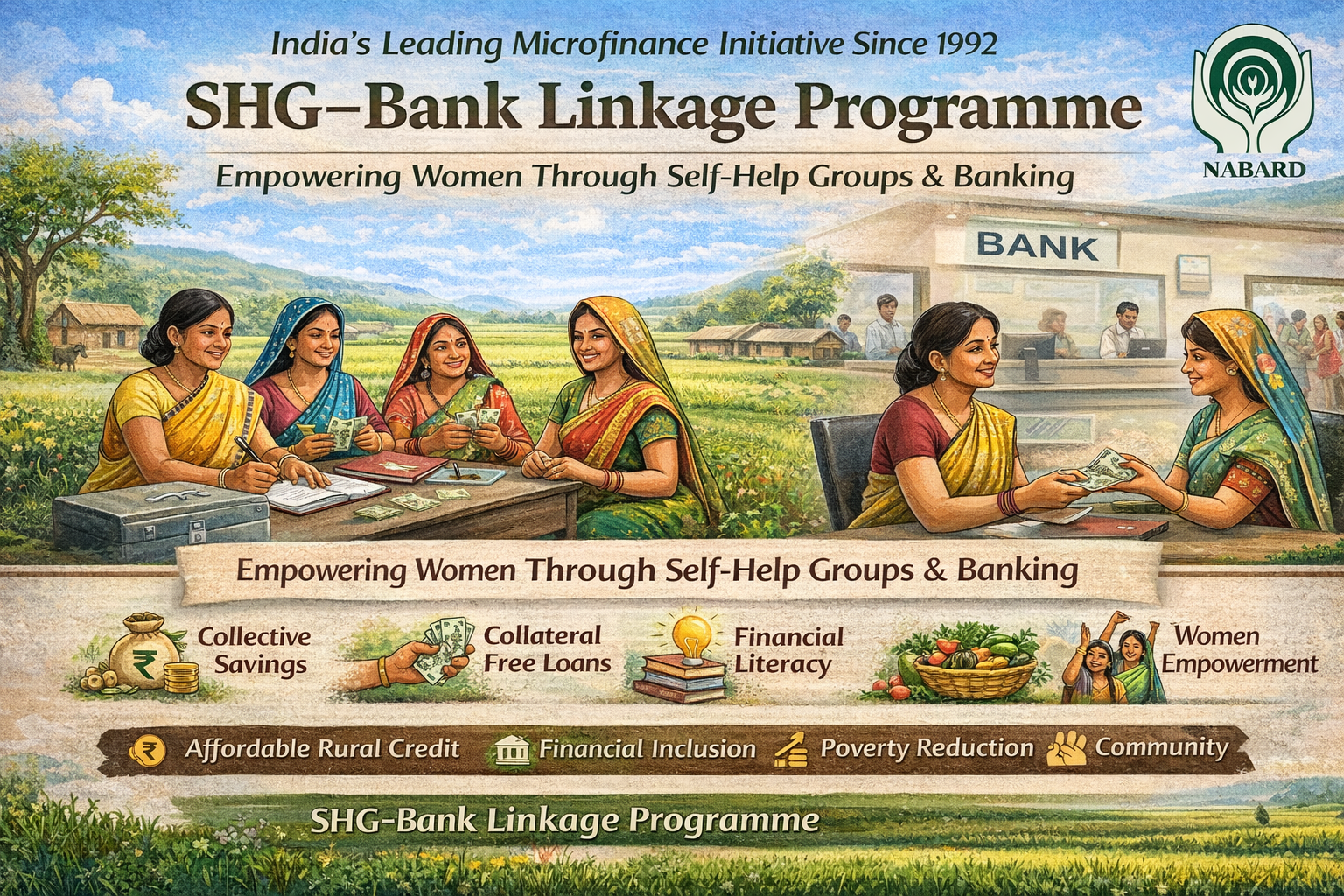
Self Help Group – Bank Linkage Programme
The Self-Help Group–Bank Linkage Programme in India promotes financial inclusion and women’s empowerment through community-based microfinance, transforming rural poverty alleviation strategies.
-

India and Brazil – Deeper Cooperation in Agriculture
India and Brazil on Friday discussed expanding cooperation in agriculture and allied sectors, with a focus on bio-inputs and technology collaboration, during a meeting between Union Agriculture Minister Shivraj Singh Chouhan and his Brazilian counterparts. Chouhan met Brazil’s Minister of Agriculture and Livestock Carlos Fávaro and Minister of Agrarian Development and Family Agriculture Luiz Paulo…
-
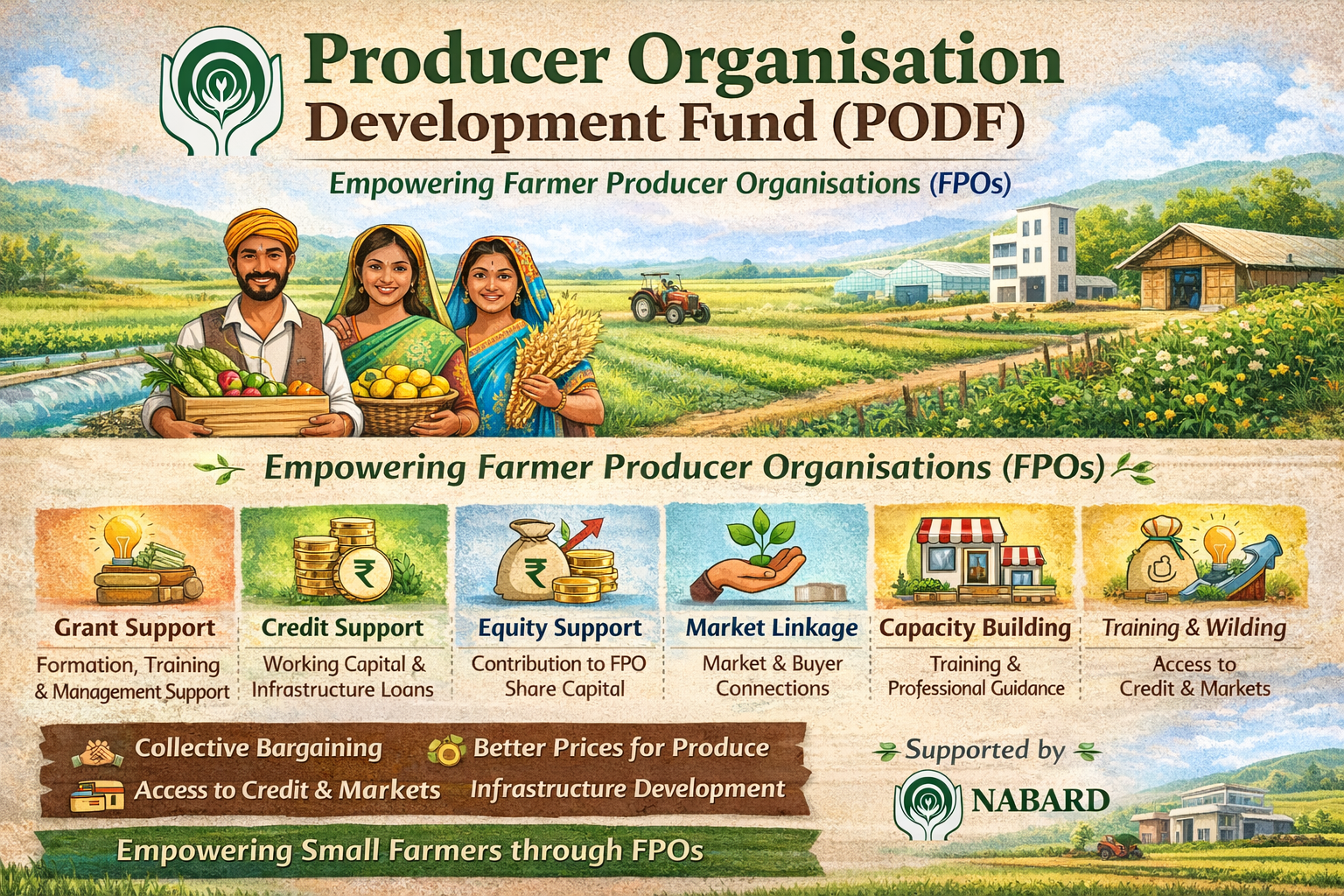
Producer Organisation Development Fund (PODF)
NABARD’s Producer Organisation Development Fund (PODF) empowers small farmers in India by promoting collective strength, providing financial support and infrastructure assistance.
-
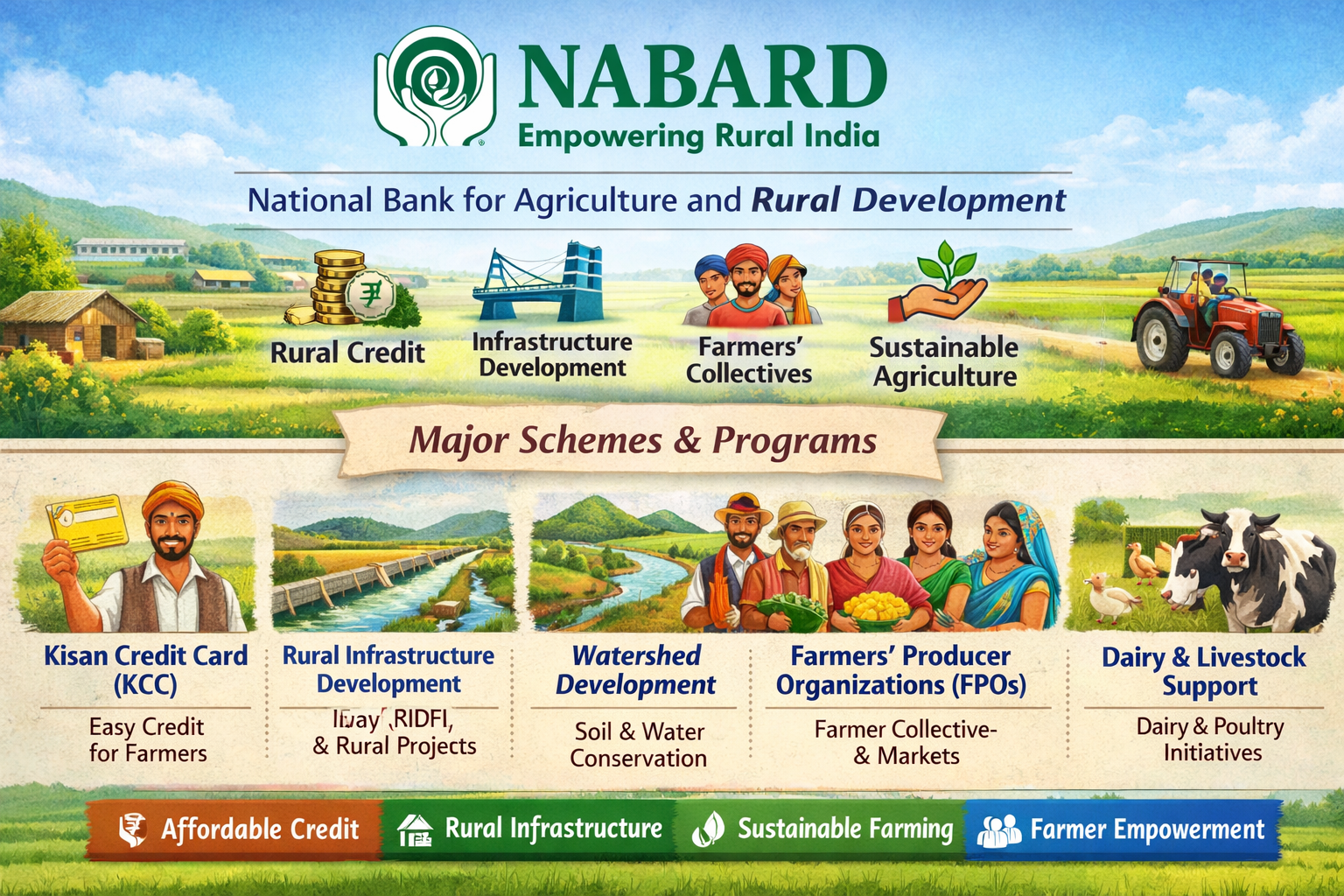
NABARD – Key Institution for Rural India
NABARD, established in 1982, enhances India’s agriculture and rural development through credit support, infrastructure financing, and promoting sustainable practices for farmers.
-
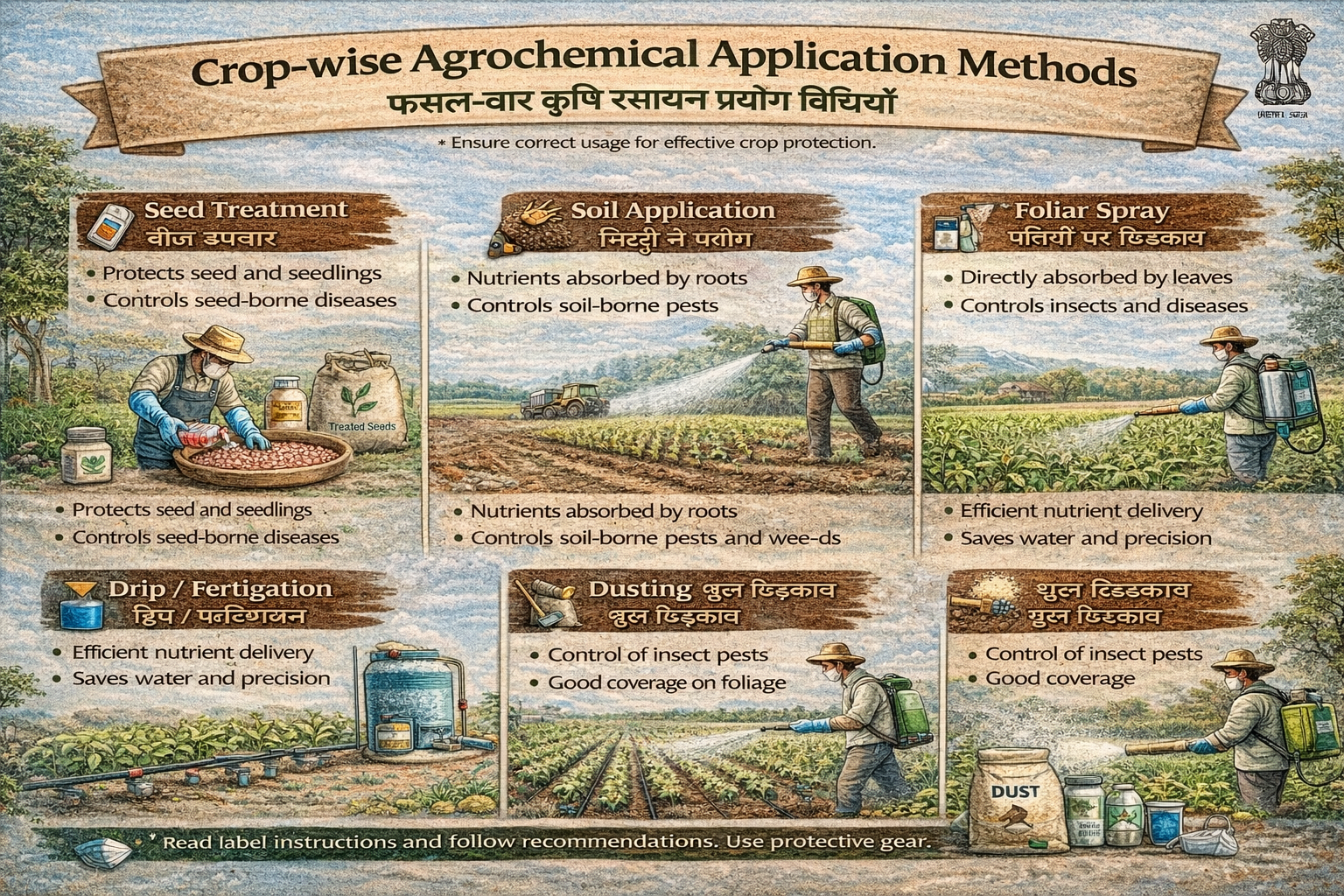
Agrochemicals: Application Methods on Crops
Agrochemicals enhance agricultural productivity by controlling pests and diseases, but their improper use can lead to health and environmental issues, necessitating responsible application.
-
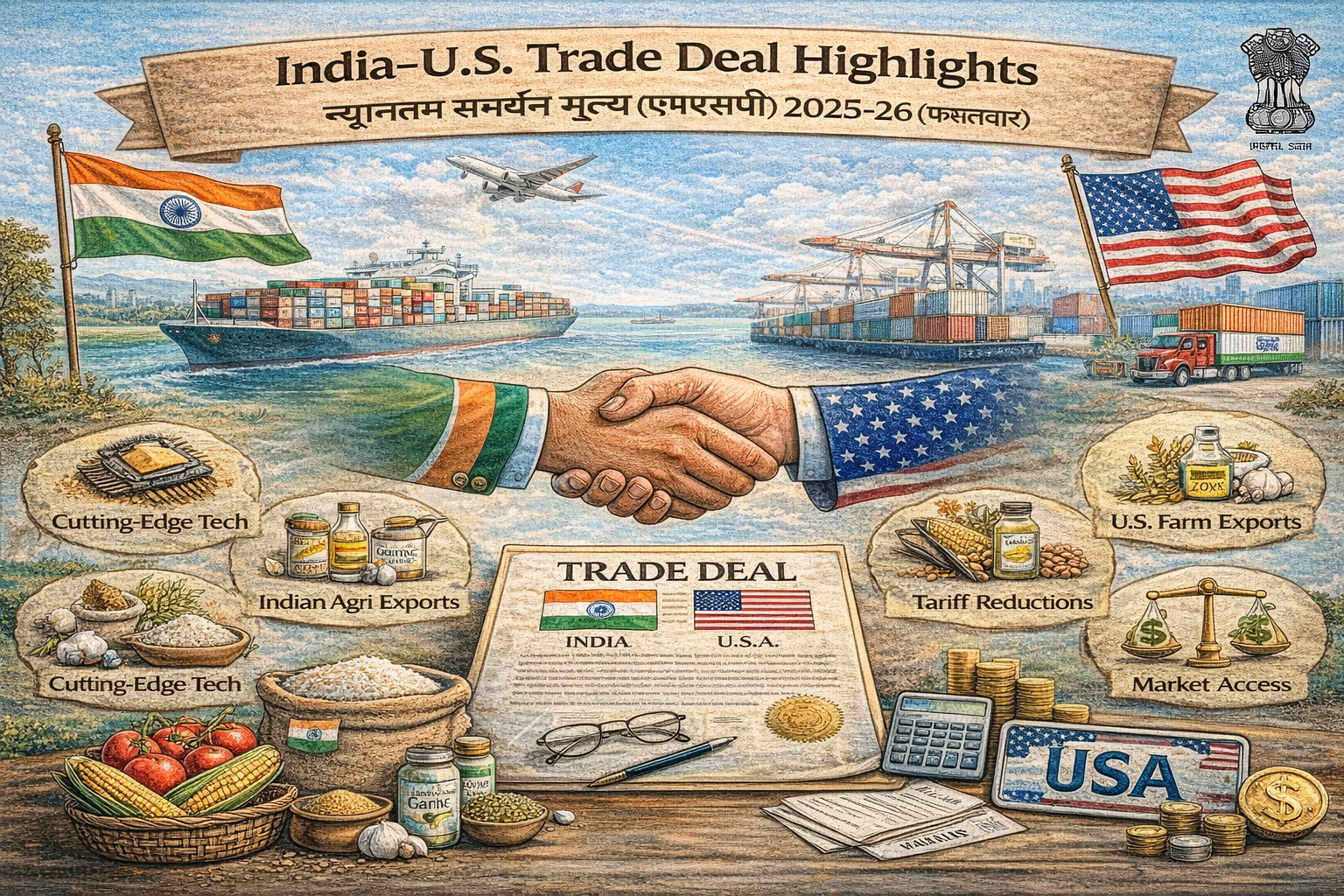
India – America Trade Deal Impact on Agricultural Sector
India and the US finalized a February 2026 trade deal that reduces tariffs, impacting agriculture and safeguarding sensitive crops while affecting soybean prices negatively.
-
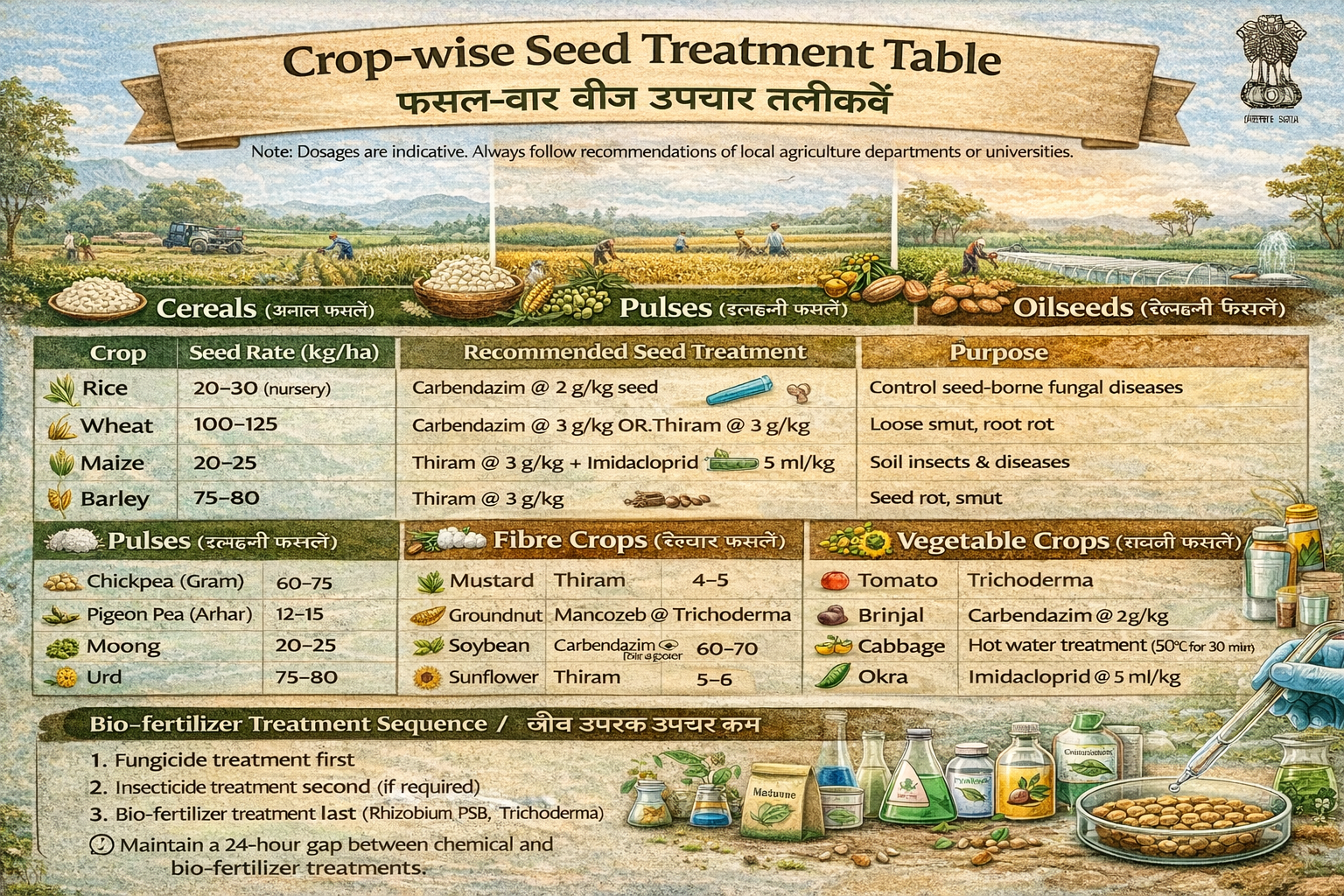
Seed Selection and Seed Treatment Techniques
Proper seed selection and treatment are vital for successful agriculture, ensuring high germination, pest resistance, and improved crop yields while supporting sustainable practices.
-
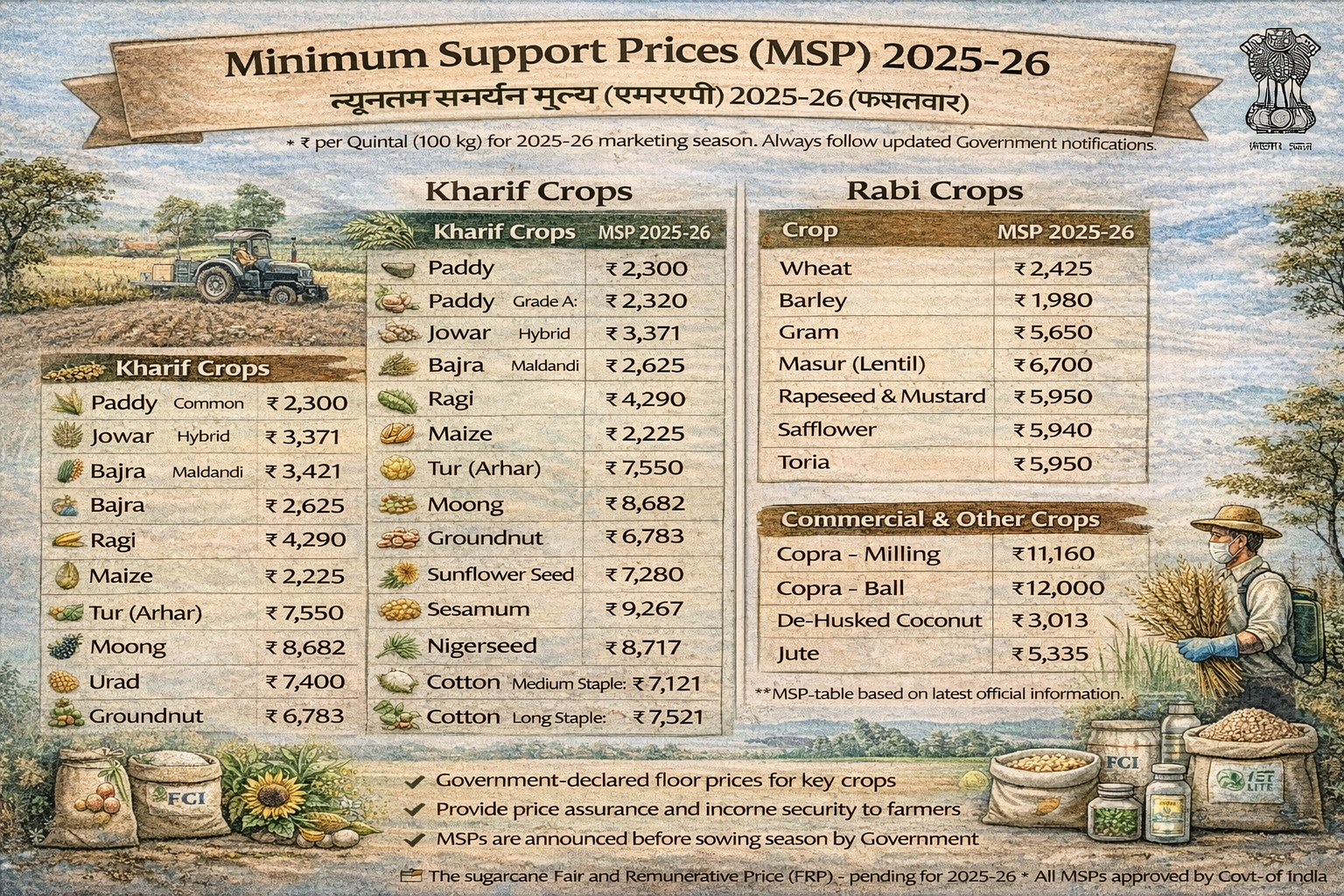
Minimum Support Price (MSP) System
The Minimum Support Price (MSP) in India ensures farmers receive a guaranteed price for crops, stabilizing income and encouraging production despite market fluctuations.
-
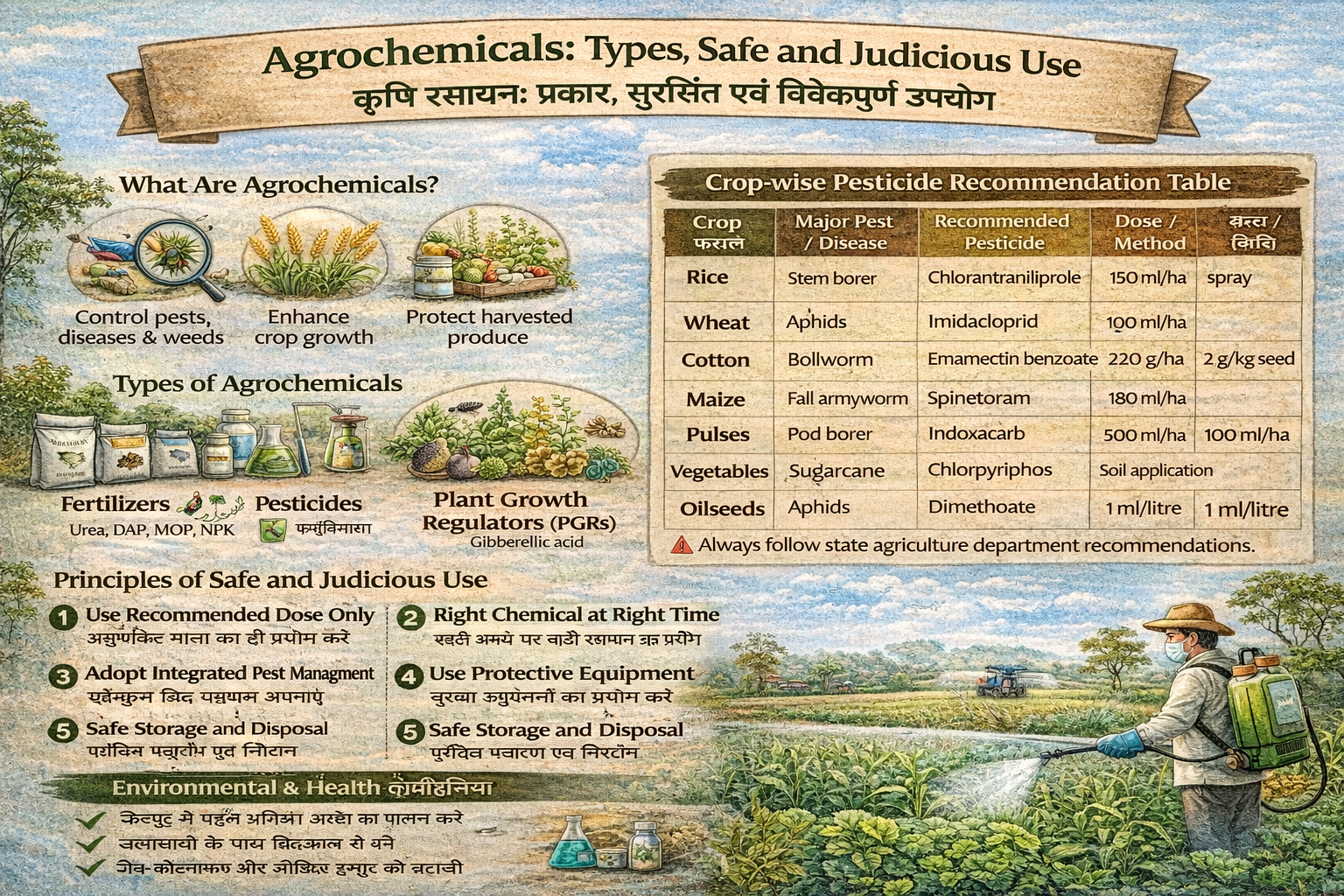
Agrochemicals – Types and Usage
Agrochemicals are vital for modern agriculture, enhancing crop growth and protecting against pests. Responsible usage is crucial to mitigate health and environmental risks.
-
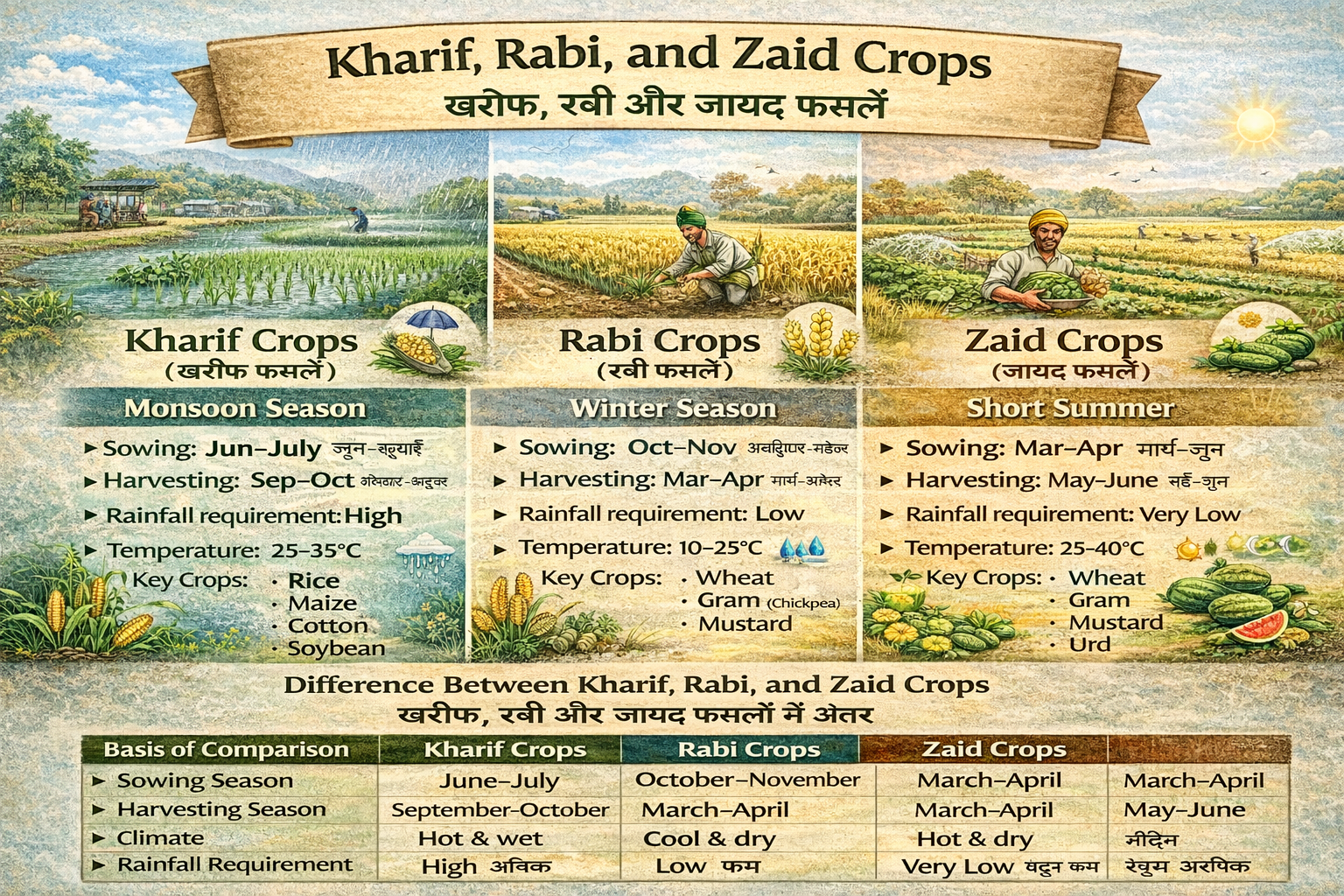
Kharif, Rabi, and Zaid Crops
Indian agriculture features three main crop seasons: Kharif, Rabi, and Zaid, each defined by distinct sowing times, climates, and irrigation needs for optimal productivity.
-
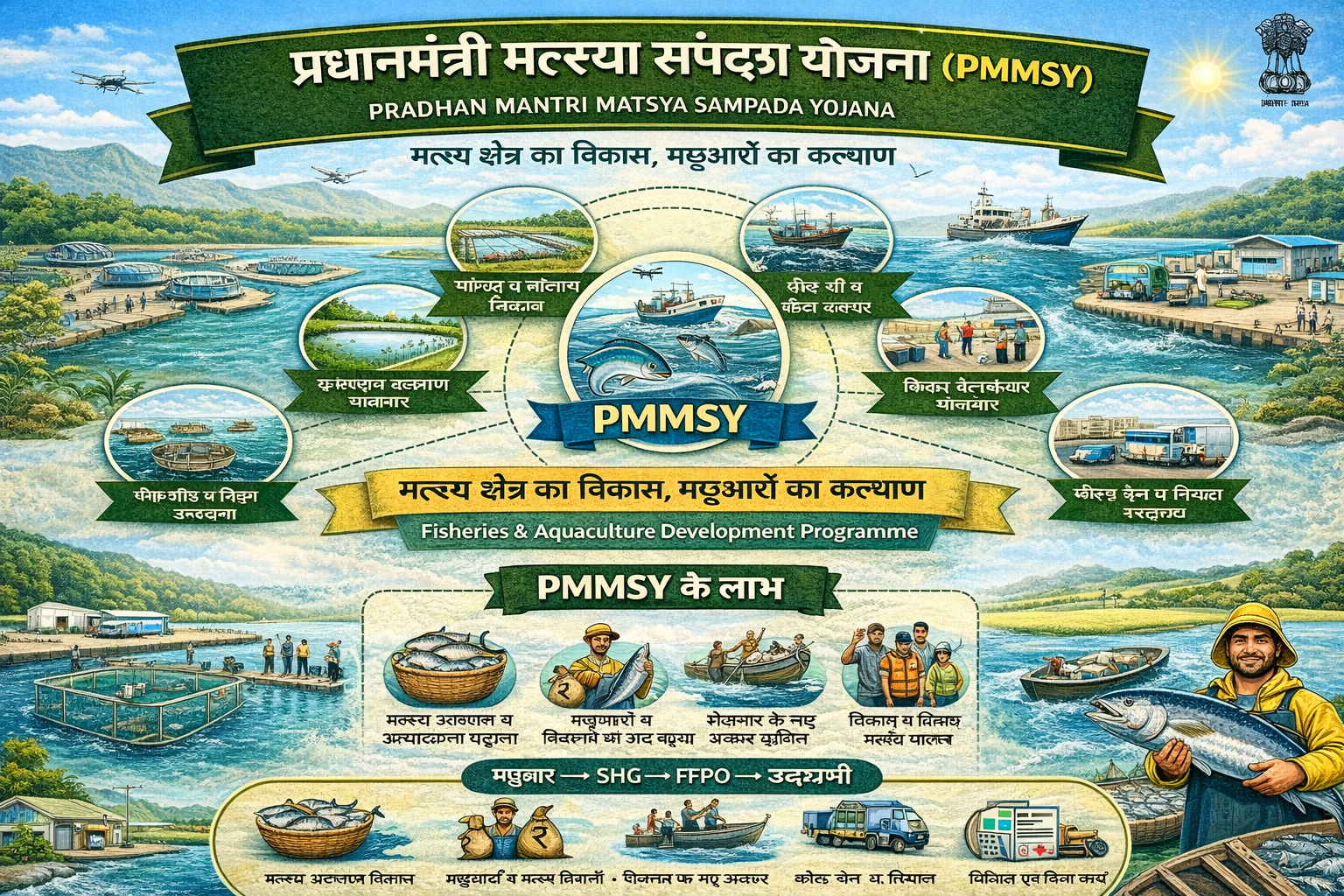
Pradhan Mantri Matsya Sampada Yojana
The Pradhan Mantri Matsya Sampada Yojana (PMMSY) aims to enhance India’s fisheries sector through sustainable practices, increasing production, income, and employment opportunities.
-
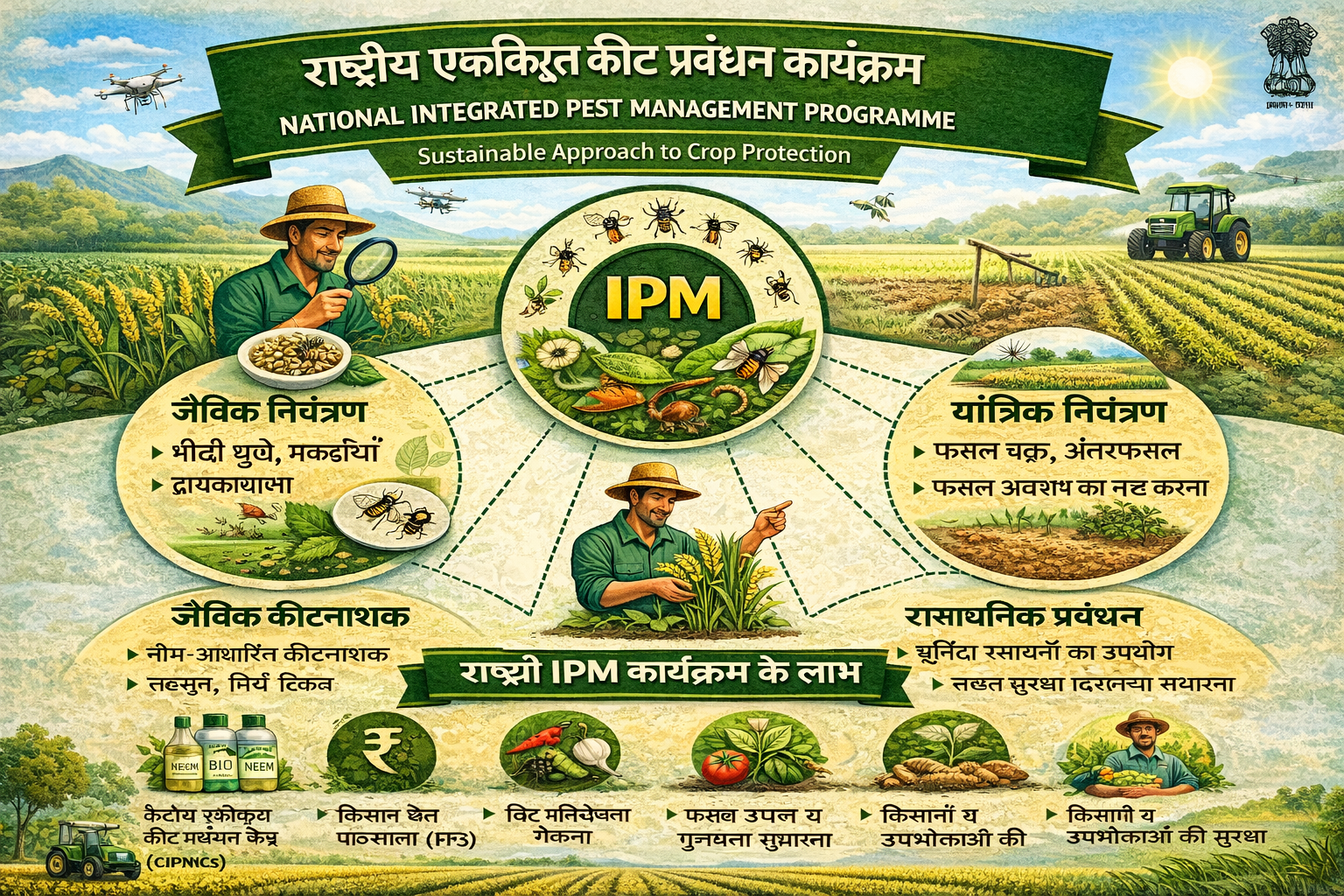
National IPM Programme
What is National IPM Programme The National Integrated Pest Management (IPM) Programme राष्ट्रीय एकीकृत कीट प्रबंधन कार्यक्रम is a flagship initiative of the Government of India. It aims at promoting environmentally sustainable pest control practices in agriculture. The programme encourages farmers to adopt eco-friendly, cost-effective, and scientifically proven methods to manage crop pests while minimizing…
-
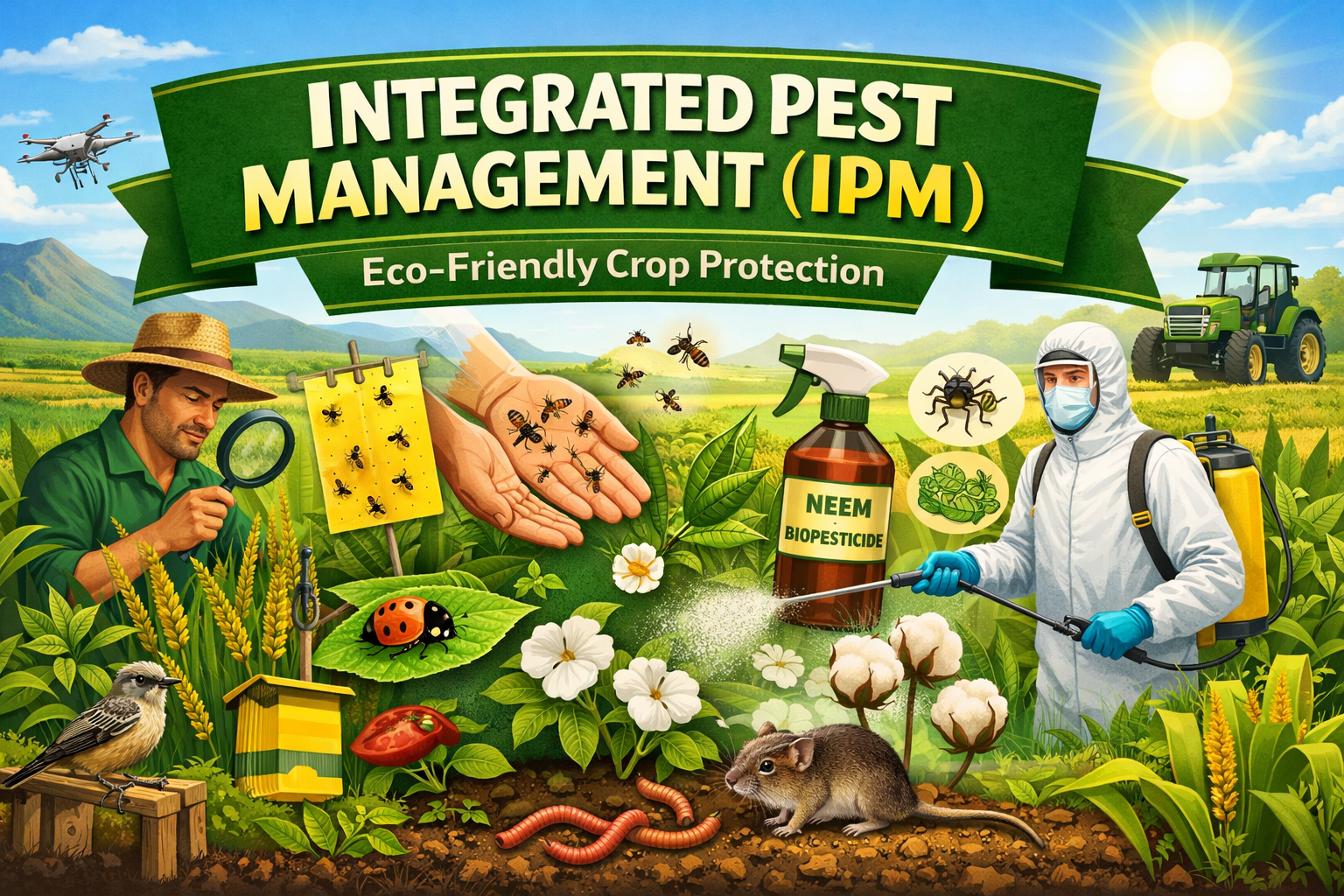
Integrated Pest Management (IPM): A Sustainable Approach to Crop Protection
Integrated Pest Management (IPM) combines biological, cultural, mechanical, and chemical methods for sustainable pest control, enhancing agricultural productivity and environmental safety.
-
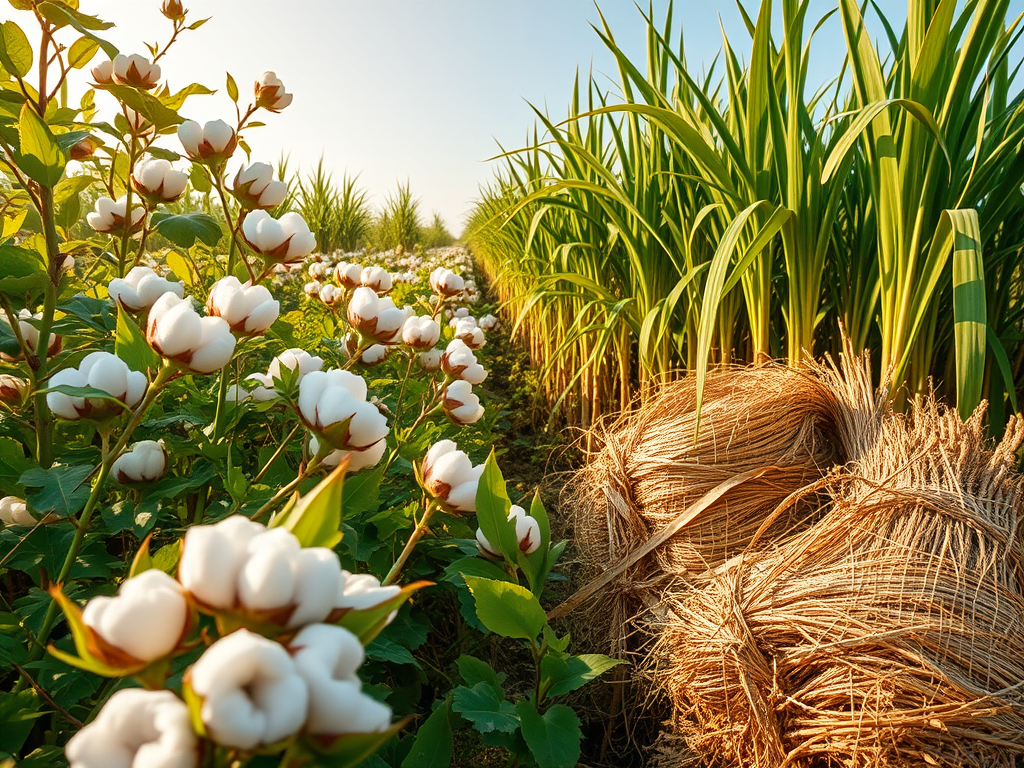
Cash Crops: Cotton, Sugarcane, and Jute
Cash crops like cotton, sugarcane, and jute drive India’s economy, providing income and employment while facing challenges like price volatility and climate risks.
-
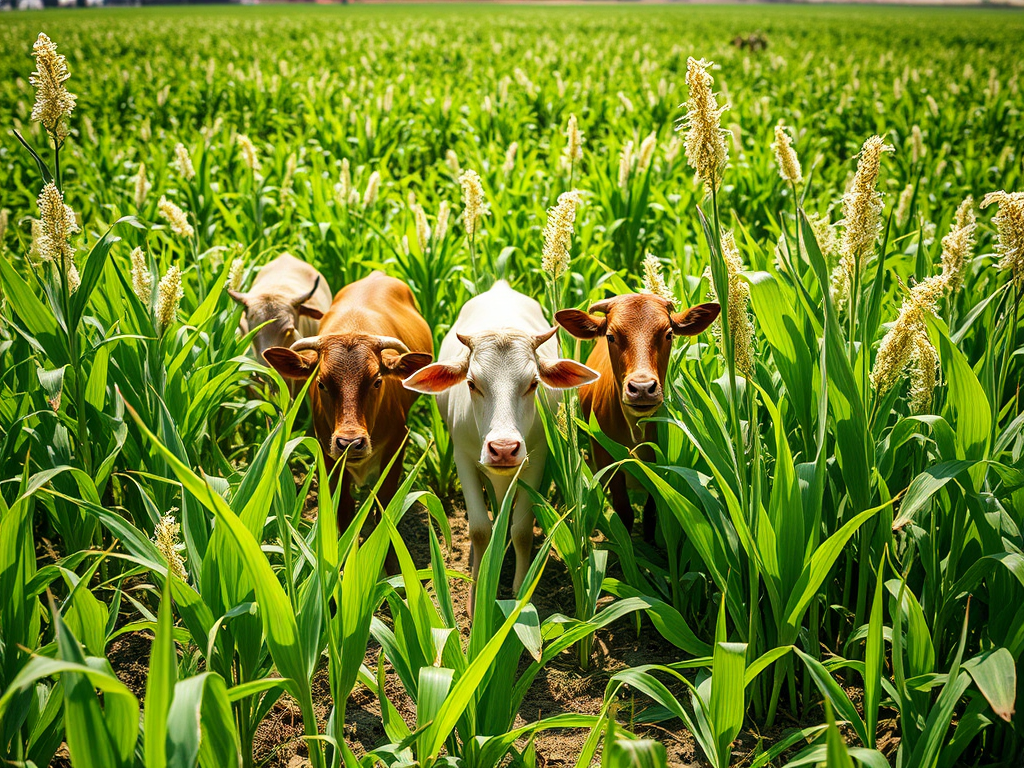
Fodder Crops for Livestock Farming
Fodder crops are essential for livestock health and productivity in India, significantly improving milk production and reducing feed costs through sustainable practices.
-
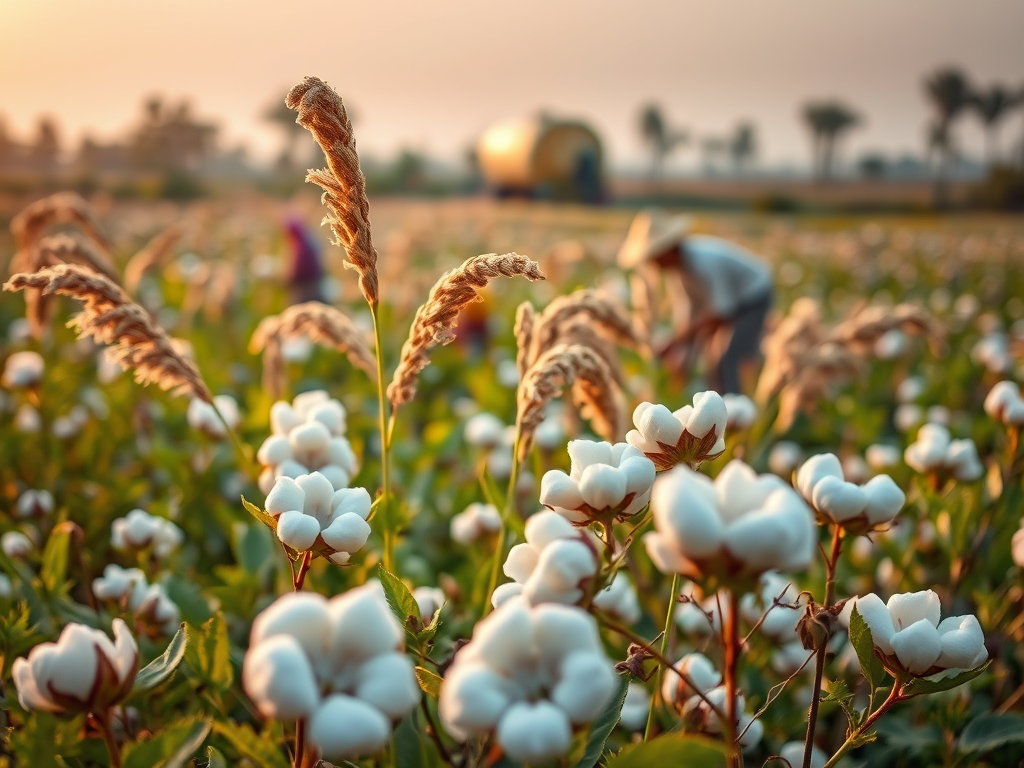
Fibre Crops and Their Economic Importance in India
Fibre crops are crucial for India’s economy, providing employment, supporting exports, and contributing to sustainable industries, with cotton and jute being primary examples.
-
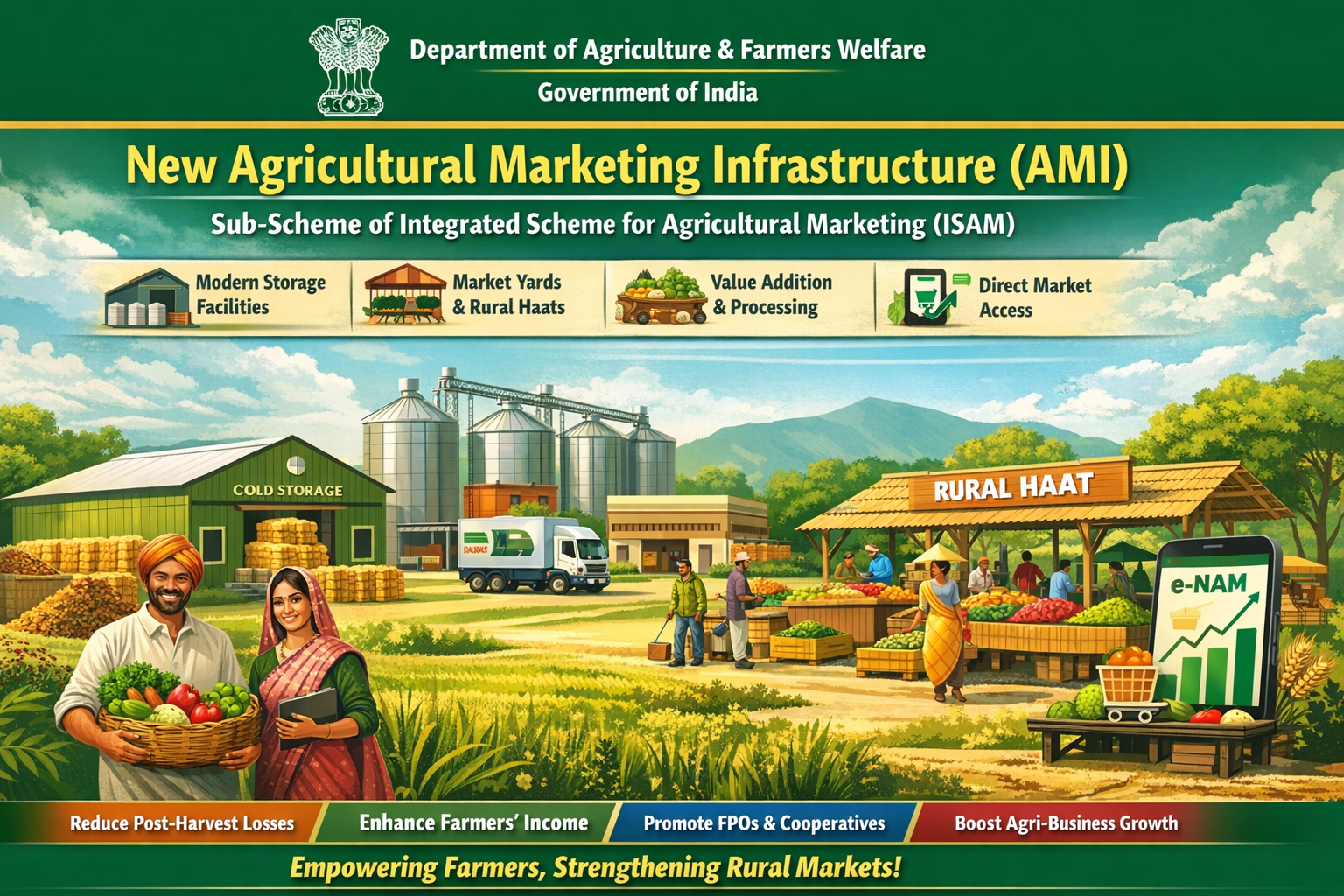
Agricultural Marketing Infrastructure
The New Agricultural Marketing Infrastructure (AMI) sub-scheme enhances agricultural marketing by improving infrastructure, reducing losses, and enabling efficient market access for farmers.
-
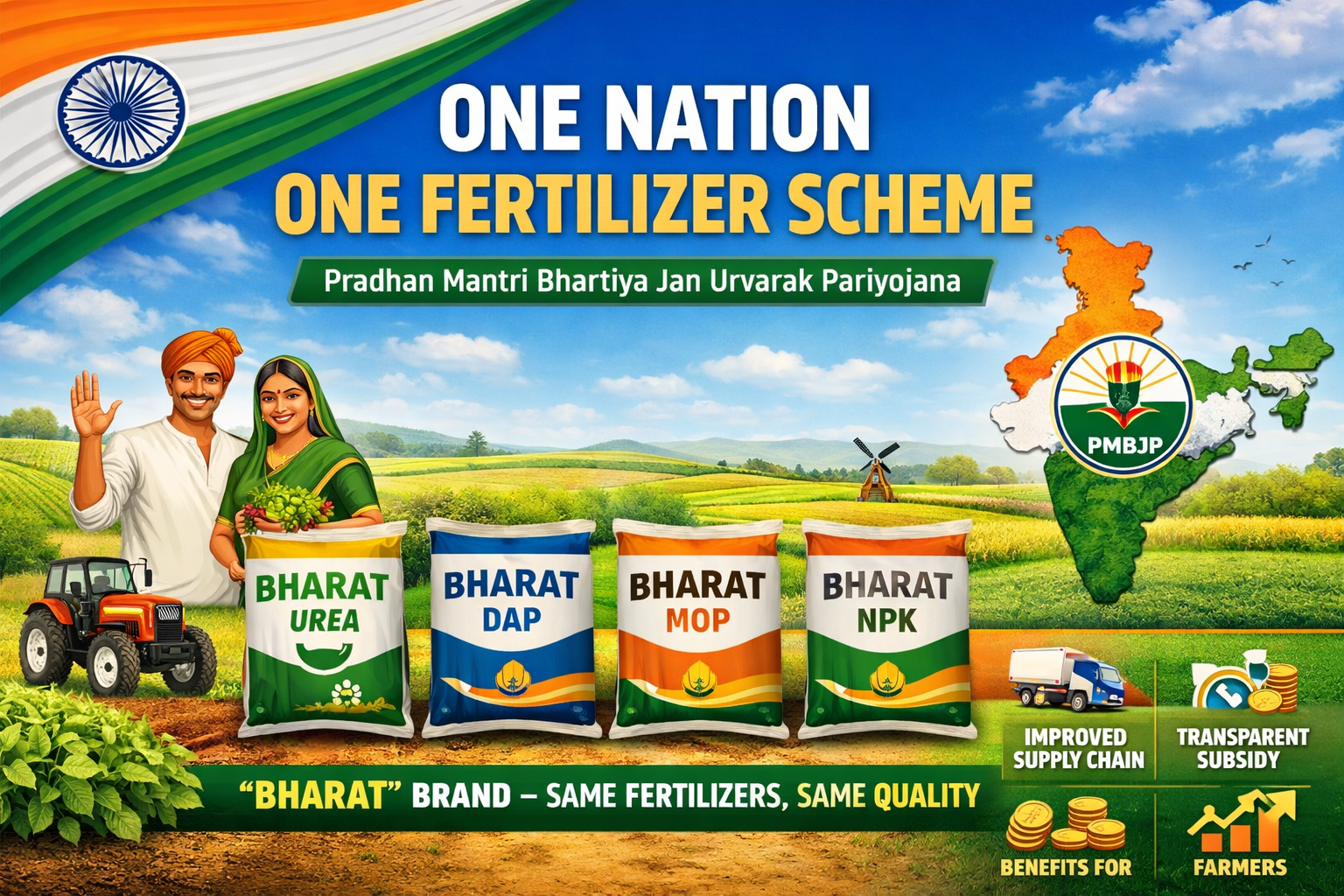
One Nation One Fertilizer Scheme
The One Nation One Fertilizer scheme standardizes fertilizer branding and improves distribution efficiency, enhancing transparency and reducing confusion for farmers in India.
-
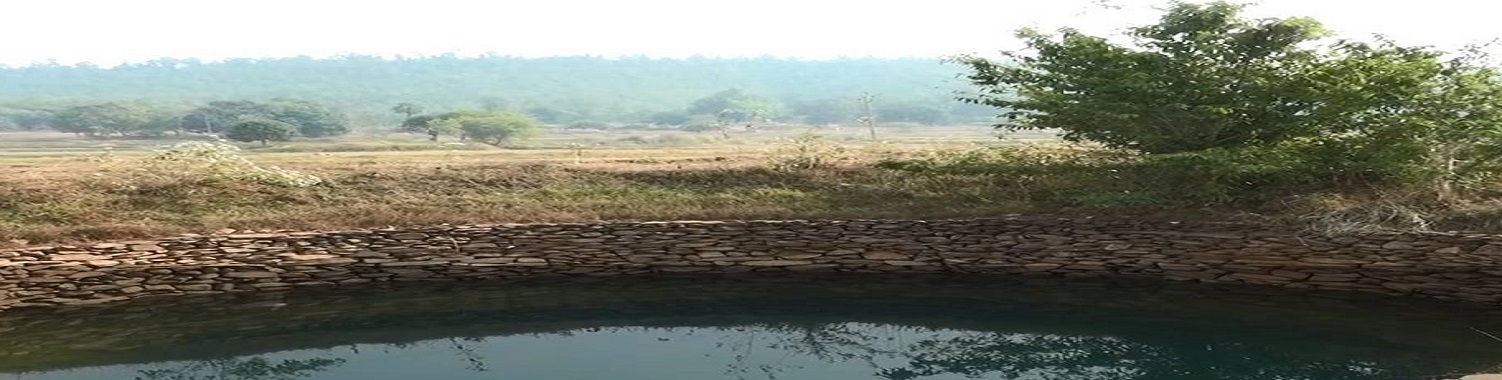
Watershed Development Component – PMKSY
The Department’s Integrated Watershed Management Programme has been extended as WDC-PMKSY 2.0 for 2021-2026, targeting 49.50 lakh ha with Rs. 8,134 crore funding.
-
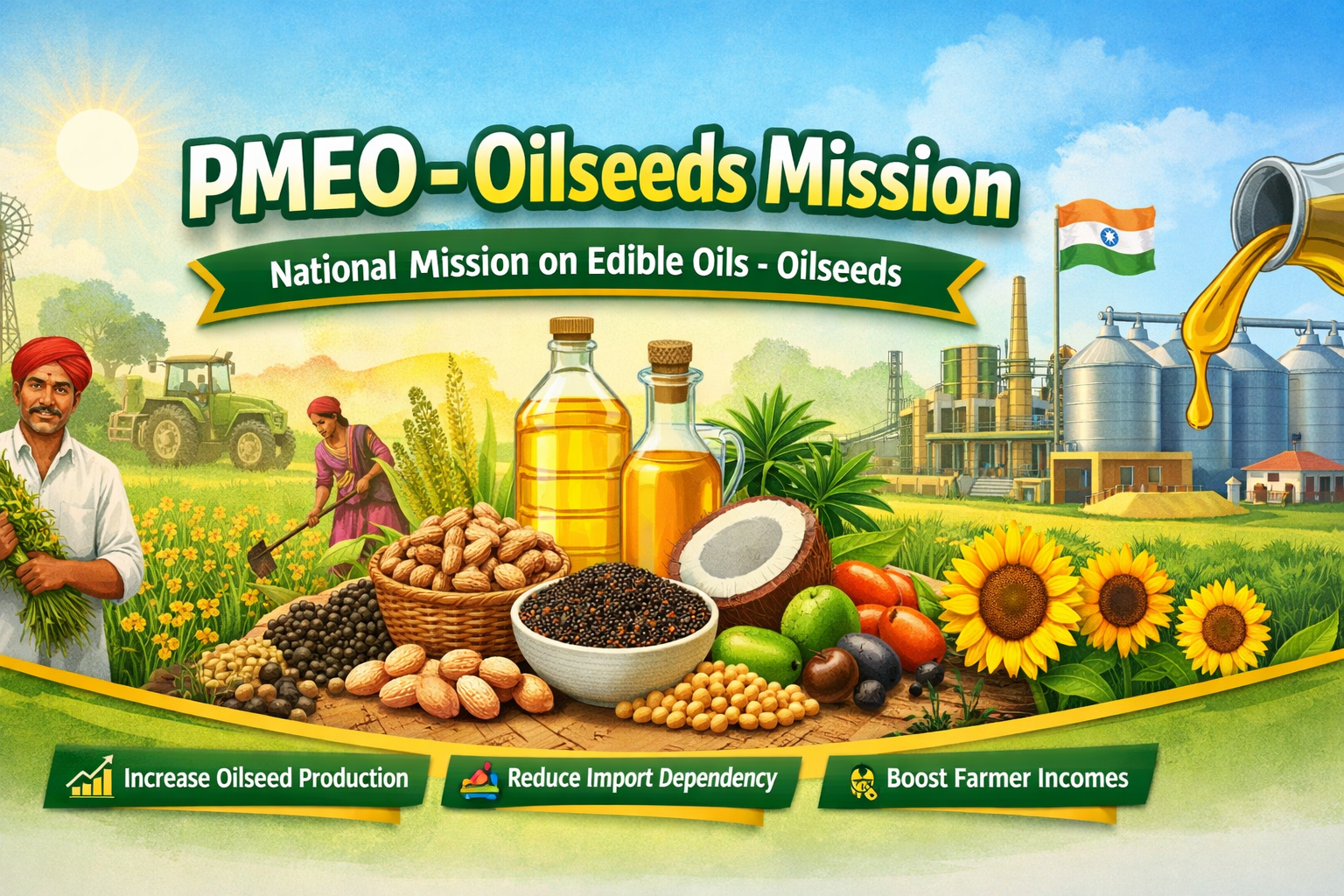
PMEO – Oilseeds Mission (National Mission on Edible Oils – Oilseeds)
The National Mission on Edible Oils – Oilseeds aims to enhance domestic oilseed production, reduce import reliance, and support farmer livelihoods through sustainable practices.
 KrishiCenter