

A Process-oriented Framework to Achieve Development Goals
If we compare the amount of energy required worldwide with the potential of Solar energy the Sun distributes on the earth’s surface, we can get about 16,000 times more energy when harnessed completely. In simple words, you get 3 times more energy on your roof than the energy consumed in the house.
Solar Energy Programmes are driven globally for being a clean energy source. From time to time, we’ve been advancing Solar technologies to increase its harnessing capacity. Himurja utterly emphasizes the use of solar energy taking further steps with laudable achievements.
India has achieved 23 GW of installed Solar capacity within eight years. The State of Himachal Pradesh is promoting cumulative Solar installations across all the districts especially remote areas for fast-paced development. Himurja welcomes potential investors for profitable Solar Schemes.
- SOLAR POWER POLICY
- Background
In hills, grid reliability is a constraint due to geographical, topographical and climate constraints and decentralized generation from solar is more efficient and easy to access. Low gestation period of 12 months and also reduced cost with technology upgrade has led to economic cost of generation.
National Institute of Solar Energy (NISE) has estimated a potential of 34 GW of solar power taking into account 3% of total wasteland and roof top surface areas of the consumers for this purpose. Indian Renewable Energy Development Agency Limited (IREDA) has estimated a potential of about 53 GW taking into account 5% of the waste land.
In consonance with the new trajectory finalized by MNRE, GoI whereby 500 GW of renewable energy is to be added by the year 2029-30, which includes 330 GW through solar, 140 GW through wind and 30 GW from other sources. Accordingly, a target of 1995 MW has been fixed for the state to be added through solar by the end of the year 2029-30. To align the state’s target with national target of 500 GW, approximately 1950 MW capacity will be required to be added by 2030. However, the State Government will prioritize the establishment of large solar power projects/solar parks in the cold desert area of the state by encouraging the developers to create optimum amount of BESS capacity to ensure effective utilization of the evacuation system. Similarly, the State Government will also promote the BESS backed solar power projects to develop micro grids in the remote areas.
- Need for Solar Policy Revision
It is desirable to align state’s policy goals with the national policy and targets. This policy shall be applicable for solar power projects. However, with the improvement in solar and related technologies and their relevance to the state, the State Government will prioritize introduction of solar thermal systems like solar water heating system, concentrated solar thermal (cst) systems, heat pumps etc. which will be promoted for heating, community cooking, space heating & cooling applications. The State Government will consider providing suitable financial incentives to promote use of these green and efficient technologies. This will also ensure the flattening of the peak demand to some extent apart from improving the living standard of people especially those living in higher hills.
- Prime Aims and Objectives of the Policy
- Promote generation of electricity from solar energy for energy security for sustainable development.
- Strengthen and sustain the policy of 100% clean electricity consumption in the state, by providing firm base load power during the sunshine time of the day.
- Empower people in the remote and rural areas with 24×7 powers by way of decentralized solar power supply, especially in the unreliable grid systems in the hilly and remote areas.
- Facilitate achieving Renewable Power Purchase Obligation (RPPO) by capacity creations in the state.
- Strategic Approach
Development of solar power projects is different from development of other renewable sources like small hydro, biomass, municipal waste etc. It is not site specific resource and therefore can be set up on waste land, devoid of forests and having no other efficient alternative use. Solar photovoltaic panels are mounted and do not involve substantial change in profile of land and slopes.
- Average investment of about Rs.4.00 crore/MW at the current price is required for development of solar power project, thus a huge investment to the tune of about Rs.8000 crore shall be required to achieve the target of 1995 MW through solar power as per the national target of 280 GW. However, the State Government will take all necessary steps to harness its maximum solar potential which is estimated to be 34 GW as per the studies. Most investment shall come from private or joint Sector. Distributed generation of smaller capacities across the state have huge advantages and hence State will promote small projects all across the state to meet local needs through local farmers, unemployed youth and other local entrepreneurs and also enable capital investment from outside the state in bigger projects.
- Generation is de-licensed and no approvals are required.
- State Government will facilitate the developers in obtaining statutory clearances, if any, and procedures and processes for various state level clearances and support will be made simple, transparent with self certified documentation and with clear time lines, so as to ensure doing business with ease.
- Land is crucial requirement for solar power projects, because it has to be the most efficient in terms of location, slopes, solar radiation, cost, proximity to EHT/HT grid and load centers. Land bank of State Government, waste land for solar parks will be identified and developed to facilitate large investments.
- Preference in power purchase from solar generation within the state will be given.
- Solar Capacity Addition
After the revision of the Solar Power Policy- 2016, some progress has been made and solar power projects ranging from 250 kW capacity to 5.00 MW capacity have been set up in the last 4 years with a cumulative capacity of 28 MW. In addition, 14.72 MW capacity Grid Connected Rooftop Solar Plants have also been installed.
Further keeping in view the new trajectory of the MNRE, GoI for achieving RPPO obligations, the capacity addition shall be made in the following modes:
- Grid Connected Rooftop Solar Plants
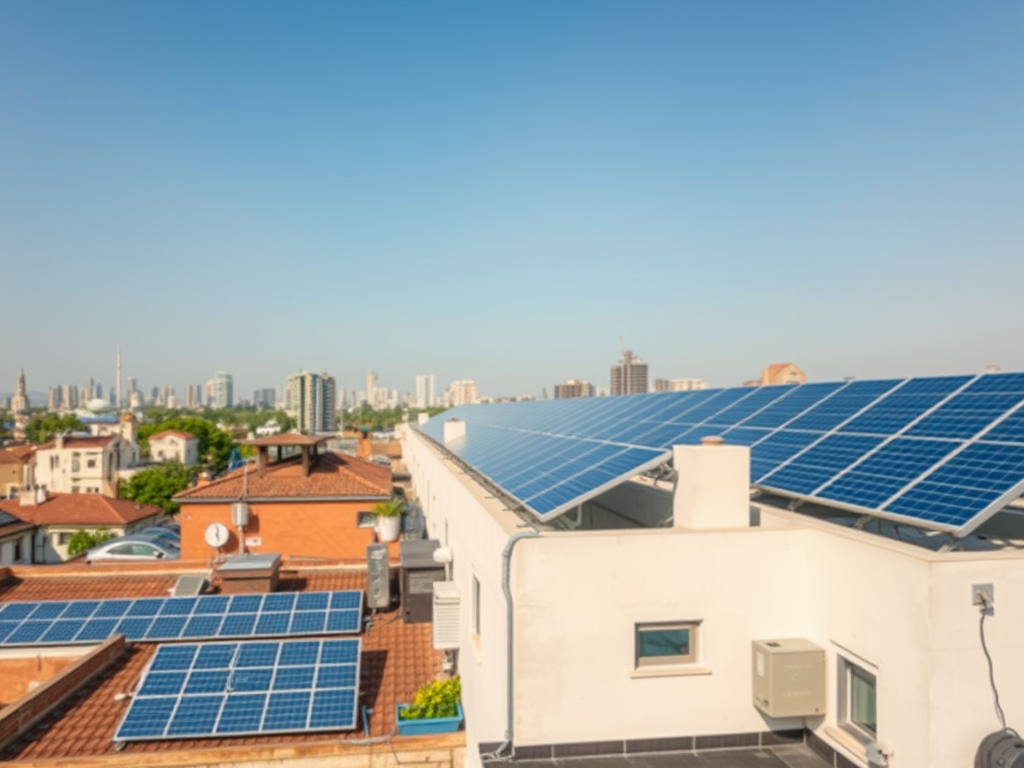
- Grid connected Rooftop Solar Plants under Net Metering Scheme:
The domestic electrical consumers of HPSEBL shall be eligible to install grid connected Rooftop Solar Plant on their rooftop/premises irrespective of consumer sanctioned load. Incentives under the grid connected rooftop solar scheme will be applicable as per the guidelines issued by Government of India or State Government from time to time. The system will be connected to the grid with bi-directional meters, whereby the consumer will use solar generation for his consumption and the surplus will be fed to the grid. The surplus energy will be adjusted in the monthly energy bills of the consumer and in case the generated energy from the solar plant is more than that consumed from the grid the same will be carried forward at the end of the billing cycle in the year or shall be paid in cash at the rate equivalent to 50% of the generic tariff for the year notified by the HPERC for the Ground mounted solar power projects up to 5 MW capacity.
- Grid connected Rooftop Solar Plants under captive use:
The industrial, commercial, institutional and other consumers shall be permitted to install grid connected rooftop solar plants on their vacant rooftops. The energy generated from these plants can be used for self consumption within the same premises. The surplus energy, not consumed by the consumer can be fed to the grid for which consumer will be paid as per the charges notified by HPERC every year. However, the consumer will have to seek consent from HPSEBL as per the powers delegated before setting up the grid connected rooftop solar plant.
- Ground Mounted Solar Power Projects
- Solar Power Projects ranging from 250 kW – 1 MW capacity for Bonafide Himachalis.
Under this scheme, solar power projects ranging from 250kW – 1 MW capacity shall be allotted to bonafide himachalis only. These projects will preferably be set up near HPSEBL sub-station or near the 11 kV/22 kV HT distribution feeder. In case, the availability of the land is not in close vicinity of existing HPSEBL sub-station/11kV/22kV distribution feeder, the applicant may construct a 11kV/33kV feeder from the proposed project site up to nearest existing HBSEBL sub-station/ 11kV/ 33kV distribution feeder at his own cost and risk of transmission losses and in future the line will be maintained by the applicant. The energy generated from these solar power projects shall mandatorily be purchased by HPSEBL, if commissioned on or before 31.03.2030 at HPERC approved tariff applicable at the date of allotment of the project and shall remain in force as per the terms and conditions stipulated in the PPA. The purpose of the scheme is to promote entrepreneurship in the state and also put to use the barren land which may be available with farmers and other land owners.
- Solar Power Projects of capacity greater than 1MW up to 5 MW.
HIMURJA shall, through wide publicity, invite applications from prospective applicants for setting up of solar power projects on own land or land taken on lease and the energy generation from such projects, if commissioned on or before 31.03.2030 shall be purchased by HPSEBL on the tariff fixed by HPERC.
- Solar Power Projects of capacity greater than 5 MW
Solar power projects of capacities greater than 5 MW can be developed by any Solar Power Project Developer or under any scheme the State Government may notify or under the Ultra Mega Renewable Energy Park Scheme of MNRE, GoI as per the availability of land, and transmission corridor where the project is to be set up. The project developer will be at liberty to dispose of power generated in any manner i.e. captive consumption, sale to any consumer within the State, sale to any trader or exchange or entity or consumer outside the State.
- Floating Solar Power Projects
The State Government may invite the proposals from prospective developers for setting up Floating solar power projects on reservoirs or lakes in the state. Preference will be given to the developers who have existing reservoirs for hydro projects.
- Land Requirement:
- Approximate land requirement for solar photovoltaic technology is 2 Hectares per MW. In the hilly terrain, due to topographical considerations, usable surface of the land may not be available in contiguity and in entirety and therefore maximum limit of land per MW capacity shall be 2.5 Hectare or 31 Bighas or 62 Kanals, unless in exceptional situations higher quantum of land is required.
- Transfer of private and government lands for the purpose shall be allowed only on lease basis. Useful life of photovoltaic equipments is likely to go up to 30 years from the present level of 25 years. Keeping in view implementation time and expected additional life of project, the project developer may enter into lease for period up to maximum of 35 years. The land can be further given on lease if the developer wants to reinstall the solar power project on the same land by replacing the solar photovoltaic modules.
- Transfer of Private land on lease shall require prior approval of the State Government under Section 118 of HP Tenancy and Land Reforms Act. Non- utilization of the land for the intended purpose and non commissioning within the time frame of 3 years, as laid down in the said Act, shall be violation of law and hence land shall be vested with the Government.
- Transfer of Government land will be in accordance with lease rules of state.
- Nodal Agency:
- HIMURJA under the Department of Non Conventional Energy Source, Government of Himachal Pradesh will be the state level nodal agency for all capacities of solar power projects for the purpose of registration of projects, co-ordination, facilitation, administration of Central and State Government incentives if any, grant of consent/ approvals etc.
- For the purpose of Power Purchase Agreement with DISCOM, HPSEBL shall be the dealing authority.
- For statutory clearances/permissions, the concerned department shall be the relevant authority like Revenue department for lands, Forest department for Forest clearance etc.
- Procedure for Registration of Solar Power Projects:
- All the solar power projects shall be treated like industrial investment projects. Procedures and processes shall be simple and transparent and timelines for each process shall be laid down and adhered to. Main processes and procedures involved are registration, signing of PPA, interconnection, land transfers and other routine processes like electricity connection, water connection, approach roads, Town and Country Planning (TCP) approvals etc.
- Solar power projects of all capacities, will be registered with HIMURJA and letter of approval/consent for setting up project, with commitment for support and assistance for project implementation, shall be issued by State Government through HIMURJA.
- For the registration of the projects, following procedures and processes shall be followed:-
- HIMURJA shall, through wide publicity, invite applications from prospective applicants for setting up of solar power projects on own land or land taken on lease in proximity to HPSEBL load centers in accordance with Solar Power Procurement Policy of HPSEBL. If the applications received is for less capacity than the capacity for which applications have been advertised then HIMURJA may repeatedly invite offers till the capacity is achieved.
- All the Projects up to 5 MW capacity in a decentralized generation mode, to be set up whether under the State Scheme or any other scheme notified by Government of India or otherwise, shall be registered with HIMURJA on provisional basis on the lines of small and medium industrial projects. If the project developer intends selling power to HPSEBL, the project developer shall first decide the location of the project in prior consultation with HPSEBL and obtain consent to purchase. A standard application format will be made available on HPSEBL website and shall be filed electronically or other mode of mail. Letter of Registration and Consent shall be issued within three days, on a standard format, as token of approval of the State Government, based on which all necessary approvals shall be granted by the concerned departments.
- All the projects of capacity above 5 MW shall be provisionally registered by HIMURJA with the prior approval of the State Level Empowered Committee (SLEC), comprising of the following:
- Additional Chief Secretary /Principal Secretary(MPP& Power and NES) – Convener.
- Additional Chief Secretary /Principal Secretary (Revenue).
- Principal Chief Conservator of Forests.
- Director Energy, Directorate of Energy.
- Managing Director, HPSEBL.
- Managing Director, HPPTCL.
- Chief Executive Officer, HIMURJA- (Member Secretary).
The Committee will meet in such a periodicity that decision on every proposal is made within 15 days of receipt of application by HIMURJA. Application format will be common as devised for projects mentioned at (c) above. In case power is to be sold to HPSEBL, prior consent shall be required to be obtained by the project developer.
- HIMURJA shall issue Essentiality Certificate (EC) for transfer of land, government or private, within one week of application, once the project is registered as per procedure (b) or (c) above; within the ceiling norms of land per MW capacity. If additional land is required, EC shall be issued within 15 days after approval of Additional Chief Secretary / Principal Secretary (MPP & Power and NES).
- HIMURJA will charge processing fee (non-refundable) of Rs. 10,000 per project up to 1 MW and Rs. 1,00,000 per project for above 1 MW with application.
- Permanent registration will be done by HIMURJA on commissioning of the project.
- Implementation Guidelines for Solar Power Projects:
The detailed guidelines for implementation of solar power projects in the state are attached at Annexure-IX.
- Disposal of Power:
The project developers are at liberty to dispose of the power generated in any manner i.e. captive consumption, sale to any consumer within the state, sale to any trader or exchange or entity or consumer outside the state and sale to HPSEBL.
- Tariff:
For projects up to 5 MW capacity, tariff for purchase of power by HPSEBL will be determined by HPERC, whereas tariffs for projects above 5 MW capacity will be discovered by the HPSEBL through competitive bidding mode. However, if a hybrid project has solar power as a component, the tariff for purchase of solar power by DISCOM exceeding 5 MW also shall be as determined by HPERC.
- Interconnection with Grid:
- Open access to distribution system of HPSEBL has been provided by HPERC through Regulations. The project developers shall use network of HPPTCL and HPSEBL as per conditions laid down in the Open Access and Connectivity Regulation of HPERC and signing an agreement with the state utility. Projects up to 2 MW capacity shall be allowed solid tap connectivity in 11kV network and above 2 MW capacity, the project line has to connect to 33kV or above sub-station.
- HPSEBL and HPTCL shall ensure that the project developers do not suffer due to lack of evacuation infrastructure.
- The project developer can install +/- 10% of the capacity of the project allotted to him. Addition / reduction over and above and below will not be accepted.
- Transmission and wheeling charges as decided by HPERC and HPSEBL from time to time shall be payable by the project developer.
- Banking charges as decided by HPERC and HPSEBL from time to time shall be payable by the project developer.
- The consumers in the state having connected load of more than 5 MW shall be allowed to install the captive solar power plant anywhere in the state. In such cases, demand charges shall continued to be paid to the DISCOM as per the contract demand.
- Project completion:
It should ordinarily take about 12 months to commission the project after acquiring land, obtaining statutory clearances and achieving financial closure, depending upon the size of the project. As such, three years have been kept for project completion after provisional registration, which will be the implementation time of project. The project developer will not be liable for loss or damage due to delay in manufacturer and delivery of equipments resulting from any cause beyond the reasonable control including but not limited to compliance with regulations, orders or instructions of any federal state or municipal, Government or agency thereof, acts of God, acts of omissions of the purchaser, acts of civil and military authority, fire, floods, strikes, lockouts, altercations, embargoes, war, riots. Delay in transportation, to obtain necessary labour, manufacturing facility or inability to obtain material due to import or non-availability of raw material, any failure or restriction of power supply and delay in releasing payment shall not be considered Force Majeure circumstances for the purpose of extension in setting up the project. The onus of proving that the work was delayed due to Force Majeure shall rest with the project developer.
- Delays in Commissioning of Projects:
- Wherever HPSEBL has signed PPA with the project developers, provisions contained in the PPA shall govern to regulate delays.
- If project is set up on personal land, any delay is to the cost of the project developer.
However, if land is obtained on lease with permission under section 118 of the Act, it shall vest with owner after due process of law, if not utilized for the purpose within the time frame laid down under Law.
- If Government land is leased out, completion period will be 3 years, subject to further extension of one year to be granted on justified grounds, without any extension fee, failing which, lease will be cancelled.
- Direct Benefits to the Locals:
- Of the total employment potential in the project, at construction and operations stages, 80% employment will be provided to bonafide residents of the state, with preference to those who transfer private land or to the right-holders of the Revenue estate where Government land is leased out for project.
- Where-ever Government land, on which the right-holders have community rights, is leased out for project development, 1% of the total cost of the project, as fixed by HPERC on normative basis, shall be contributed by the project developer to Local Area Development Fund (LADF) for community development works. Where private land is used, no such contribution is mandatory, however, the project developer may contribute to LADF voluntarily.
- Transfer of the Project
The solar power project can be transferred to any entity only after commissioning of the project.


Leave a Reply