
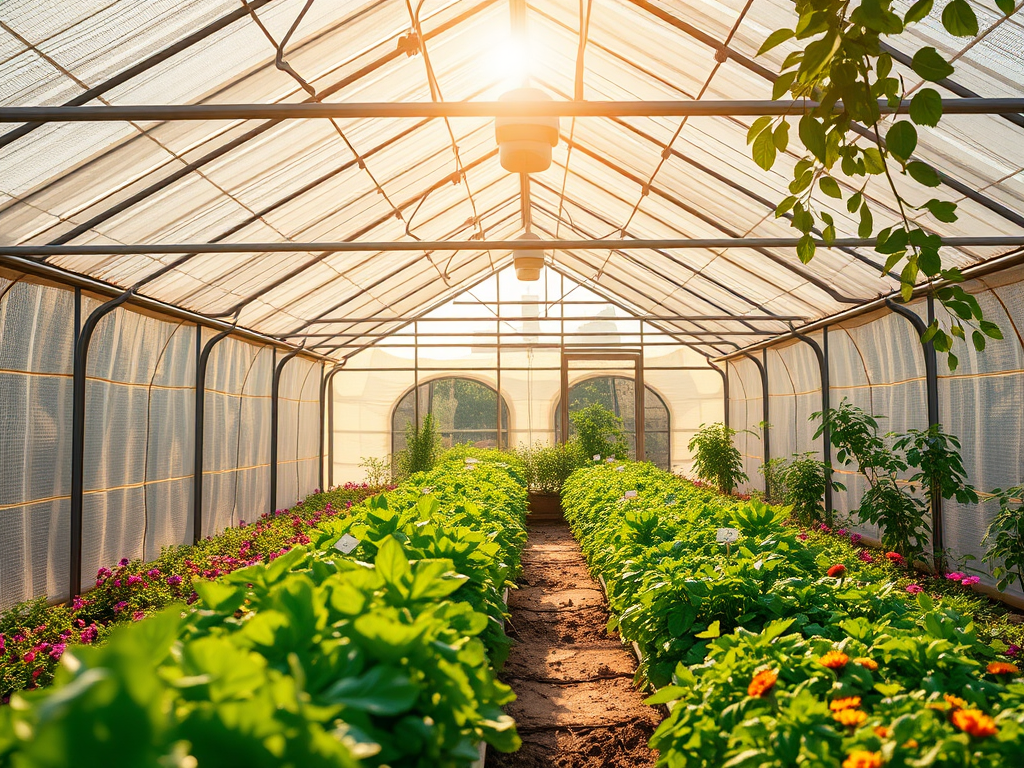
Setting up a greenhouse (protected cultivation) in India involves several steps — technical, financial, and regulatory — and there are a number of government schemes that can help. Below is a detailed guide + an overview of relevant schemes in India.
1. What Is a Greenhouse & Why Use One
A greenhouse (or polyhouse / net house) is a structure that allows you to control micro-climatic conditions (temperature, humidity, light, ventilation) to improve plant growth and enable year-round cultivation. Benefits include:
- Better yield and quality
- Protection from extreme weather (heat, hail, heavy rain)
- Efficient water use
- Possibility to grow high-value crops (vegetables, flowers, fruits)
2. Types of Greenhouse / Protected Structures
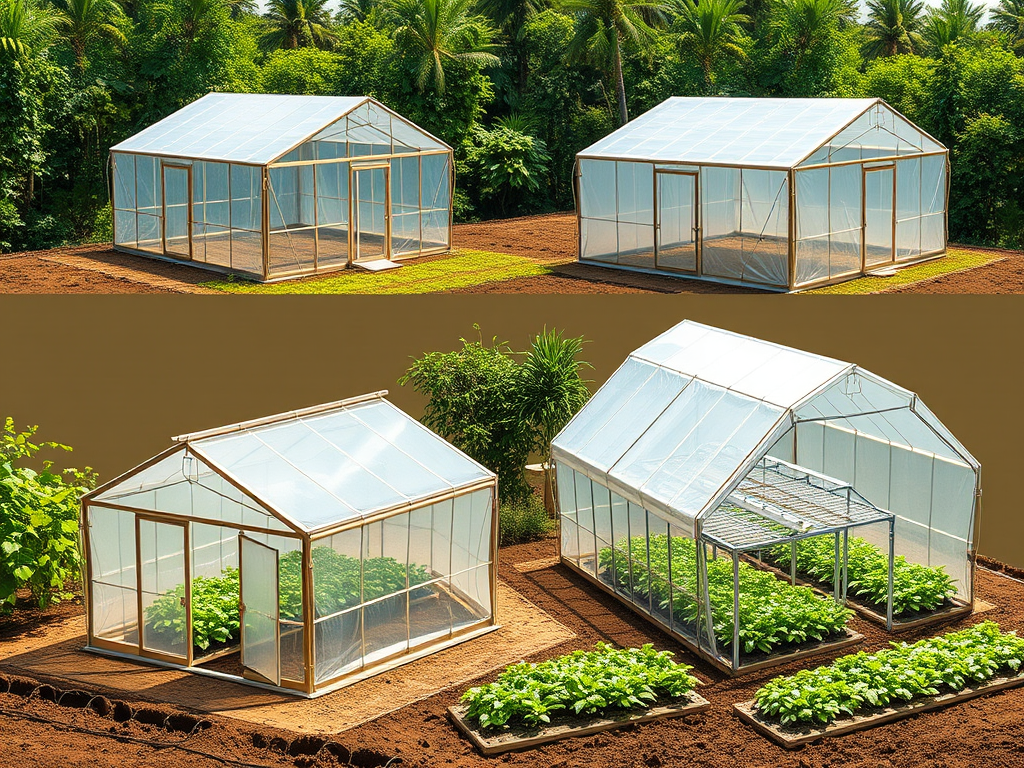
Some common types used in India:
- Naturally ventilated greenhouse: Simple structure, uses natural airflow.
- Fan & pad (evaporative cooling) greenhouse: For more controlled cooling.
- Shade net house / net house: Uses shade nets rather than transparent cover — good for reducing light, heat, and pests.
- Plastic tunnel / poly tunnel: Simplified greenhouse, cheaper covering.
- Hydroponic greenhouse: Soilless cultivation inside a controlled greenhouse.
3. Key Steps to Setting Up a Greenhouse
Here’s a step-by-step guide:
- Feasibility Study & Planning
- Select crops: high-value vegetables / flowers / herbs / fruits.
- Estimate demand & market: local market, export potential.
- Choose location: land availability, water source, orientation.
- Decide size: how many sq. meters.
- Design & Structure
- Choose structure type (see above).
- Frame material: tubular steel, wood, bamboo, etc.
- Covering material: UV-stabilized polyethylene film, polycarbonate, glass.
- Ventilation & cooling system: vents, fans + pad cooling if needed.
- Irrigation system: drip / mist system for water efficiency.
- Benching / flooring: raised beds or ground beds, depending on crop.
- Environmental control: sensors (temperature, humidity), automation (optional).
- Construction
- Hire a contractor or greenhouse company.
- Prepare the foundation and frame.
- Install covering, ventilation, irrigation, benches.
- Test all systems (water, airflow) before planting.
- Soil / Substrate Preparation
- If soil-based: prepare soil (mixing, sterilization if needed).
- If hydroponic: choose substrate (coco coir, rock wool, perlite, etc.) and set up nutrient delivery.
- Crop Management
- Planting: choose high-value varieties suited for protected cultivation.
- Nutrient management: use fertigation (fertilizer + irrigation) for precision.
- Pest & disease control: monitor, use integrated pest management.
- Pollination (if needed): manual or using pollinators.
- Climate Monitoring & Control
- Use sensors for temperature, humidity, soil moisture.
- Control ventilation (open/close vents), run fans or cooling pads.
- Adjust irrigation frequency based on plant needs.
- Harvesting & Post-Harvest
- Plan for regular harvesting.
- Use post-harvest infrastructure: packing room, cold storage or pre-cooling if needed.
- Marketing & Sales
- Identify buyers (wholesalers, supermarkets, exporters).
- Explore direct-to-consumer (farmers’ markets, online).
- Consider branding or organic certification (if applicable).
- Operation & Maintenance
- Regular maintenance of structure (repair film, check frame).
- Clean and disinfect inside (especially for soil-based greenhouses).
- Update system (automation, sensors) as you scale.
4. Cost Considerations
- Structure cost depends on size, material, and technology (fan-pad systems are costlier).
- Operating cost: electricity (for fans), water, fertigation, labor.
- Maintenance: replacing plastic cover, repairing frame.
- Infrastructure: packing, cold storage.
5. Risks & Challenges
- High upfront investment.
- Technical know-how required.
- Pest / disease pressure in closed environments.
- Market risk: need consistent demand.
- Dependence on reliable water and power.
6. Government Schemes & Subsidies in India
There are several schemes from central and state governments to support greenhouse / protected cultivation.
Here are some key ones:
| Scheme | What It Supports / Helps With |
|---|---|
| Mission for Integrated Development of Horticulture (MIDH) | Central mission covering protected cultivation (greenhouses, polyhouses), planting material, etc. (Agri Farming) |
| National Horticulture Board (NHB) – Protected Cultivation Subsidy | Provides subsidy for protected structures: greenhouses, net houses, plastic tunnels, etc. (Agri Joy) – Subsidy is ~50% of admissible cost. (Agri Joy) – Cap: up to ₹1 Crore per project. (LinkedIn) – Additional subsidy in special regions (NE states / hilly) under NHB norms. (Agri Joy) |
| National Horticulture Mission (NHM) | Part of MIDH; helps with greenhouse construction cost, shade nets, etc. (Agri Farming) – For greenhouses: 50% subsidy for up to a certain area per beneficiary (example: up to 4,000 sq m). (Agri Farming) |
| State-level Subsidies | Varies by state: – Rajasthan Greenhouse Scheme: Subsidy up to 50–70% depending on farmer category (SC/ST etc.). (Hortidaily) – Goa: Very attractive – up to 100% subsidy for greenhouse structure in certain cases. (Hortidaily) – Karnataka: Greenhouse subsidy via NHM + state; e.g., 50% central subsidy under NHM + additional state share. (Agri Farming) |
| State | Subsidy / Assistance for Protected Cultivation* | Notes / Source |
|---|---|---|
| Maharashtra | 50% for polyhouse (up to 4000 sqm) | G.R. – Rs 1060/sqm for tubular structure. (Maharashtra Government) |
| Telangana | 75% for general farmers; 95% for SC / ST | State polyhouse plan. (horticulture.tg.nic.in) |
| Haryana | 65% for general farmers; 85% for SC | Haryana Horticulture Dept scheme. (hortharyana.gov.in) |
| Punjab | 50%–85% (depending on category) | As per NHM / state horticulture mission. (alpha.kryzen.com) |
| Uttar Pradesh | 50%, up to cost norm of ~₹1,420/sqm for certain size | MIDH / state scheme. (uphorticulture.gov.in) |
| Andhra Pradesh | 50% for planting materials & protected cultivation on polyhouse | MIDH / state guidelines. (horticulture.ap.nic.in) |
*These are for protected cultivation / polyhouse under state or MIDH-NHM / horticulture-mission schemes. There is also a central NHB subsidy (50%) which many states combine with.
Key Points & Caveats:
- MIDH (Central): A lot of states follow the MIDH cost norms + subsidy pattern. According to its operational guidelines, the typical subsidy is 50%, limited to 4000 sqm per beneficiary for protected structures. rawe2020.in
- State Variations: Many states provide top-up subsidies over the central share, which differs significantly (e.g., Telangana’s very high 95% for SC/ST, Haryana’s 65% general).
- Technical Cost Norms: Cost norms (₹ per sqm) for structures (tubular, wooden, etc.) are defined in MIDH / NHB guidelines. rawe2020.in+2nhb.gov.in+2
- Limit: The 50% subsidy under MIDH often has a ceiling of 4000 sqm (or equivalent) for many states / components.
7. Funding & Loans
- Many banks offer agri-term loans for greenhouse / polyhouse projects.
- Example: Central Bank of India offers loans; up to 80% of project cost depending on assessment.
- Since NHB subsidy is often credit-linked, you’ll typically need a term loan from a bank to claim the subsidy.
8. Technical Tips & Best Practices
- Use UV-stabilized polyethylene film; it lasts longer.
- For cooling: use fan-pad systems in hot climates; for moderate climates, natural ventilation may suffice.
- Use drip + fertigation for efficient nutrient delivery.
- Monitor microclimate with sensors — this helps in optimizing irrigation and ventilation.
- Train labour / staff: protected cultivation needs more technical skills than open-field farming.
- Maintain hygiene to reduce pest/disease risk.
- Keep good records: yields, costs, climate parameters.
9. Example Use Cases
- A vegetable greenhouse for off-season tomatoes / peppers: The structure + drip irrigation can help you produce when market rates are high.
- A flower greenhouse: high-value cut flowers (roses, gerberas) that need controlled climate.
- Hydroponic farm: soilless, in greenhouse — good for leafy greens, herbs — high yield per sq.m.
10. How to Apply for Schemes
- Contact your State Horticulture Department or Horticulture Mission.
- Prepare a project report: cost estimates, layout, expected ROI.
- Visit NHB or MIDH websites to check for application guidelines, admissible costs, and documentation. For NHB subsidy, make sure you understand credit-linked subsidy requirements. (Agri Joy)
- Approach a bank for a term loan; get the loan sanction letter (often needed for subsidy).
- Build the greenhouse as per approved design / cost norms.
- After construction, get the structure verified by the horticulture department (or as required) to claim subsidy.
11. Challenges to Watch Out For
- Technical Risk: Without good design, greenhouse may overheat or humidity may be too high.
- Market Risk: Protected cultivation often produces more / off-season — but you need buyers.
- Maintenance Cost: Replacing plastic covers, repairing structures.
- Power / Water: Fan systems and irrigation demand reliable electricity and water.


Leave a Reply