
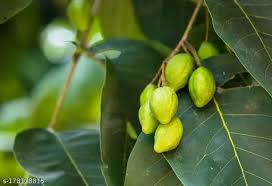
Introduction to Harad Farming
Harad (हरड़), scientifically known as Terminalia chebula, is a medicinal tree species native to India and other parts of Southeast Asia. It belongs to the Combretaceae family and is commonly referred to as Chebulic Myrobalan or Black Myrobalan. Harad is highly prized in traditional Ayurvedic medicine for its wide range of therapeutic properties, including its detoxifying, anti-inflammatory, antioxidant, and digestive health benefits.
The fruit of the Harad tree is small, round, and green when immature, turning yellow to brown as it ripens. It is one of the three primary fruits used in the well-known Ayurvedic formulation Triphala, which also includes Amla and Baheda (Behra). Harad is known for its potent healing properties and is used in treatments for various ailments such as digestive issues, constipation, liver health, skin disorders, and more.
In addition to its medicinal uses, Harad farming offers farmers a viable income source due to its adaptability to dry and semi-arid regions, its low maintenance requirements, and its increasing market demand for medicinal products. This guide provides detailed information on Harad cultivation, including soil and climatic requirements, propagation methods, and economic potential.
1. Understanding Harad (Terminalia chebula)
Harad is a deciduous tree that grows up to 15-25 meters tall. The tree produces small, round fruits that are harvested when they ripen and have a yellow-brown appearance. The fruit is renowned for its health benefits, especially as a mild laxative, digestive aid, and detoxifier.
- Scientific Name: Terminalia chebula
- Common Names: Harad, Chebulic Myrobalan, Black Myrobalan, Indian Walnut, Haritaki (in Sanskrit)
- Uses: Digestive health, detoxification, anti-inflammatory, antioxidant, skin care, liver health, and immune support.
2. Climatic and Soil Requirements
Harad trees are well-suited to tropical and subtropical climates. They are hardy, drought-tolerant, and can grow in relatively poor soil conditions, making them ideal for cultivation in arid and semi-arid regions.
Climate Requirements:
- Temperature: Harad thrives in warm climates with temperatures ranging from 25°C to 35°C. The tree can tolerate higher temperatures and is resilient to periods of drought, although it does best with moderate seasonal rainfall.
- Rainfall: Harad trees can grow in areas receiving 800 mm to 1,500 mm of rainfall annually. While the tree is drought-tolerant, a moderate amount of rainfall is beneficial during the early stages of growth.
- Altitude: Harad trees can grow at altitudes ranging from sea level up to 1,500 meters. They prefer areas with good sunlight exposure, as they are sun-loving plants.
Soil Requirements:
- Soil Type: Harad grows well in a variety of soils, including loamy, sandy, and even rocky soils. However, well-drained soils are essential for proper root development.
- pH Level: The soil should be slightly acidic to neutral, with a pH level ranging from 6.0 to 7.5.
- Drainage: Well-drained soil is crucial for preventing waterlogging, which can damage the roots and reduce fruit yield. Adding organic matter can enhance soil fertility and improve drainage.
3. Land Preparation
Before planting Harad, proper land preparation is essential for ensuring healthy tree growth.
- Site Selection: Choose a site with adequate sunlight, as Harad trees need full sunlight for optimal growth.
- Plowing and Tilling: The land should be plowed to a depth of 20–25 cm to break up any compacted soil and ensure proper aeration for root development.
- Soil Amendment: Incorporate organic matter like farmyard manure (FYM) or compost into the soil before planting. This improves soil fertility and moisture retention.
- Digging Pits: If planting in rows, dig pits that are 30 cm × 30 cm in size. For large-scale plantations, the spacing between pits should be about 4–5 meters to allow ample space for tree growth.
4. Propagation of Harad
Harad can be propagated through seeds or vegetative methods such as grafting, but seed propagation is the most common method.
Seed Propagation:
- Seed Collection: Mature fruits of Harad are collected, and the seeds are extracted after removing the pulp. The seeds are washed and dried in the shade for 7–10 days.
- Sowing: The seeds are sown in a nursery bed or seed trays, about 2–3 cm deep. The soil should be well-drained and slightly acidic.
- Germination: Seeds typically take 3–4 weeks to germinate under optimal conditions.
- Transplanting: Once the seedlings have grown large enough (around 10–15 cm tall), they can be transplanted into the main field.
Grafting and Cutting:
- Grafting: Grafting onto rootstocks from other Terminalia species can be used for more uniform growth or faster fruiting. This method is more commonly employed in commercial plantations.
- Cuttings: While not widely practiced, semi-hardwood cuttings from healthy trees may also be used for propagation.
5. Planting Harad Trees
Once the seedlings are ready for transplanting, the following steps should be followed:
- Planting Time: The ideal time for planting Harad is during the early monsoon season (June–July) when the rainfall ensures proper establishment of roots.
- Spacing: Space the trees 4–5 meters apart to allow for proper canopy growth. For higher-density planting, reduce the spacing to around 3 meters.
- Depth: When planting, ensure that the root collar is just above the soil level. This helps in preventing diseases like root rot and encourages proper root development.
- Watering: Water the plants immediately after transplanting and continue to provide regular water during the establishment period. Once established, Harad trees can tolerate drought and require less frequent watering.
6. Irrigation and Water Management
Though Harad is drought-tolerant, regular irrigation during the first few years is crucial for healthy growth.
- Watering Frequency: Young plants should be watered every 3–4 days, depending on weather conditions. Once established, irrigation can be reduced, especially during the rainy season.
- Irrigation Methods: Drip irrigation is ideal for large-scale plantations, as it ensures water reaches the root zone without waste. For small-scale farms, flood irrigation or manual watering can also be employed.
7. Nutrient Management
Harad trees require adequate nutrients for optimal growth and fruiting. Fertilization practices should be based on soil fertility and tree growth stage.
- Organic Fertilization: Apply organic fertilizers such as FYM, compost, or vermicompost at planting and once a year to improve soil fertility.
- Inorganic Fertilization: Apply balanced NPK fertilizers (e.g., 10:10:10 or 20:10:10) to encourage healthy growth and fruiting. Apply these fertilizers during the first 2-3 years.
- Micronutrient Application: If soil tests indicate a deficiency in micronutrients like zinc, iron, or manganese, these can be applied through foliar sprays or soil amendments.
8. Weed and Pest Management
Weed control and pest management are crucial for ensuring healthy tree growth and maximizing fruit yield.
Weed Control:
- Manual Weeding: Regular hand weeding is necessary to remove unwanted vegetation around the base of the tree. Weeds compete with the tree for nutrients and water, so their control is essential during the early years.
- Mulching: Apply organic mulch around the base of the tree to suppress weed growth and retain moisture in the soil.
Pest Control:
- Common Pests: Harad trees can face issues with pests like termites, root borers, and caterpillars. Regular monitoring is essential to catch infestations early.
- Organic Pest Control: Use neem oil or organic insecticides to control pest problems without harming the environment.
- Fungal Diseases: Fungal diseases such as root rot can affect Harad trees in poorly-drained soils. Ensuring proper soil drainage and avoiding overwatering is crucial for disease prevention.
9. Pruning and Maintenance
Pruning Harad trees helps maintain their shape and encourages better airflow and sunlight penetration.
- Pruning: Regularly prune dead, diseased, or damaged branches to maintain tree health. Pruning also helps in maintaining the desired height and shape of the tree.
- Height Management: For easier harvesting, trees can be pruned to a manageable height of 4–5 meters, especially if grown in agroforestry systems.
- Thinning: If the tree canopy becomes too dense, thin it out to improve sunlight penetration and reduce the risk of fungal diseases.
10. Harvesting Harad
Harad fruits are typically harvested when they ripen, which usually occurs in the late summer to early autumn.
- Harvesting Time: The ideal time to harvest is when the fruits turn brown or yellowish and are easily separated from the tree.
- Harvesting Method: Harvesting is usually done by hand, using a long pole or ladder to reach higher branches.
Care should be taken to avoid bruising or damaging the fruit.
- Post-Harvest Processing: After harvesting, the fruits are dried in the shade for 7–10 days to preserve them. Dried fruits can be stored for long periods and are later processed into powders or extracts for use in medicinal products.
11. Economic Potential of Harad Farming
Harad farming holds significant economic potential due to the increasing demand for herbal and Ayurvedic products globally.
- Medicinal Market: Harad is a key ingredient in Ayurvedic products, including Triphala and digestive supplements. The growing trend towards natural health products has increased the demand for Harad fruit.
- Value-Added Products: Farmers can process the fruits into powders, oils, and extracts, which have a higher market value than fresh fruits.
- Profitability: Harad trees can produce 20–30 kg of fruit per tree once they mature (typically after 4–5 years). With proper management, a hectare of Harad trees can yield substantial profits.
Conclusion
Harad farming offers a sustainable and profitable opportunity for farmers, especially in dry and semi-arid regions. With its numerous medicinal benefits, low maintenance requirements, and adaptability to diverse climates, Harad can be a valuable addition to any agroforestry or medicinal plant farming system. By following proper cultivation practices, including optimal soil management, pest control, and harvesting methods, farmers can achieve healthy, high-yielding crops while tapping into the lucrative market for herbal products.


Leave a Reply