
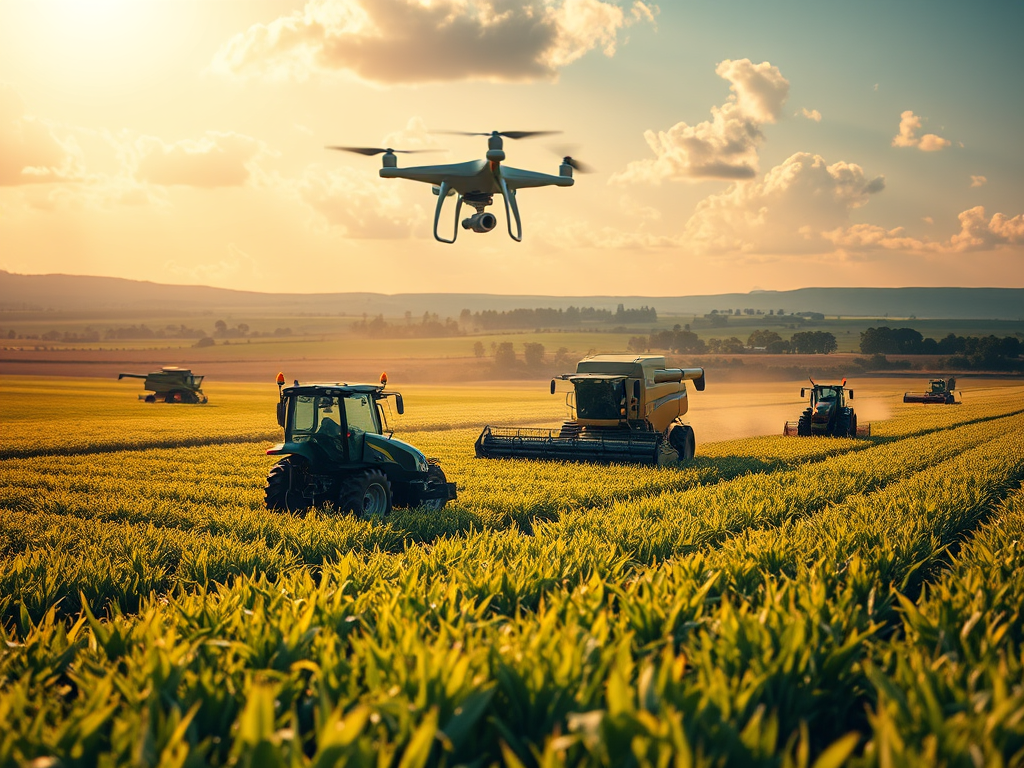
The Role of Machinery and Drones in Modern Agriculture
Agriculture, once heavily reliant on manual labor and traditional farming techniques, has experienced significant advancements in recent years. One of the most transformative aspects of modern farming is the integration of machinery and drones. These innovations are revolutionizing the industry by improving efficiency, increasing productivity, and enabling more sustainable farming practices.
The Rise of Agricultural Machinery
Agricultural machinery has become a backbone of modern farming. It provides farmers with the tools necessary to scale operations. These tools help reduce labor costs and achieve higher yields. From tractors to harvesters, these machines have made a profound impact on various agricultural processes, including planting, irrigation, harvesting, and processing.
- Tractors and Plows
Tractors are arguably the most important piece of agricultural machinery. They can pull plows, sowers, and seeders, allowing for faster and more consistent planting. Plows are used to till the soil, preparing it for the sowing of seeds. These machines significantly reduce the time and energy required for land preparation, enabling farmers to cultivate larger plots of land in less time. - Combines and Harvesters
Harvesting is another critical stage in the farming process, and machinery has made this task exponentially more efficient. Combine harvesters, which can simultaneously cut, thresh, and separate crops from the stalks, have dramatically reduced the labor required for harvesting. This machinery ensures that crops are harvested at their peak, preventing loss due to weather conditions or delays. - Sprayers and Irrigation Systems
Modern sprayers and irrigation systems are vital for ensuring crops receive the right amount of nutrients and water. Automated irrigation systems use sensors and weather data to deliver precise amounts of water to crops, reducing water waste. Sprayers are used to apply pesticides, fertilizers, and herbicides, protecting crops from pests and diseases while ensuring that they receive proper nutrients. - Soil Management and Fertilizer Application
Precision agriculture technologies have led to the development of machinery that can manage soil health more effectively. Soil sensors, integrated into tractors or attached to specialized vehicles, measure nutrient levels, moisture, and soil structure. This data can then guide farmers in applying fertilizers and soil amendments only where needed, reducing the environmental impact of over-fertilization and optimizing crop growth.
Drones: The Game-Changer in Precision Agriculture
Drones have emerged as a groundbreaking tool in precision agriculture, offering farmers real-time data and actionable insights that were once impossible to obtain. By integrating drones into their operations, farmers can monitor crops, assess field conditions, and even apply treatments without stepping foot in the field.
- Crop Monitoring and Surveillance
Drones are equipped with high-resolution cameras, multispectral sensors, and infrared technology, which allow them to capture images of crops from above. This technology enables farmers to monitor crop health, detect early signs of diseases, pests, or water stress, and assess overall field conditions. Drones can also detect variations in plant growth, helping farmers identify which areas of a field may require additional attention. - Precision Spraying and Fertilization
Some drones are designed to spray fertilizers, pesticides, and herbicides with remarkable precision. By using GPS and onboard sensors, these drones can target specific areas that require treatment, reducing the amount of chemicals used and minimizing environmental impact. This method is particularly beneficial for crops with varying needs, as it ensures that the right treatments are applied at the right time and in the right amounts. - Field Mapping and Data Collection
Drones are capable of creating detailed field maps, which can be used to plan planting schedules, irrigation strategies, and harvest timing. These maps provide a bird’s-eye view of the field’s layout, helping farmers make informed decisions based on accurate, real-time data. Drones also provide valuable information about soil conditions, allowing for more precise soil management and the ability to optimize the use of fertilizers and water. - Early Pest and Disease Detection
Drones are highly effective at detecting pests and diseases before they spread across a field. Using advanced imaging technologies, drones can identify changes in crop color, leaf texture, or shape that may indicate the presence of pests or disease. Early detection allows farmers to take immediate action, preventing widespread crop damage and minimizing the need for chemical treatments. - Irrigation Management
Drones equipped with thermal imaging sensors can be used to monitor the moisture levels in the soil. These sensors detect temperature differences that can indicate areas of excessive or insufficient water. By identifying water stress areas, farmers can adjust their irrigation systems to ensure that crops receive the optimal amount of water, thereby conserving resources and enhancing crop productivity.
Benefits of Machinery and Drones in Agriculture
The use of machinery and drones in agriculture offers a range of benefits:
- Increased Efficiency and Productivity: With advanced machinery, tasks that once took days can now be completed in hours. Tractors, harvesters, and automated irrigation systems allow farmers to scale their operations and work more efficiently.
- Cost Reduction: While the initial investment in machinery and drones can be high, the long-term cost savings are significant. Reduced labor costs, less waste, and more efficient resource use all contribute to greater profitability for farmers.
- Sustainability: Both machinery and drones can play a critical role in sustainable farming practices. Precision agriculture technologies enable farmers to apply inputs like water, fertilizers, and pesticides more precisely, reducing waste and environmental damage.
- Improved Crop Management: Drones, in particular, enable farmers to make data-driven decisions based on real-time insights. This leads to better crop management, improved yields, and reduced losses.
- Better Monitoring and Decision Making: The ability to monitor large areas of land quickly and accurately allows farmers to respond to problems before they escalate. Early detection of diseases, pests, and water stress can lead to faster interventions and better outcomes.
Challenges and Future Prospects
While the integration of machinery and drones into agriculture holds immense promise, there are challenges to overcome:
- High Initial Costs: The cost of advanced machinery and drones can be prohibitive for small-scale farmers. Although the long-term benefits may outweigh the costs, access to financing and subsidies is essential for widespread adoption.
- Technical Expertise: Operating advanced machinery and drones requires specialized knowledge and skills. Farmers may need training to use these technologies effectively, and there may be a learning curve associated with their integration into existing farming practices.
- Regulatory Issues: The use of drones in agriculture is subject to various regulations, which can vary from country to country. In some areas, drone operators need to obtain licenses, and there may be restrictions on where and when drones can fly.
Despite these challenges, the future of agriculture looks promising with continued advancements in machinery and drone technology. As the industry continues to innovate, these technologies will become more accessible, affordable, and effective in helping farmers meet the growing demand for food in a sustainable and environmentally responsible manner.
Conclusion
The use of machinery and drones is transforming agriculture into a more efficient, precise, and sustainable industry. From soil preparation to harvesting, these technologies are reducing labor costs. They are increasing productivity. They also enable farmers to respond more effectively to environmental and economic challenges. With the continued development of these tools, the future of agriculture looks increasingly data-driven, automated, and environmentally friendly. As more farmers adopt these technologies, the potential for global agricultural growth and sustainability is vast.


Leave a Reply