What is Krishak Bakri Palan Yojna?
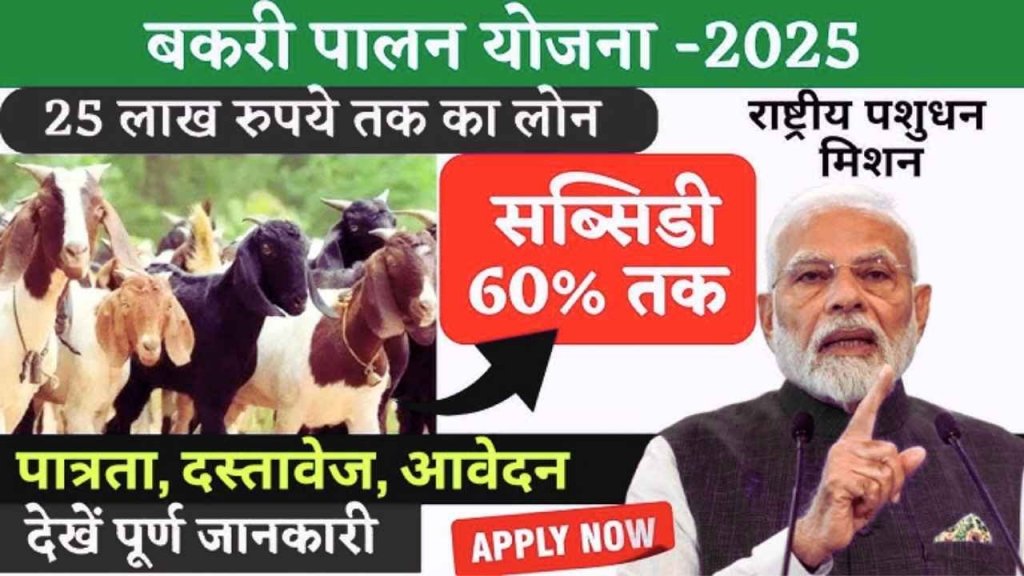
The Department of Animal Husbandry, Government of Himachal Pradesh has introduced a scheme named “Krishak Bakri Palan Yojna” बकरी पालन. This scheme aims to increase income generation opportunities for economically weaker segments of the society. It also seeks to increase meat production. Goat farming is a traditional occupation in Himachal Pradesh. Economically weaker segments of the society, such as small and marginal farmers, mainly nomads and landless laborers, commonly practice it. This species is considered to be a major source of economic sustenance for these categories of people. Adaptability of goats to a wide range of agro-climatic conditions has rendered it suitable for poor farmers. Under this scheme, it has been proposed to distribute units of 11 goats, consisting of 10 females and 1 male. There are also units of 5 goats, with 4 females and 1 male, and units of 3 goats, with 2 females and 1 male. These goats are from Beetal, Sirohi, Jamanapari, or White Himalayan breeds. This distribution will be on a 60% subsidy.
Objectives of this scheme:
- Increase Income Generation: The scheme aims to enhance income generation opportunities for economically weaker sections through goat farming.
- Boost Meat Production: By providing high-quality goat breeds, the scheme aims to increase meat production in the state.
- Support Economically Disadvantaged Families: The scheme offers a 60% subsidy on goat units, making it easier for financially weaker families to start goat farming.
- Promote Rural Development: Encouraging goat farming contributes to the overall development of rural areas in Himachal Pradesh.
- Ensure Sustainable Livelihoods: The scheme provides a sustainable livelihood to small farmers and landless laborers, reducing their economic vulnerability
What are the Benefits of Krishak Bakri Palan Yojna?
Financial Assistance: Farmers receive goat units on a 60% subsidy, significantly reducing the initial investment required for goat farming.
Improved Livelihoods: The scheme helps improve the livelihoods of small farmers by providing a steady source of income through goat farming.
Increased Meat Production: By distributing high-quality goat breeds, the scheme boosts meat production in the state, contributing to the local economy.
Sustainable Farming Practices: The scheme promotes sustainable farming practices, ensuring long-term economic benefits for farmers.
Empowerment of Marginalized Communities: By targeting economically weaker sections, the scheme empowers marginalized communities, promoting social and economic inclusion.
Eligibility
- Farmers belonging to all categories like general/SC/ST/BPL/Women and Landless persons of Himachal Pradesh are eligible.
- Training/awareness in skills of goat husbandry is mandatory for all applicants. Concerned Senior Veterinary Officer will provide training to interested persons/applicants.
- Training/awareness in skills of goat husbandry is mandatory for all applicants. Concerned Senior Veterinary Officer will provide training to interested persons/applicants.
The preference will be given to:
- Unemployed SC, ST, Women and General category persons. At least 30 percent beneficiaries should be women.
- Families where no member is in Government job.
- Persons with annual income not exceeding 2 lakh per annum.
- Persons/farmers who have built their own goat sheds or built under MGNREGA.
Subsidy Structure (Indicative)
| Category | Subsidy |
|---|---|
| General Category | 25% |
| SC / ST | 33%–50% |
| Women / SHG / BPL | 50%–60% |
Subsidy percentage may vary by state and scheme.
Application Process
This Scheme can now be availed online
Visit the official website of the Department of Animal Husbandry.
On reading the detailed guidelines, if the eligibility criteria meets, the applicant may scroll down the page and click on the checkbox “I am agree with the terms & Conditions” and then click “Apply Now” button.
On clicking, online application form will open.
The applicant fills the complete form by uploading the required documents and click submit.
Contact the District Animal Husbandry Department
Prepare a Detailed Project Report (DPR)
Apply for bank loan
Get subsidy approval
Establish goat farming unit
Popular Goat Breeds Under the Scheme
🐐 Meat Purpose
- Jamunapari
- Sirohi
- Barbari
- Beetal
- Black Bengal
🐐 Milk Purpose
- Jamunapari
- Beetal
- Totapuri
Goat Farming Unit Models
| Unit Size | Goats | Estimated Cost |
|---|---|---|
| Small Unit | 10 + 1 | ₹1.5–2 lakh |
| Medium Unit | 25 + 2 | ₹3–4 lakh |
| Large Unit | 50 + 4 | ₹6–8 lakh |
Cost Components
- Purchase of goats
- Goat shed construction
- Feed & fodder
- Medicines & vaccination
- Insurance
- Labor cost
Goat Shed Requirements
- Elevated and dry location
- Proper ventilation
- Protection from rain & cold
- 10–12 sq. ft. space per goat
Disease Control & Vaccination
| Disease | Vaccination Schedule |
|---|---|
| PPR | Once annually |
| FMD | Every 6 months |
| Enterotoxemia | As required |
| Deworming | Every 3–4 months |
Feed & Nutrition Management
- Green fodder: Berseem, Napier, Sorghum
- Dry fodder: Straw, hay
- Concentrate feed: Maize, bran, oil cake
- Clean drinking water at all times
Documents
The copy of following documents may be required at the time of filling of online application form:
- Bank Passbook
- Income Certificate
- Unemployment Certificate
- BPL Certificate
- Training Certificate
- Cast Certificate (if SC, ST))
Income & Profit Potential
- Income per goat: ₹8,000–15,000 per year
- 25-goat unit profit: ₹2–3 lakh annually
- Investment recovery in 18–24 months
Bakri Palan Yojana – Training Program
The Bakri Palan Yojana Training Program is a structured capacity-building initiative conducted by the Animal Husbandry Department, Krishi Vigyan Kendras (KVKs), NABARD, and State Livestock Training Institutes. The program equips farmers with practical, field-oriented skills to start and manage profitable goat farming units.
Objectives of the Bakri Palan training program
- Build scientific goat farming skills
- Reduce mortality and disease losses
- Improve productivity and income
- Enable beneficiaries to access loans & subsidies
- Promote entrepreneurship in livestock
Who Can Attend the Bakri Palan training program
- Farmers and small/marginal landholders
- Unemployed youth
- Women farmers & SHG members
- First-time goat farming entrepreneurs
- Beneficiaries of Bakri Palan Yojana / NABARD schemes
Minimum age: 18 years
Training Duration for the Bakri Palan training program
- 3 to 7 days (basic level)
- 10–15 days (advanced / residential programs)
Duration varies by state and institute.
Training Modules Covered in Bakri Palan training program
1. Introduction to Goat Farming
- Scope, economics, unit planning
- Selection of suitable unit size
2. Breed Selection & Breeding Management
- Meat & milk breeds
- Breeding cycle and kidding management
3. Housing & Shed Design
- Low-cost shed models
- Space, ventilation, hygiene
4. Feed & Nutrition Management
- Green, dry & concentrate feed
- Mineral mixture and feeding schedule
5. Health Care & Disease Management
- Vaccination schedule
- Deworming & common diseases
- First aid practices
6. Reproduction & Kid Management
- Care of pregnant goats
- Kid mortality control
7. Economics & Project Report (DPR)
- Cost–benefit analysis
- DPR preparation for bank loans
- Subsidy linkage
8. Marketing & Value Addition
- Live goat marketing
- Meat & milk marketing basics
Training Methodology
- Classroom sessions
- Live farm demonstrations
- Interaction with successful goat farmers
- Audio-visual presentations
- Field visits (where applicable)
Certificate & Benefits of the Bakri Palan training program
- ✅ Training Certificate (useful for bank loan & subsidy)
- ✅ Priority in government schemes
- ✅ Technical guidance after training
- ✅ Improved survival rate & profits
How to Enroll in the Bakri Palan training program
- Visit District Animal Husbandry Office
- Contact nearest KVK / Livestock Training Institute
- Register through state livestock department portals
- Enroll via bank / NABARD-linked programs
Documents Required for the Bakri Palan training program
- Aadhaar Card
- Passport-size photo
- Bank details
- Category certificate (if applicable)
Why Training Is Important
- Prevents beginner mistakes
- Reduces disease outbreaks
- Ensures eligibility for subsidy
- Makes goat farming commercially viable
A proper Bakri Palan Yojana Training Program is the foundation of successful goat farming. Farmers who undergo training achieve higher productivity, lower losses, and faster returns, making goat farming a reliable rural enterprise.
Frequently Asked Questions
Q- What would be the area of implementation?
A – It can be implemented in the Entire State
Q – Is there any subsidy provided on Goats?
A – Goat Units Will Be Provided On 60% Subsidy.
Q – Is this scheme online?
A – Yes it can also be applied online with required documents.
Q – Is there any training provided?
A – Training programs are provided for specific categories
Conclusion
Bakri Palan Yojana is a powerful tool for rural economic empowerment. Proper breed selection is crucial. Along with scientific management, government support is essential. Goat farming can become a profitable and sustainable livelihood option for farmers and rural youth.


Leave a Reply