
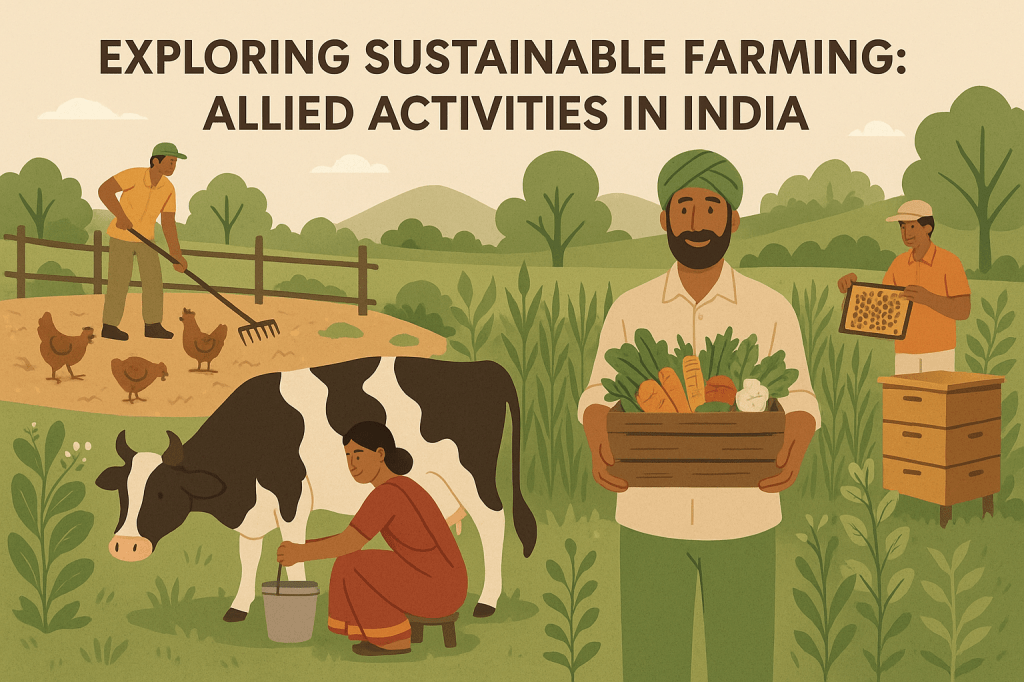
Allied Agricultural Activities in India: Enhancing Livelihoods and Sustainability
Agriculture in India is not confined to the traditional cultivation of crops. Over the years, allied agricultural activities have gained prominence. They are essential components of the rural economy. They contribute to both food security and economic stability. These activities include animal husbandry, dairying, fisheries, horticulture, apiculture (beekeeping), and sericulture. They provide diversified sources of income for farmers. These activities are crucial for sustainable agricultural development.
Approximately 60% of India’s population is engaged in agriculture. Allied activities not only improve farm productivity but also help reduce dependency on seasonal crops. This diversification plays a pivotal role in ensuring the economic stability of rural households. It is particularly important during times of crop failure or unpredictable weather conditions.
Let’s delve deeper into the various allied agricultural activities that complement traditional farming in India.
1. Animal Husbandry
Livestock Farming:
Animal husbandry is one of the most significant allied activities in India, providing meat, milk, wool, hides, and manure. The livestock sector in India supports millions of farmers, particularly in rural areas.
- Dairy Farming: India is the largest producer of milk globally, with dairying being a primary source of livelihood for millions. States like Uttar Pradesh, Gujarat, Rajasthan, and Maharashtra are major milk-producing regions.
- Poultry Farming: The demand for eggs and chicken meat has led to the rise of poultry farming in India. Commercial poultry farming has grown substantially in states like Andhra Pradesh, Tamil Nadu, and West Bengal.
- Goat and Sheep Farming: Goats and sheep are raised for meat, wool, and milk. Goat farming has proven especially beneficial in dry regions where crop cultivation is difficult.
Economic Impact:
- Livestock farming has not only diversified farm incomes but has also contributed significantly to the national GDP and rural employment.
- The sector also supports the feed industry, veterinary services, and fodder production, creating a positive ripple effect across the economy.
2. Dairying
Milk Production:
India’s dairy industry is one of the largest in the world, contributing substantially to the rural economy. The demand for milk and milk products like ghee, paneer, curd, and butter has grown exponentially.
- Major States: Uttar Pradesh, Rajasthan, Madhya Pradesh, Gujarat, and Maharashtra dominate India’s dairy production.
- Cooperative Models: Successful dairy cooperatives like the Amul cooperative in Gujarat have revolutionized the sector. They provide farmers with higher incomes. These cooperatives also offer better market access.
Challenges:
- Inadequate veterinary care, poor feeding practices, and climatic stress often hamper productivity. However, initiatives like fodder development programs and improved breeding technologies are slowly addressing these issues.
3. Fisheries and Aquaculture
Aquaculture:
India has a vast coastline of over 7,500 km, making fisheries and aquaculture key allied agricultural activities. The demand for fish and seafood is on the rise, both domestically and internationally, due to increased awareness of the nutritional benefits of fish.
- Freshwater Aquaculture: Major fish farming takes place in West Bengal, Uttar Pradesh, Tamil Nadu, and Andhra Pradesh, with species like carp and catfish being common.
- Marine Fisheries: India is one of the largest exporters of seafood, with tiger prawns, shrimps, and mackerels being major export products. Kerala, Andhra Pradesh, and Tamil Nadu are major marine fish producers.
Economic Impact:
- The fisheries sector provides employment to millions of people and is a major source of income for coastal and rural populations.
- The growth of the aquaculture industry has led to the development of fish feed production, fish processing, and export businesses.
4. Horticulture
Fruit and Vegetable Farming:
Horticulture involves the cultivation of fruits, vegetables, spices, and flowers. It is a highly diversified sector that plays a key role in India’s agricultural landscape.
- Fruits: India is a leading producer of mangoes, bananas, oranges, apples, grapes, and papayas. States like Maharashtra, Uttar Pradesh, Himachal Pradesh, and Tamil Nadu are major fruit-producing areas.
- Vegetables: The country produces a variety of vegetables. These include tomatoes, onions, cauliflower, cabbage, and potatoes. They are especially cultivated in Himachal Pradesh, Punjab, and West Bengal.
Economic Contribution:
- Horticultural crops have become major export commodities, with India being the second-largest exporter of fruits and vegetables globally.
- The industry is labor-intensive, providing employment to millions of farmers, especially in rural regions.
- Greenhouse farming and vertical farming are emerging trends in urban and semi-urban areas. They are increasing yields. They are also expanding opportunities for smallholder farmers.
5. Apiculture (Beekeeping)
Honey Production:
Beekeeping, or apiculture, is an essential part of allied agriculture. It involves the production of honey, beeswax, and pollination services. Beekeeping has gained significant attention due to the growing demand for organic honey.
- Major States: Uttarakhand, Himachal Pradesh, Madhya Pradesh, and Karnataka are the leading states in beekeeping.
- Pollination Services: Bees play a vital role in the pollination of various crops, enhancing agricultural productivity. This symbiotic relationship boosts the yields of crops like fruits, vegetables, and oilseeds.
Economic Importance:
- Beekeeping offers farmers a supplementary income and helps diversify farm incomes.
- It also promotes environmental sustainability through enhanced biodiversity and increased crop yields due to better pollination.
6. Sericulture (Silk Farming)
Silk Production:
Sericulture, or silk farming, is the practice of raising silkworms to produce silk fibers. India is one of the world’s largest producers of silk, primarily mulberry silk.
- Major States: Karnataka, West Bengal, Tamil Nadu, and Andhra Pradesh are the top states for sericulture.
- Silk Products: The demand for handloom silk fabrics is increasing domestically. It is also growing internationally. This increase is driven by India’s strong cultural affinity for silk.
Economic Contribution:
- Sericulture offers employment to millions, especially in rural areas, and provides a source of income to farmers, including women.
- It supports several allied industries such as silk reeling, weaving, and dyeing, contributing to rural economic development.
7. Agroforestry
Agroforestry involves the integration of trees with crops and livestock. This practice helps in soil conservation, water management, and enhanced biodiversity. Farmers grow timber, fruit trees, fuelwood, and fodder crops alongside traditional crops.
Economic and Environmental Benefits:
- Agroforestry systems improve land productivity, reduce the dependency on external inputs, and contribute to long-term sustainability.
- They help farmers diversify their income sources and provide essential resources like wood, fodder, and fruit.
8. Crop Diversification and Integrated Farming Systems
Integrated farming systems (IFS) combine crop cultivation with animal husbandry, dairying, fisheries, and horticulture. This approach optimizes the use of farm resources. It enhances sustainability. It also reduces the risk of crop failure due to weather uncertainties.
Advantages:
- Reduced dependency on a single crop.
- Efficient resource utilization, with organic waste from livestock used as fertilizer for crops.
- Increased resilience against climatic shocks, pests, and diseases.
Conclusion
Allied agricultural activities are vital for India’s agricultural economy. They provide sustainable income sources. These activities increase productivity and ensure food security for millions. Agriculture faces various challenges like climate change, market volatility, and resource scarcity. Diversifying into allied activities provides a safety net for farmers. This diversification improves their livelihoods and contributes to overall rural development.
By fostering innovation in these sectors, India can achieve more resilient agricultural systems. Improving access to technology and training will make them more profitable and sustainable. The integration of allied activities into mainstream farming can transform rural economies. It empowers farmers and boosts the nation’s agricultural productivity.

