
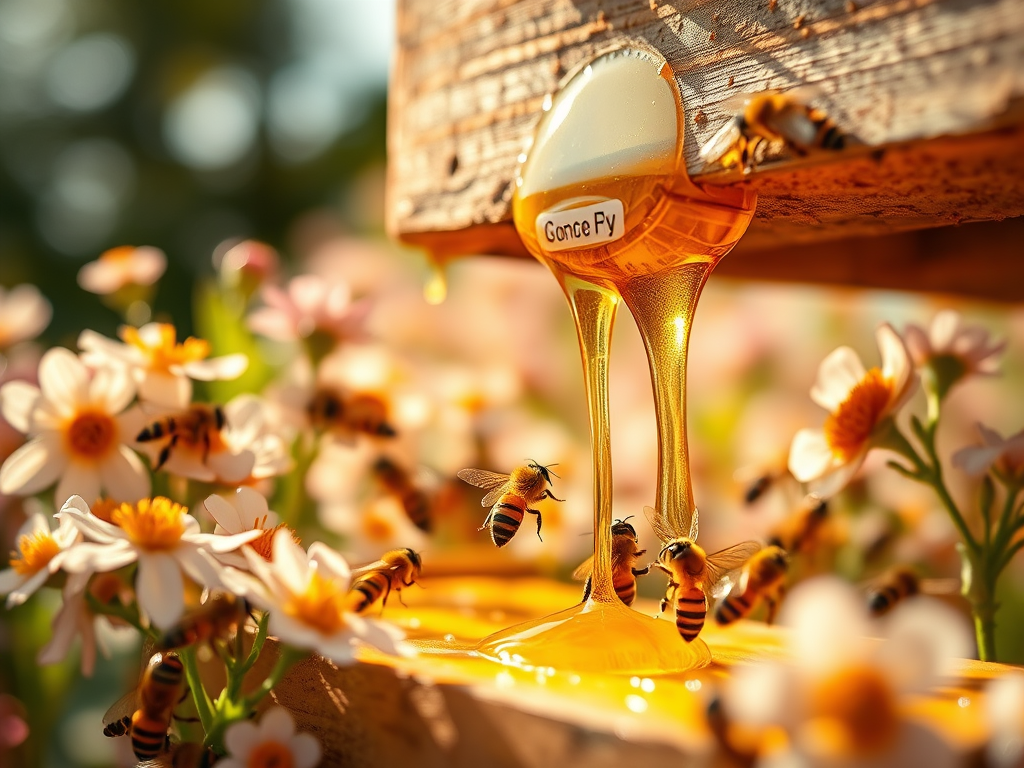
The National Beekeeping and Honey Mission (NBHM) is a Central Sector Scheme of the Government of India aimed at promoting scientific beekeeping, boosting honey and other bee-product production, and driving India’s so-called “Sweet Revolution”—on the lines of the Green and White Revolutions in crops and milk. (Press Information Bureau)
Genesis and Background
For many years, beekeeping in India remained largely informal and under-developed, despite India being a mega-biodiversity country with huge potential for nectar and pollen. Low awareness, poor quality control, lack of processing facilities and fragmented marketing chains kept both production and farmer incomes low.
Recognising this untapped potential, the Government of India approved National Beekeeping & Honey Mission (NBHM) as a Central Sector Scheme under the broader Atmanirbhar Bharat Abhiyan in 2020, with an outlay of ₹500 crore for three years (2020-21 to 2022-23). (Press Information Bureau)
NBHM builds on earlier efforts such as beekeeping components under:
- Mission for Integrated Development of Horticulture (MIDH),
- National Horticulture Mission (NHM),
- Khadi and Village Industries Commission (KVIC) Honey Mission, etc.,
but seeks to integrate them in a mission mode, focusing on both pollination services in agriculture and value-added bee products.
Implementing Agency and Coverage
- Nodal Ministry: Ministry of Agriculture & Farmers Welfare (MoA&FW)
- Implementing Agency: National Bee Board (NBB), an agency under MoA&FW. (nbb.gov.in)
- Scheme Type: Central Sector Scheme – 100% funded by the Union Government.
- Geographical Coverage: All states and union territories, with emphasis on:
- horticulture-rich regions,
- tribal and hilly areas,
- regions with high honey export potential.
NBHM should not be confused with the National Board for Higher Mathematics. Confusingly, it also uses the acronym NBHM. However, it is a completely different body under the Department of Atomic Energy.
Objectives of the National Beekeeping and Honey Mission
Broadly, NBHM seeks to:
- Promote Scientific Beekeeping
- Shift from traditional practices to scientific management of bee colonies.
- Improve productivity per colony and reduce colony losses.
- Increase Honey and Beehive Product Production
- Enhance production of honey, beeswax, royal jelly, propolis, pollen, and bee venom.
- Expand domestic consumption and exports.
- Support “Sweet Revolution” & Doubling Farmers’ Income
- Use pollination to raise yields of fruits, vegetables, oilseeds, pulses, etc.
- Generate additional income for small and marginal farmers and landless workers.
- Create Rural Employment & Entrepreneurship
- Encourage beekeeping as a stand-alone enterprise or allied activity.
- Promote start-ups and FPOs in honey and bee-product value chain.
- Strengthen Infrastructure and Quality Assurance
- Establish Integrated Beekeeping Development Centres (IBDCs), training centres, processing units, quality testing labs, and cold storages. (nbb.gov.in)
- Promote Research and Technology
- Support R&D on bee diseases, pests, queen breeding, and region-specific technologies.
- Integrate IT tools, traceability systems and blockchain for quality and export competitiveness.
- Ensure Inclusive Growth
- Special focus on women, tribal communities, and aspirational districts.
- Promote beekeeping as a livelihood option for self-help groups (SHGs) and youth.
Institutional Framework and Digital Ecosystem
National Bee Board (NBB)
NBB functions as the central coordinating body for:
- preparing annual action plans,
- issuing guidelines and standards,
- channeling funds to states, institutions and implementing agencies,
- monitoring implementation. (nbb.gov.in)
Madhu Kranti Portal and Online Registration
To bring transparency and traceability, NBHM promotes online registration of beekeepers through digital platforms like the Madhu Kranti Portal, which:
- captures data on beekeepers, colonies, and honey production,
- facilitates policy planning and scheme targeting,
- supports future integration with traceability and blockchain solutions for export-grade honey.
Structure of NBHM: Three Mini Missions
NBHM is implemented through three “Mini Missions”, each addressing a key segment of the beekeeping ecosystem. (nbb.gov.in)
Mini Mission I – Production & Productivity
Focus: Enhancing crop yields and honey production through scientific beekeeping.
Key activities:
- Promotion of scientific beekeeping at farmer level using:
- bee boxes, colonies, protective gear, smokers, extractors, etc.
- Establishment of Integrated Beekeeping Development Centres (IBDCs) and Centres of Excellence (CoEs):
- for training, demonstration and extension activities.
- Capacity building:
- training of farmers, beekeepers and field functionaries,
- awareness campaigns, demonstrations in farmer fields.
- Support for bee breeders and bee-equipment manufacturing units.
- Cluster/area-based Integrated Development of Scientific Beekeeping (IDSB) projects.
- Support for api-therapy centres where bee products are used for wellness. (nbb.gov.in)
Mini Mission II – Post-Harvest Management and Value Chain
Focus: Post-harvest handling, processing, marketing and export readiness.
Key activities:
- Setting up and strengthening:
- honey processing and packaging units,
- cold storage and bulk storage facilities,
- collection centres and aggregation points.
- Support for branding, labelling and marketing of honey and bee products, especially by FPOs, cooperatives and SHGs.
- Promotion of value-added products such as:
- flavoured honey, comb honey, cosmetics, nutraceuticals, and medicinal bee products.
- Facilitation of quality certification, standardisation and packaging to meet domestic and global market standards. (Press Information Bureau)
Mini Mission III – Research, Technology and Innovation
Focus: R&D, technology development and advanced skill building.
Key activities:
- Funding research projects in:
- bee disease management,
- queen rearing and breeding programmes,
- region-specific bee flora and species.
- Development and dissemination of improved beekeeping technologies, tools and practices.
- Training of master trainers, scientists and extension personnel.
- Use of IT tools, GIS, traceability and blockchain for monitoring, certification and export markets. (nbb.gov.in)
Beneficiaries and Eligibility
NBHM is designed to be inclusive and broad-based. Eligible beneficiary categories include:
- Individual farmers and beekeepers
- Small and marginal farmers, including landless rural youth
- Self-Help Groups (SHGs) and Joint Liability Groups (JLGs)
- Farmer Producer Organisations (FPOs), cooperatives and federations
- Start-ups and private entrepreneurs in the honey value chain
- State government agencies, institutions, universities, and Krishi Vigyan Kendras (KVKs)
- Women-led groups and beekeepers from tribal and hilly areas
The actual pattern of assistance (subsidy percentage, upper limits, etc.) is laid down in detailed NBHM guidelines and may vary by component and beneficiary category. (nbb.gov.in)
Funding Pattern and Financial Outlay
- Total approved outlay (initially): ₹500 crore for three years (2020-21 to 2022-23). (Press Information Bureau)
- Being a Central Sector Scheme, the entire cost is borne by the Government of India, although states and private partners participate through implementation and co-investment.
- Funds are allocated to various components across the three mini missions—covering:
- capacity building and HRD,
- input support to beekeepers,
- infrastructure (IBDCs, labs, processing units),
- research and innovation. (nbb.gov.in)
Recent official documents and current-affairs updates (2024–25) show continued implementation and refinement of the Mission beyond the initial 2020–23 period. There are ongoing projects, and new guidelines and clarifications are issued through NBB and MoA&FW. (Press Information Bureau)
Progress and Impact
While exact, latest numerical data vary by source and year, government and policy summaries highlight several positive trends: (Press Information Bureau)
- Increase in Registered Beekeepers and Colonies
- A substantial rise in the number of registered beekeepers and colonies under NBB-linked registration drives.
- Expansion of beekeeping clusters in horticulture-rich states such as Uttar Pradesh, Punjab, Haryana, Maharashtra, and others.
- Expansion of Infrastructure
- Establishment/strengthening of IBDCs, training centres, honey processing units and labs.
- More states launching their own state honey missions aligned with NBHM.
- Boost to Honey Production and Exports
- India’s honey production and exports have shown an upward trend over the last decade. NBHM aims to accelerate this growth by improving quality and ensuring compliance with export standards.
- Income and Employment Generation
- Beekeeping provides a viable supplementary income for farmers, especially during off-season agricultural months.
- It is particularly suitable for women’s groups and youth due to relatively low initial land requirement and flexible labour.
- Pollination and Crop Productivity
- Increased use of honeybee colonies as pollinators improves the yield and quality of crops such as:
- fruits (apple, litchi, citrus),
- vegetables,
- oilseeds (mustard, sunflower),
- pulses and spices.
- Increased use of honeybee colonies as pollinators improves the yield and quality of crops such as:
Key Innovations: Honey Corridors, Blockchain, and Quality Control
Recent explanatory notes on NBHM emphasise some innovative directions:
- Honey Corridors
- Creation of organised “honey belts” or corridors with:
- dense bee-based activity,
- shared infrastructure (processing units, labs, collection centres),
- coordinated branding and marketing.
- Creation of organised “honey belts” or corridors with:
- Blockchain and Traceability
- Using IT and blockchain to:
- track honey from hive to market,
- maintain quality records,
- combat adulteration and ensure export-grade standards.
- Using IT and blockchain to:
- Madhu Kranti Portal
- Centralised beekeeper registration and data management to:
- support planning,
- enable targeted benefits,
- integrate with future e-market platforms.
- Centralised beekeeper registration and data management to:
Challenges in Implementation
Despite the promise, several challenges remain as:
- Awareness and Skill Gaps
- Many farmers are still unaware of scientific beekeeping practices or the available support under NBHM.
- Need for sustained training and demonstration.
- Quality and Adulteration Issues
- Ensuring pure, unadulterated honey that meets domestic and export standards remains a pressing challenge.
- Strict enforcement, testing labs and traceability systems are crucial.
- Bee Health and Climate Stress
- Colony collapse, disease, pesticide exposure and climate variability threaten bee populations.
- Requires robust R&D, good beekeeping practices (GBPs), and farmer education on pesticide use.
- Fragmented Value Chain
- Small producers often find it difficult to access:
- finance,
- larger markets,
- branding channels.
- FPO-based aggregation and better marketing support are needed.
- Small producers often find it difficult to access:
- Data and Monitoring
- Reliable real-time data on colonies, production and disease incidence is still evolving.
- Effective use of digital tools is essential to improve monitoring.
Forward Approach
To realise the full potential of the National Beekeeping and Honey Mission, key steps often highlighted by experts and policy discussions include: (Press Information Bureau)
- Scaling Up Training and Extension
- Regular training at village level, using FPOs, KVKs, NGOs and private partners.
- Strengthening Quality Control
- More NABL-accredited labs, routine testing, and strict checks against adulteration.
- Promoting Integrated Farming Systems
- Encouraging beekeeping with horticulture, agro-forestry and organic farming.
- Support to Women and Youth
- Easier credit, entrepreneurship programmes, and market linkages for women-led SHGs and young beekeepers.
- Research and Climate Resilience
- Investment in breeding resilient bee strains, disease management and climate-smart beekeeping practices.
- Stronger Brand “India Honey”
- National branding, GI tags for speciality honeys, and focused export promotion.
Conclusion
The National Beekeeping and Honey Mission (NBHM) is a strategic, multi-dimensional initiative. It aims to transform India’s beekeeping sector from scattered, low-productivity activity to a scientific, high-value, export-oriented enterprise. This transformation simultaneously boosts agricultural productivity, farmer incomes, rural employment, and biodiversity conservation.
NBHM combines capacity building, infrastructure creation, research and technology, and digital tools like traceability and online registration. It aims to make beekeeping a mainstream livelihood option across India. It seeks to firmly establish the “Sweet Revolution” as a pillar of Atmanirbhar Bharat. (Press Information Bureau)


Leave a Reply