
The Agricultural Marketing Infrastructure (AMI) sub-scheme of ISAM is being implemented by the Ministry of Agriculture and Farmers Welfare, Government of India.
The AMI sub-scheme of ISAM is applicable for new credit linked projects, where term loan has been sanctioned by eligible financial institutions from 22.10.2018 onwards. NABARD is the channelising agency for release of subsidy @ 25% to 33.33% of the capital cost for institutions eligible for refinance by NABARD or any other FI such as State Financial Corporations (SFCs) approved by DAC&FW.
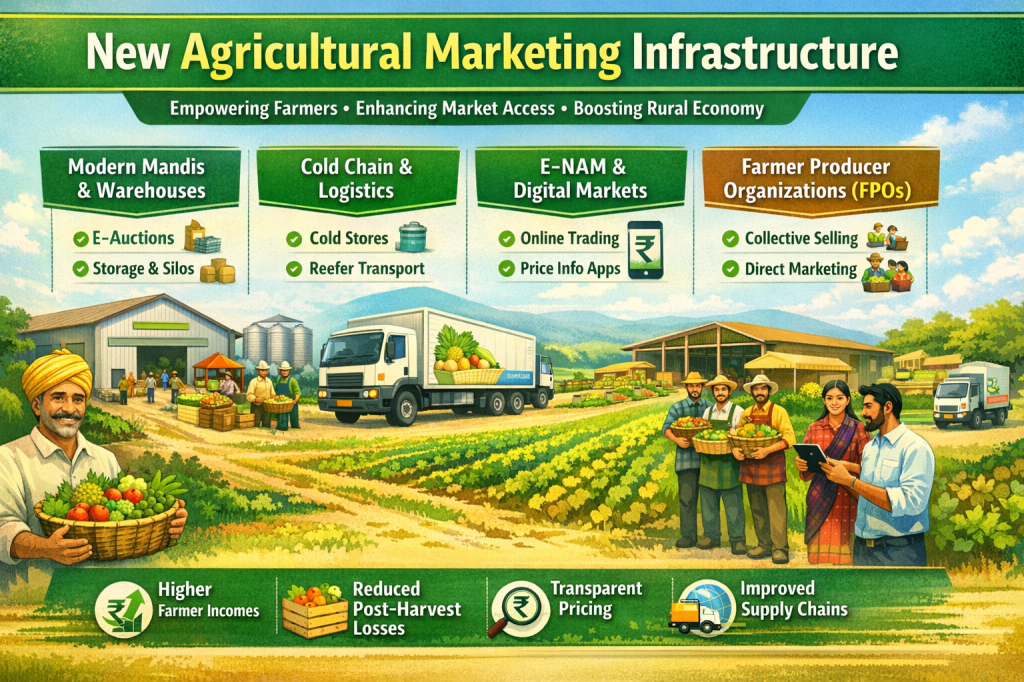
New Agricultural Marketing Infrastructure refers to the modern systems, facilities, and digital platforms being developed to improve how agricultural produce is stored, traded, transported, and sold—so farmers get better prices, lower losses, and wider market access.
Key Components of New Agricultural Marketing Infrastructure
1. Physical Infrastructure
- Modern Mandis (APMC upgrades)
- Electronic auction systems
- Better grading, sorting, and weighing facilities
- Warehousing & Silos
- Scientific storage to reduce spoilage
- Warehouse Receipt Financing (farmers can get loans against stored produce)
- Cold Chain Infrastructure
- Cold storages, pack houses, reefer transport
- Essential for fruits, vegetables, dairy, meat, and fish
Digital & Electronic Markets
- e-NAM (National Agriculture Market)
- Online trading platform linking mandis across states
- Transparent price discovery
- Reduces geographical barriers
- Digital Price Information Systems
- Real-time price updates via mobile apps & SMS
- Helps farmers decide when and where to sell
3. Farmer-Centric Institutions
- Farmer Producer Organizations (FPOs)
- Collective selling power
- Better bargaining with buyers
- Easier access to credit and infrastructure
- Direct Marketing Channels
- Farmer-to-consumer markets
- Contract farming (with safeguards)
- Online agri-commerce platforms
Logistics & Supply Chain Improvements
- Integrated farm-to-market logistics
- Rural roads, aggregation centers, and transport hubs
- Efficient linkages between farms, processors, exporters, and retailers
Government Support & Schemes
- Agriculture Infrastructure Fund (AIF) – financing for warehouses, cold storage, processing units
- PM Formalisation of Micro Food Processing Enterprises (PMFME)
- Operation Greens – stabilizing prices of perishables
Benefits of New Agricultural Marketing Infrastructure
- Higher and more stable farmer incomes
- Reduced post-harvest losses
- Transparent pricing and reduced exploitation
- Better quality produce for consumers
- Improved export competitiveness
Challenges Ahead
- Awareness among farmers
- Digital literacy gaps
- Inter-state regulatory differences
- Need for private sector investment
Conclusion
New Agricultural Marketing Infrastructure is as important as production itself. By combining physical assets, digital platforms, and farmer institutions, India can move from a production-driven to a market-driven agricultural economy—ensuring sustainability and prosperity for farmers.
 KrishiCenter
Leave a comment