
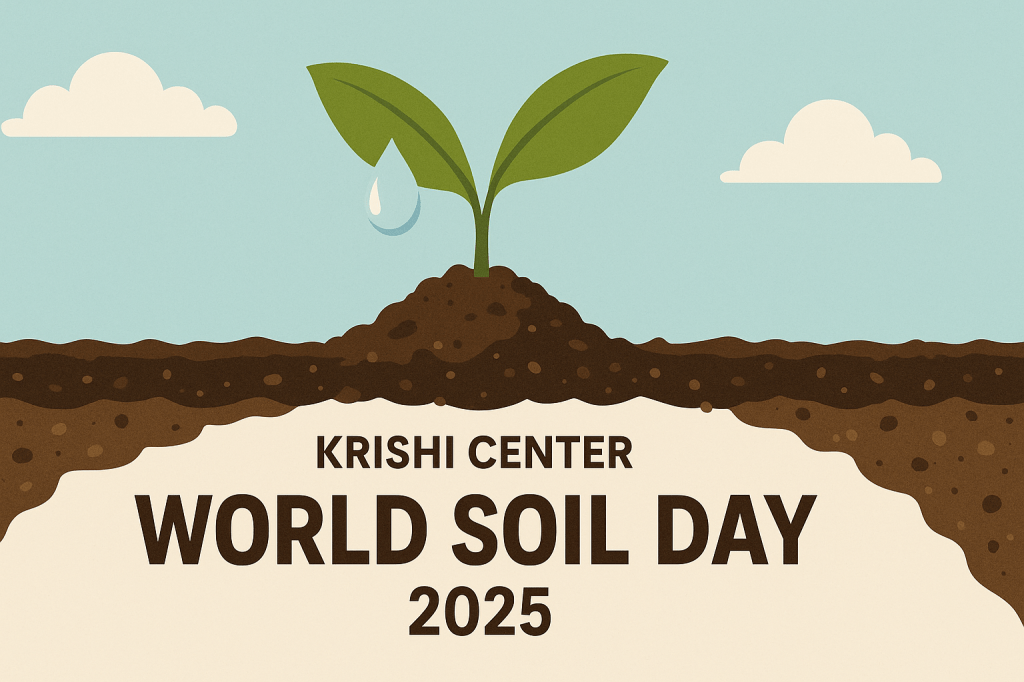
World Soil Day – Importance, Theme, and Awareness
Introduction
World Soil Day (WSD) is celebrated every year on 5th December to highlight the importance of healthy soil and advocate for sustainable management of soil resources. It was officially recognized by the United Nations in 2014, following the recommendation of the International Union of Soil Sciences (IUSS).
Soil is the foundation of food production, biodiversity, climate regulation, and human survival. Yet, it is often overlooked and degraded due to mismanagement and environmental pressures.
Why Do We Celebrate World Soil Day?
To Raise Awareness
Soil degradation affects over 33% of Earth’s land, reducing productivity, biodiversity, and water efficiency. WSD helps people understand the vital role soil plays in everyday life.
To Promote Sustainable Soil Management
Farmers, governments, and communities are encouraged to adopt practices that maintain soil fertility, reduce erosion, and improve carbon storage.
To Support Food Security
Healthy soil leads to healthy crops. Sustainable soil management ensures long-term agricultural productivity and stable food systems.
To Fight Climate Change
Soils store more carbon than all vegetation and the atmosphere combined. Protecting soil helps in climate mitigation.
Soil Element of Life – krishicenter
World Soil Day 2024-25 Theme
Themes generally focus on:
- Soil erosion
- Soil salinity and sodicity
- Soil biodiversity
- Sustainable soil management
- Soil and water conservation
Each theme highlights a major global soil challenge and suggests actionable solutions.
Importance of Soil

Soil Supports Life
- Provides nutrients and water to plants
- Supports millions of organisms (bacteria, fungi, insects)
- Maintains ecological balance
Soil is a Natural Filter
It purifies water percolating through it, maintaining clean groundwater.
Soil Helps in Climate Regulation
Acts as a carbon sink, reducing atmospheric greenhouse gases.
Soil Ensures Food Security
About 95% of the food consumed worldwide is directly or indirectly dependent on soil.
Major Threats to Soil Health
Soil Erosion
Wind and water remove fertile topsoil, reducing agricultural productivity.
Soil Pollution
Pesticides, heavy metals, and industrial waste degrade soil quality.
Soil Salinity
Excess salt accumulation affects crop growth, especially in irrigated lands.
Soil Compaction
Heavy machinery and overgrazing reduce soil porosity and water infiltration.
Loss of Soil Organic Matter
Burning residue, overuse of chemicals, and monocropping deplete soil carbon.
How to Protect Soil? (Action Points)
For Farmers
- Use organic manure, compost, and green manure
- Adopt crop rotation and intercropping
- Practice zero/minimum tillage
- Use mulching to retain moisture
- Implement contour farming & terracing to control erosion
For Communities
- Promote tree plantation
- Stop wastage and pollution of soil
- Reduce plastic usage and landfill pressure
For Governments & Institutions
- Implement soil conservation policies
- Promote soil testing and nutrient-based subsidies
- Support sustainable irrigation practices
- Encourage FPOs and local groups for land restoration projects
How World Soil Day Is Celebrated?
- Seminars and awareness campaigns
- Farmer training programs on soil health
- Soil testing camps
- School activities and exhibitions
- Community-based plantation drives
- Release of annual soil health reports (by governments & institutions)
Conclusion
World Soil Day reminds us that soil is not an infinite resource. It takes more than 500 years to form just 1 cm of topsoil, yet human actions can destroy it within minutes. Protecting soil today ensures a healthier planet, better food security, and a more sustainable future for the next generations.
 KrishiCenter
Leave a comment